Is there a mother alive who wouldn’t like those grades to climb a little? I have been accused by my children of never being satisfied with their grades. I confess it. However, doing your best is best, and if a child can make his grades climb, he should. So how can you teach your child to improve his grades? I have 10 ideas to get you started from lesson four in Every School Year Counts. Download this lesson below.
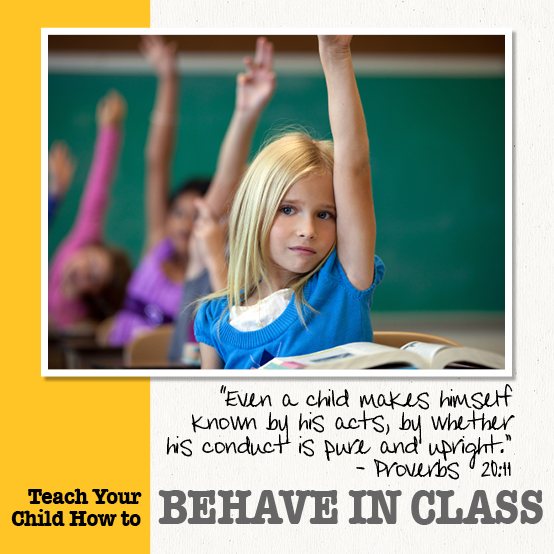
My sister, Kathie, taught ninth grade last year. She is an amazing math teacher—the kind you pray your kids will get. I was surprised at how difficult the year was for her. You see, I know Kathie—she can be tough, she can teach creatively, and she really cares about her students. If anyone can teach and teach well, she can. But the kids she had last year were tough, they were creative, and they did not care. Neither did most of their parents. The result was that she didn’t feel her students got the education that they could have, if more of them had behaved. You cannot ensure that your child’s classmates know how to behave, but you can take responsibility for your own child. It is a start; and if more moms would start, more teachers could teach, and more students could learn. Behavior in class and beyond is a simple math equation: Behaving in Class = Self-Control + Respect For five simple ways to teach self-control and some great tools for teaching respect, download Lesson 3, Teach Your Child How to Behave in Class from the free e-book, Every School Year Counts.
“But, Mom, I don’t know what to say!” If only I had a dollar for every time my kids said those words. It seems that most kids don’t like to ask questions, give tough answers, or explain struggles. Actually, most adults don’t like to either! But the child that learns how to communicate with teachers, coaches, and other kids will be miles ahead. Communication is a skill for life-long success. It is not always easy, especially for child. There are many reasons children struggle to communicate. You can help your child overcome and master communication by recognizing communication struggles and coaching your child through them. Check out these 5 Ways to Help Your Child Communicate from Lesson 5 in Every School Year Counts, 6 Ways A Mom Can Make This Year Count. Common Communication Weaknesses in Children Shyness Speech delays Fear Confusion Difficulty processing thoughts Verbal impulsiveness Discouragement How to Help your Child Learn How to Communicate 1. Practice Once you have identified your child’s communication weakness, practice with them to overcome it. {Tweet This} The best way to practice communication is to engage in conversation with your child often. Bedtime, carpool time, and mealtime are ideal for strategically proposing conversations. …
Piglet sidled up to Pooh from behind. “Pooh?” he whispered. “Yes, Piglet?” “Nothing,” said Piglet, taking Pooh’s hand. “I just wanted to be sure of you.” A.A. Milne, Winnie-the-Pooh To be sure. To be sure that when you get to the bus stop you will have someone to stand with. To be sure that when you get to the lunch room you will have someone to eat with. To be sure that when you go out on the playground you will have someone to play with. To be sure is to have a friend. When your child has friends at school, it can impact their education for good because they will enjoy school more with less social anxiety. In Lesson 6 of Every School Year Counts (a free e-book), you can learn how to teach your child to make friends so that they can–be sure. Download Lesson 6: Teach Your Child How to MAKE FRIENDS below.
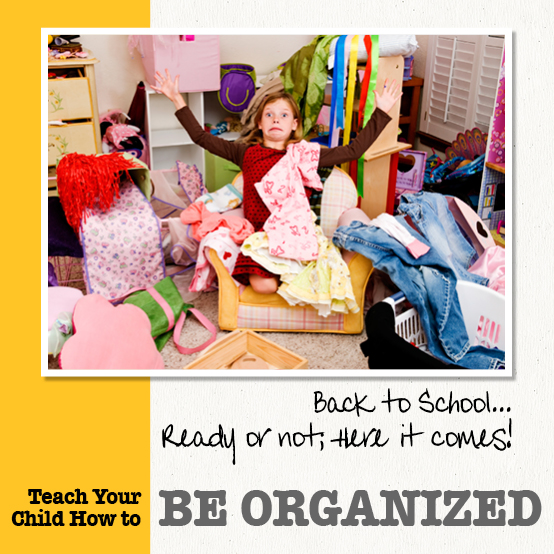
So let me just confess straight up — I struggle to stay organized. Therefore, consider this an addendum to the Teach Your Child To Be Organized lesson in my Ebook Every School Year Counts (download Lesson 1 below and the full version of the Ebook here). For every time that one of my kids yelled down the stairs, “Mom, I can’t find my shoes” there have been twice as many times when I yelled, as I raced around the house, “Has anybody seen my keys?” Organization–is there such a thing as a natural? Then again, it can be learned. I believe it, so I am learning. The house flood/14 month renovation taught me that I have three tendencies that inhibit my organization: Nonessentials Hoarding – nonessentials are things that I think I will need but in reality I could live with out. Examples might include shopping bags from every store in the mall; clothes that I loved and hope to wear again but won’t because they are too small, youthful, not comfy or out of style; left over craft supplies that one day might be applied to some school project; or outdated electronics or toys that aren’t broken but the kids have move …
Did you know that in the first 18 years of your child’s life 6.4 years will be spent in school? Over one third of the days you have with your child until they go to college will be spent in school. Your child’s education is important and every year counts. Having three children that began school at the age of 4, an adopted child who began school at 7, and another adopted child who didn’t start until the age of 9, I have had to be rather “creative” in ensuring that each of my children got the best out of every year in school. For my five children that often meant different schools for different needs, including public school, private school and home school. Regardless of where or how you choose to educate your child, making the most of every year will exponentially improve your child’s education. In this free e-book you will find everything you need to know so that you can start this year to make every year count. Download the full Ebook below. Lesson 1: How to be Organized Lesson 2: How to Manage Time Lesson 3: How to Behave in Class Lesson 4: How to Improve Grades …
Walt Larimore and I discuss the 4 different types of parenting: the eagle parent, the Labrador retriever parent, the grizzly bear parent, and the sloth parent.
My friend Tracey is quite the mom. In fact, she is a major inspiration for me because, well, we track. Do you know someone that just tracks with you. It doesn’t matter how long you go without seeing them because when you do you fall in immediately, as if you never had parted. That’s Tracey. We kind of live in similar worlds, far apart. Her husband is CEO of Family Life, my husband is President of Family First. She has kids about the ages of my kids. She was drafted to direct Family Life’s program for mothers – Mom Life. I was drafted to direct Family First’s program for mothers – iMOM. Tracey and I track. So much so that I just run in to her surreally. One minute I am talking to a host of moms at the MOPS Convention and the next I am being squeezed around the neck by my friend Tracey. She pops up everywhere because we are on the same track in life. It is comforting to see my friend and to know that I am not alone on my track. Tracey and I are tracking again into a new world. It is a …
It’s easy to notice bad habits during the summer when your family is home, but here are the top 5 habits that you can easily kick. Be sure to check out the takeaways below after you watch the video. iMOM’s 25-Day You Can Do It Chart is a great way to motivate your children to form good habits before the new school year!