Previously on Bible Book Club
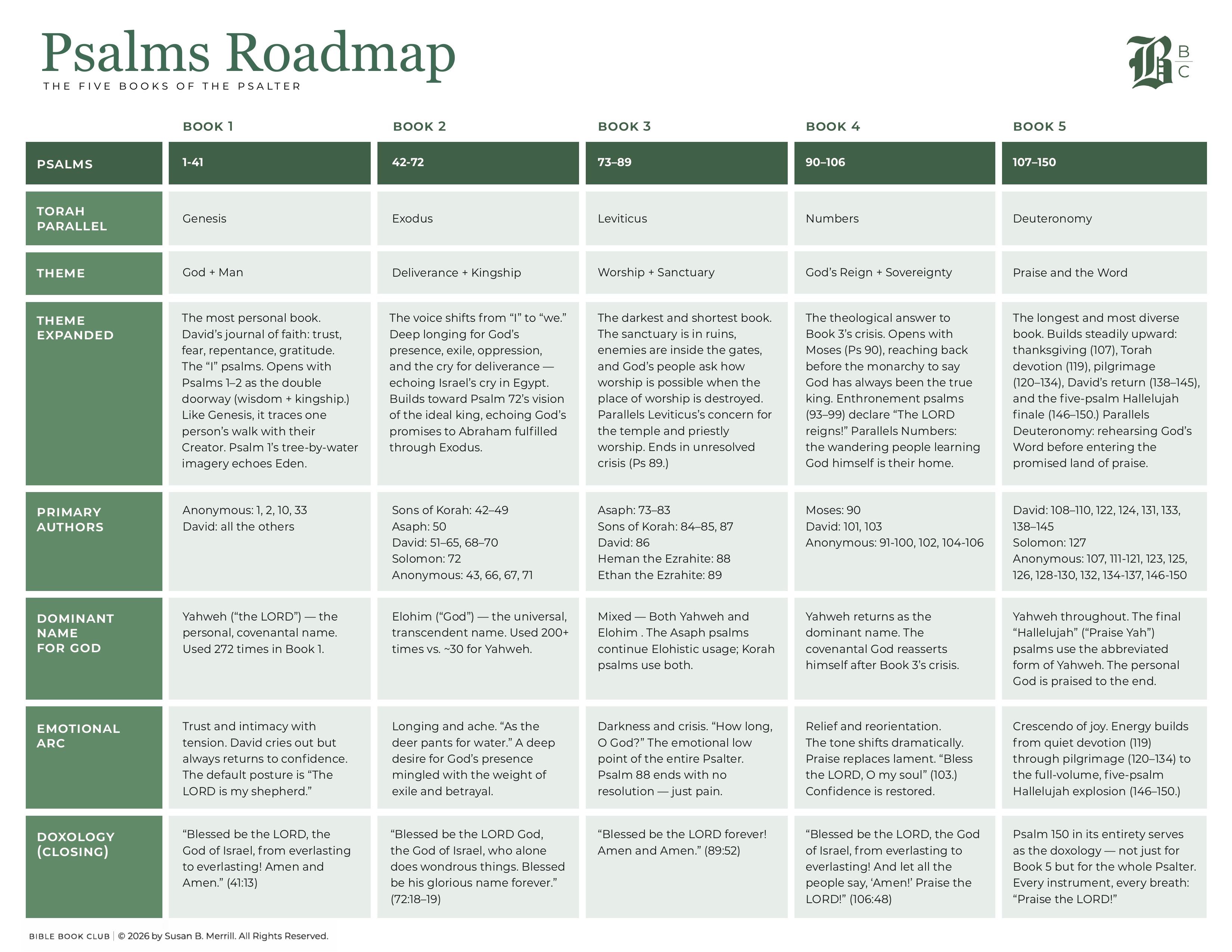
In our last psalms, we began Book 3, the parallel to the book of Leviticus, whose theme is worship and sanctuary. Book 3 opened with Asaph’s personal praise of God in Psalm 73:26, “My flesh and my heart may fail, but God is the strength of my heart and my portion forever.” And it closed on Psalm 80, Israel’s plea for God to “Restore us... make your face shine on us, that we may be saved.”
Psalms 81-89 Introduction
Psalms 81-89 are the climax of Book 3. Often called the darkest Book of the Psalms, this section wrestles with national devastation, exile, individual suffering, and questions of God’s faithfulness. Recall that in this book, the sanctuary that the Book of Leviticus so meticulously detailed for worship in the Temple is no more, because the Temple has been decimated.
The Psalms are God’s playlist for the heart, and every book is a micro-journey of some kind ending in a doxology. Well, in this book the journey leaves us hanging, and it is a journey that many of us go through. Sometimes the finality of God’s will does not compute: a marriage ends, the tragic loss of a child, or a crippling illness.
Why is Book 3 called the darkest book of the Psalms?
Book 3 echoes the song of those whose faith is holding on when heaven is silent. I have been in that choir, and confess that I did not sing through it well. In fact, my song of worship was barely audible. If you are there right now, keep singing. Sometimes worship is all you can do.
The micro-journey of Book 3 will end with these psalms, without resolution. It will leave us with the questions, “Why God?” and “How long?” The lesson this book leaves us with is that sometimes we must worship when the promise and the reality no longer match.
Psalm 81: Praise for God’s Provision and a Warning to Be Faithful
Psalm 81
For the director of music. According to gittith. Of Asaph.
1 Sing for joy to God our strength;
shout aloud to the God of Jacob!2 Begin the music, strike the timbrel,
play the melodious harp and lyre.3 Sound the ram’s horn at the New Moon,
and when the moon is full, on the day of our festival;
4 this is a decree for Israel,
an ordinance of the God of Jacob.
5 When God went out against Egypt,
he established it as a statute for Joseph.6 “I removed the burden from their shoulders;
their hands were set free from the basket.7 In your distress you called and I rescued you,
I answered you out of a thundercloud;
I tested you at the waters of Meribah.
8 Hear me, my people, and I will warn you—
if you would only listen to me, Israel!
9 You shall have no foreign god among you;
you shall not worship any god other than me.
10 I am the Lord your God,
who brought you up out of Egypt.
Open wide your mouth and I will fill it.11 “But my people would not listen to me;
Israel would not submit to me.
12 So I gave them over to their stubborn hearts
to follow their own devices.13 “If my people would only listen to me,
if Israel would only follow my ways,
14 how quickly I would subdue their enemies
and turn my hand against their foes!
15 Those who hate the Lord would cringe before him,
and their punishment would last forever.
16 But you would be fed with the finest of wheat;
with honey from the rock I would satisfy you.”
What is Psalm 81 about?
Psalm 81 is a festival call to celebrate past deliverance and future obedience. It was a feast or one of the annual celebrations given to them in the Torah, most likely either Passover or the Feast of the Tabernacles. See our outline explaining all the Feasts and Festivals.
God had created and commanded the keeping of all of the Festivals to remind them that their past was always present. A present reminder of God’s faithfulness, care, and promises for their future.
- Starts in praise but ends in lament.
- Begins with praising God’s name and ends in a warning to obey His Word.
- Begins with the blessing of what God has done and ends with what the people have not done: obey.
God promises that if they will just open their mouths, He will fill them. But they choose instead to turn from Him, mouths set against Him. It is a lesson for us. They will not listen. We must. The apostle Paul issues the same warning in Romans 1.
Romans 1:18-21 18 God’s Wrath Against Sinful Humanity
18 The wrath of God is being revealed from heaven against all the godlessness and wickedness of people, who suppress the truth by their wickedness, 19 since what may be known about God is plain to them, because God has made it plain to them. 20 For since the creation of the world God’s invisible qualities—his eternal power and divine nature—have been clearly seen, being understood from what has been made, so that people are without excuse.
21 For although they knew God, they neither glorified him as God nor gave thanks to him, but their thinking became futile and their foolish hearts were darkened.
We must listen. God has made it plain to us...since the creation of the world. If we reject what has been made plain, do not listen to His words, and don’t believe in God, in His Son, then our thinking will become futile, our hearts darkened. There is blessing in hearing and obeying God’s Word.
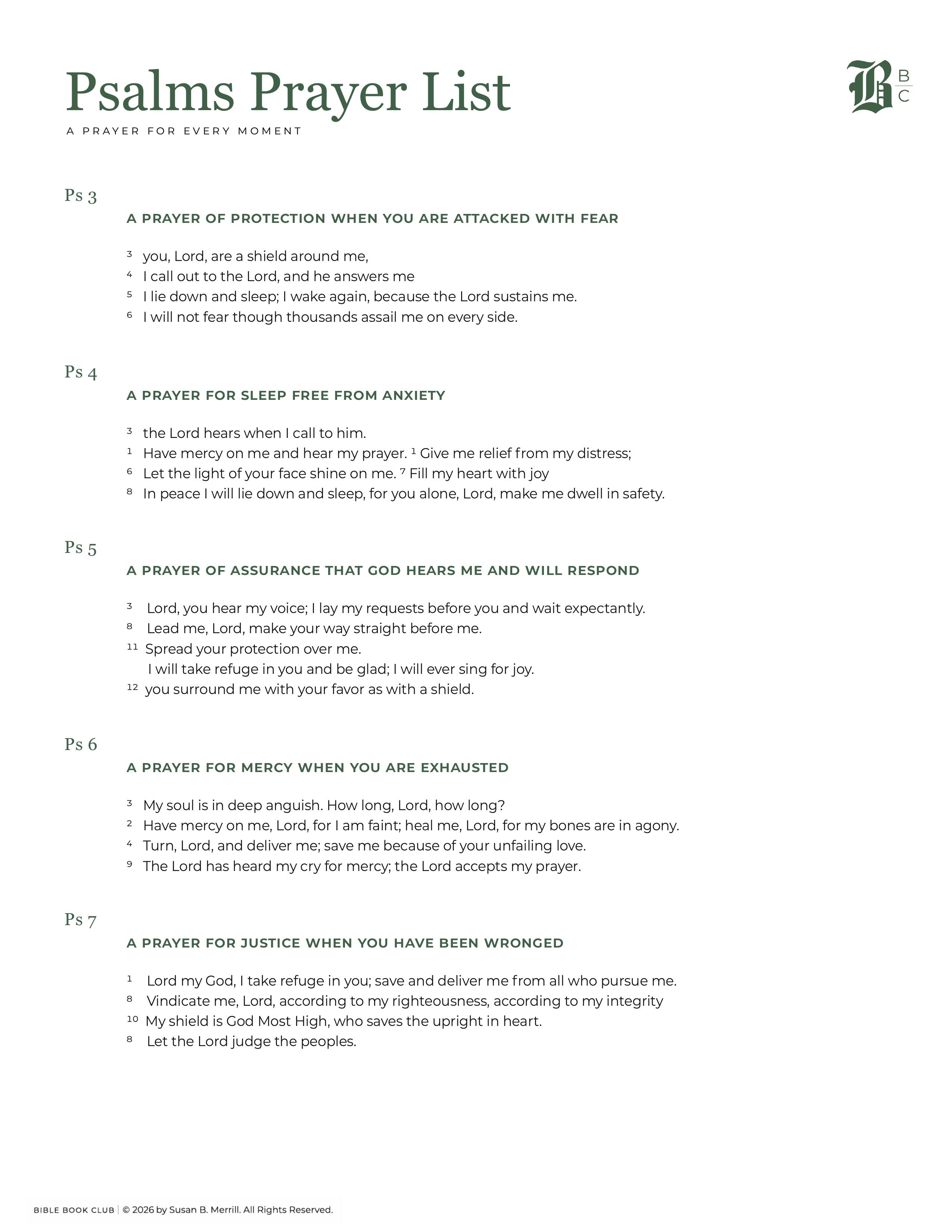
A Prayer from Psalm 81 of Praise for God’s Provision to the Faithful
10 I am the Lord your God. Open wide your mouth, and I will fill it.
13 “If my people would only listen to me, if you would only follow my ways,
16 you would be fed with the finest of wheat; with honey from the rock I would satisfy you.”
Psalm 82-83: God Judges as the Most High Over All the Earth
Psalm 82
A psalm of Asaph.
1 God presides in the great assembly;
he renders judgment among the “gods”:2 “How long will you defend the unjust
and show partiality to the wicked?
3 Defend the weak and the fatherless;
uphold the cause of the poor and the oppressed.
4 Rescue the weak and the needy;
deliver them from the hand of the wicked.5 “The ‘gods’ know nothing, they understand nothing.
They walk about in darkness;
all the foundations of the earth are shaken.6 “I said, ‘You are “gods”;
you are all sons of the Most High.’
7 But you will die like mere mortals;
you will fall like every other ruler.”8 Rise up, O God, judge the earth,
for all the nations are your inheritance.
Psalm 83
A song. A psalm of Asaph.
1 O God, do not remain silent;
do not turn a deaf ear,
do not stand aloof, O God.
2 See how your enemies growl,
how your foes rear their heads.
3 With cunning they conspire against your people;
they plot against those you cherish.
4 “Come,” they say, “let us destroy them as a nation,
so that Israel’s name is remembered no more.”
5 With one mind they plot together;
they form an alliance against you—
6 the tents of Edom and the Ishmaelites,
of Moab and the Hagrites,
7 Byblos, Ammon and Amalek,
Philistia, with the people of Tyre.
8 Even Assyria has joined them
to reinforce Lot’s descendants.
9 Do to them as you did to Midian,
as you did to Sisera and Jabin at the river Kishon,
10 who perished at Endor
and became like dung on the ground.
11 Make their nobles like Oreb and Zeeb,
all their princes like Zebah and Zalmunna,
12 who said, “Let us take possession
of the pasturelands of God.”
13 Make them like tumbleweed, my God,
like chaff before the wind.
14 As fire consumes the forest
or a flame sets the mountains ablaze,
15 so pursue them with your tempest
and terrify them with your storm.
16 Cover their faces with shame, Lord,
so that they will seek your name.
17 May they ever be ashamed and dismayed;
may they perish in disgrace.
18 Let them know that you, whose name is the Lord—
that you alone are the Most High over all the earth.
What is Psalm 82-83 about?
God judges the internal and external enemies of God’s people. These are the last two psalms of Asaph. In Psalm 83, God judges the external enemies of God’s people. None of these nations will be new to you if you have been with Bible Book Club since the beginning. Moab, Ammon, Amalek, and Philistia are all tenacious enemies of Israel.
In Psalm 82, God judges internal enemies. The opening verse states: God renders judgment among the “gods.” The word gods is in quotes and not capitalized. There are several debated theories about who these “gods” are, but most likely the author is referring to people: magistrates, kings, or judges appointed to administer God’s law on earth.
They are called “gods” because they hold God-given authority over life and death, but they are warned that despite their high status, they will still face judgment and die like any other human. Jesus reaches back to this obscure verse, Psalm 82:6, and quotes it to the Jews who are about to stone him.
John 10:33-36 33 “We are not stoning you for any good work,” they replied, “but for blasphemy, because you, a mere man, claim to be God.”
34 Jesus answered them, “Is it not written in your Law, ‘I have said you are “gods”’? 35 If he called them ‘gods,’ to whom the word of God came—and Scripture cannot be set aside— 36 what about the one whom the Father set apart as his very own and sent into the world? Why then do you accuse me of blasphemy because I said, ‘I am God’s Son’?
Why does Jesus quote “you are gods” (Psalm 82:6) in John 10:34?
With Psalm 82:6, Jesus defends His identity against accusations of blasphemy. He argues that if God granted human judges and rulers the status of lowercase “gods” because they carried His authority and word, how much more fitting is it for the One sent directly from the Father to call Himself the Son of God?
A Prayer from Psalm 82-83 for God to Judge Our Enemies So They May Seek Him
82:8 Rise up, O God, judge the earth, for all the nations are your inheritance.
83:1 O God, do not remain silent; do not turn a deaf ear, do not stand aloof, O God.
83:16 Cover their faces with shame, Lord, so that they will seek your name.
83:18 Let them know that you alone are the Most High over all the earth.
Psalm 84: It Is Better to Be Near God Than Anywhere Else
Psalm 84
For the director of music. According to gittith. Of the Sons of Korah. A psalm.
1 How lovely is your dwelling place,
Lord Almighty!
2 My soul yearns, even faints,
for the courts of the Lord;
my heart and my flesh cry out
for the living God.
3 Even the sparrow has found a home,
and the swallow a nest for herself,
where she may have her young—
a place near your altar,
Lord Almighty, my King and my God.
4 Blessed are those who dwell in your house;
they are ever praising you.5 Blessed are those whose strength is in you,
whose hearts are set on pilgrimage.
6 As they pass through the Valley of Baka,
they make it a place of springs;
the autumn rains also cover it with pools.
7 They go from strength to strength,
till each appears before God in Zion.8 Hear my prayer, Lord God Almighty;
listen to me, God of Jacob.
9 Look on our shield, O God;
look with favor on your anointed one.10 Better is one day in your courts
than a thousand elsewhere;
I would rather be a doorkeeper in the house of my God
than dwell in the tents of the wicked.
11 For the Lord God is a sun and shield;
the Lord bestows favor and honor;
no good thing does he withhold
from those whose walk is blameless.12 Lord Almighty,
blessed is the one who trusts in you.
What is Psalm 84 about?
Psalm 84 is about the preciousness of the nearness of God.
Psalm 84:10 10 Better is one day in your courts
I would rather be a doorkeeper in the house of my God
I mentioned the story of Korah’s tragedy turned blessing when we discussed the sons of Korah’s first psalm, Psalm 42. Recall that Korah’s sin in Numbers 16 was that he and his tribe wanted access to the Tabernacle, a privilege that only the priests had been given. The ambition drove them to rebellion, resulting in death. The ground swallowed all who were in his tent. In other words, most of his family. But some of his line who had not rebelled survived.
Generations later, God assigned those descendants to be the literal gatekeepers of the Temple. The doorkeepers who guarded the thresholds and opened the house of God every morning. When the Sons of Korah write in Psalm 84:10, “I would rather be a doorkeeper in the house of my God than dwell in the tents of the wicked,” they are humbly reflecting on the preciousness of their altered state as a tribe.
Why did the Sons of Korah choose to be gatekeepers in Psalm 84:10?
They are so in love with God that they are content, even joyful, just to be doorkeepers. They have learned that they’d rather stand at the door, the lowest post in the house, than live anywhere else. Nearness to God is a gift, not a corporate ladder you can climb on your own initiative. Something for us to think about.
The phrase “tents of the wicked” in that same verse echoes Numbers 16, where Moses warned the people about what was about to happen to Korah.
Numbers 16:26 26 He warned the assembly, “Move back from the tents of these wicked men! Do not touch anything belonging to them, or you will be swept away because of all their sins.”
In this psalm, Korah’s descendants are audibly renouncing their forefathers’ wicked tent by name. There are two touching verses in this psalm.
Psalm 84:3 3 Even the sparrow has found a home,
The thought is that even the smallest, most overlooked creature has a permanent address in God’s house.
Psalm 84:6 6 As they pass through the Valley of Baka,
What is the meaning of the “Valley of Baka” in Psalm 84:6?
The Valley of Baka becomes a place of springs. Baka in Hebrew means weeping, so as people pass through the valley of weeping, God turns that painful place into a source of spiritual growth.
A Prayer from Psalm 84 Praising the Preciousness of Being Close to God
1 How lovely is your dwelling place, Lord Almighty!
10 Better is one day in your courts than a thousand elsewhere; I would rather be a doorkeeper in the house of my God than dwell in the tents of the wicked.
3 Even the sparrow has found a home—a place near your altar, my King and my God
11 For the Lord bestows favor and honor; no good thing does he withhold from those whose walk is blameless.
Psalms 85, 86, 87: Longing for Mercy, Love, Peace... Zion
Psalm 85
For the director of music. Of the Sons of Korah. A psalm.
1 You, Lord, showed favor to your land;
you restored the fortunes of Jacob.
2 You forgave the iniquity of your people
and covered all their sins.
3 You set aside all your wrath
and turned from your fierce anger.4 Restore us again, God our Savior,
and put away your displeasure toward us.
5 Will you be angry with us forever?
Will you prolong your anger through all generations?
6 Will you not revive us again,
that your people may rejoice in you?
7 Show us your unfailing love, Lord,
and grant us your salvation.8 I will listen to what God the Lord says;
he promises peace to his people, his faithful servants—
but let them not turn to folly.
9 Surely his salvation is near those who fear him,
that his glory may dwell in our land.10 Love and faithfulness meet together;
righteousness and peace kiss each other.
11 Faithfulness springs forth from the earth,
and righteousness looks down from heaven.
12 The Lord will indeed give what is good,
and our land will yield its harvest.
13 Righteousness goes before him
and prepares the way for his steps.
Psalm 86
A prayer of David.
1 Hear me, Lord, and answer me,
for I am poor and needy.
2 Guard my life, for I am faithful to you;
save your servant who trusts in you.
You are my God; 3 have mercy on me, Lord,
for I call to you all day long.
4 Bring joy to your servant, Lord,
for I put my trust in you.
5 You, Lord, are forgiving and good,
abounding in love to all who call to you.
6 Hear my prayer, Lord;
listen to my cry for mercy.
7 When I am in distress, I call to you,
because you answer me.
8 Among the gods there is none like you, Lord;
no deeds can compare with yours.
9 All the nations you have made
will come and worship before you, Lord;
they will bring glory to your name.
10 For you are great and do marvelous deeds;
you alone are God.
11 Teach me your way, Lord,
that I may rely on your faithfulness;
give me an undivided heart,
that I may fear your name.
12 I will praise you, Lord my God, with all my heart;
I will glorify your name forever.
13 For great is your love toward me;
you have delivered me from the depths,
from the realm of the dead.
14 Arrogant foes are attacking me, O God;
ruthless people are trying to kill me—
they have no regard for you.
15 But you, Lord, are a compassionate and gracious God,
slow to anger, abounding in love and faithfulness.
16 Turn to me and have mercy on me;
show your strength in behalf of your servant;
save me, because I serve you
just as my mother did.
17 Give me a sign of your goodness,
that my enemies may see it and be put to shame,
for you, Lord, have helped me and comforted me.
Psalm 87
Of the Sons of Korah. A psalm. A song.
1 He has founded his city on the holy mountain.
2 The Lord loves the gates of Zion
more than all the other dwellings of Jacob.3 Glorious things are said of you,
city of God:
4 “I will record Rahab and Babylon
among those who acknowledge me—
Philistia too, and Tyre, along with Cush—
and will say, ‘This one was born in Zion.’”
5 Indeed, of Zion it will be said,
“This one and that one were born in her,
and the Most High himself will establish her.”
6 The Lord will write in the register of the peoples:
“This one was born in Zion.”7 As they make music they will sing,
“All my fountains are in you.”
What are Psalm 85, 86, and 87 about?
Psalms 85-87 are about longing for mercy, love, peace, and the perfect restoration and harmony in Zion. Psalm 85:10 gives us one of Scripture’s most poetic descriptions of divine redemption:
Psalm 85:10 10 Love and faithfulness meet together;
righteousness and peace kiss each other.
It paints a picture of God restoring harmony between heaven and earth. It is a picture of the lion and the lamb. The lion (righteousness) and the lamb (sacrificial love) dwell together in total harmony and in perfect peace.
Psalm 86:11 is a common one-line prayer to God, acknowledging that living faithfully requires learning from God, trusting in His reliability, and a heart free from divided loyalties.
Psalm 87:4 is a prophecy of what Zion will look like when the lion and the lamb rest in peace with the world at their feet.
How does Psalm 87 predict that Israel’s enemies will be born in Zion?
Psalm 87 surprises by including all those common enemies of Israel who will acknowledge God and be “born in Zion.”
- Egypt (or Rahab)
- Babylon
- Philistia
- Tyre
- Cush
In the darkest book of the Psalms, we find a radical inclusion: God’s enemies registered as citizens. This is a New Testament fulfillment and directly lays the groundwork for the apostle Paul’s theology of the Church. In Ephesians 2:19, Paul argues that non-Jewish believers (Gentiles) are no longer strangers or foreigners but full citizens adopted as equal children of God, just as Psalm 87 foresaw.
A Prayer from Psalms 85-87 Asking God to Teach You in Love and Grant You Salvation
85:7 Show us your unfailing love, Lord, and grant us your salvation.
86:15 You are a compassionate and gracious God, slow to anger, abounding in love and faithfulness.
85:8 I will listen to what the Lord says; he promises peace to his people, his faithful servants
85:10 Love and faithfulness meet together; righteousness and peace kiss each other.
86:11 Teach me your way, Lord, that I may rely on your faithfulness; give me an undivided heart, that I may fear your name.
Heman and Ethan, the authors of the next two psalms, wrote only here. However, they are known to us from 1 Kings and 1 Chronicles.
1 Kings 4:31 31 He was wiser than anyone else, including Ethan the Ezrahite—wiser than Heman,
Who were Heman and Ethan the Ezrahites in Psalm 88 and 89?
Heman and Ethan were wise, most likely musicians, and both had Ezrahite titles. In the case of both, this was honorary. Heman was from the line of Samuel and therefore a Levite from the tribe of Kohath. Ethan was a Levite from the tribe of Merari. Kohath, Merari, and Gershon were the Sons of Levi.
After the good news of Psalm 87, the sentiment of Psalm 88 plummets. The next psalm is the darkest psalm in the entire book. It literally concludes with, “Darkness is my closest friend.”
Psalm 88: Darkness Is My Closest Friend
Psalm 88
A song. A psalm of the Sons of Korah. For the director of music. According to mahalath leannoth. A maskil of Heman the Ezrahite.
1 Lord, you are the God who saves me;
day and night I cry out to you.
2 May my prayer come before you;
turn your ear to my cry.3 I am overwhelmed with troubles
and my life draws near to death.
4 I am counted among those who go down to the pit;
I am like one without strength.
5 I am set apart with the dead,
like the slain who lie in the grave,
whom you remember no more,
who are cut off from your care.6 You have put me in the lowest pit,
in the darkest depths.
7 Your wrath lies heavily on me;
you have overwhelmed me with all your waves.
8 You have taken from me my closest friends
and have made me repulsive to them.
I am confined and cannot escape;
9 my eyes are dim with grief.I call to you, Lord, every day;
I spread out my hands to you.
10 Do you show your wonders to the dead?
Do their spirits rise up and praise you?
11 Is your love declared in the grave,
your faithfulness in Destruction?
12 Are your wonders known in the place of darkness,
or your righteous deeds in the land of oblivion?13 But I cry to you for help, Lord;
in the morning my prayer comes before you.
14 Why, Lord, do you reject me
and hide your face from me?15 From my youth I have suffered and been close to death;
I have borne your terrors and am in despair.
16 Your wrath has swept over me;
your terrors have destroyed me.
17 All day long they surround me like a flood;
they have completely engulfed me.
18 You have taken from me friend and neighbor—
darkness is my closest friend.
Why Is Psalm 88 Considered the Darkest Chapter in the Bible?
Psalm 88 is a desperate lament and the one psalm that ends with no resolution. It’s the cry of one in his darkest hours, and it speaks of the threat of death and the grave eight times. The author is in despair, and his only hope is God.
Four times he calls on God using the name Lord-Jehovah, the name for God that emphasizes the God who keeps His promises, and once as God-Elohim, the God of power and majesty. Despite his anguish, the author opens with “You are the God who saves me.” He trusts God and only God to save him.
This is the only psalm with no happy ending. And perhaps that is intentional. David’s laments almost always pivot to praise. But what if you don’t have it in you to praise? Is that ok? Yes. And here is our example.
What does “darkness is my closest friend” mean in Psalm 88:18?
Sometimes we cry out to God, and all we can do is express our grief, fear, pain, or loneliness. Sometimes, darkness is all we know. It is our closest friend. We have permission to express unresolved grief to God, but always remember, somewhere in that darkness, there is a light.
John 8:12 12 When Jesus spoke again to the people, he said, “I am the light of the world. Whoever follows me will never walk in darkness, but will have the light of life.”
You may experience darkness, but you don’t have to walk in it. The light of Christ will lead you out. This is a cry of one in his darkest hours... like Christ.
How does Psalm 88 foreshadow Jesus’ suffering in Gethsemane?
The imagery of being engulfed by dark waters (Psalm 88:7) mirrors Jesus’ agony in Gethsemane. While Psalm 88 does not have a single direct New Testament quote, tradition links Heman’s prayer of agony and abandonment to Jesus in Gethsemane and on the Cross.
Mark 14:34 34 “My soul is overwhelmed with sorrow to the point of death,”
The theme of being abandoned by companions (Psalm 88:8) foreshadows the disciples fleeing during Jesus’ arrest (Mark 14:50). In our darkest hours, it is easy to forget that Christ suffered a darkness of unimaginable oppression. The sin of the world rested on Him. He knows how you feel, even in your darkest hours. You are not alone.
A Prayer from Psalm 88 When Darkness Overwhelms You
1 Lord, you are the God who saves me; 2 May my prayer come before you;
3 I am overwhelmed with troubles and my life draws near to death.
18 You have taken from me friend and neighbor—darkness is my closest friend.
14 Why, Lord, do you reject me and hide your face from me?
Psalm 89: Lord, where is the faithfulness you swore to David?
Psalm 89 is the hinge of the whole book, and it’s a sad doxology. It celebrates the Davidic covenant for 37 verses, then accuses God of renouncing it.
Psalm 89
A maskil of Ethan the Ezrahite.
1 I will sing of the Lord’s great love forever;
with my mouth I will make your faithfulness known
through all generations.
2 I will declare that your love stands firm forever,
that you have established your faithfulness in heaven itself.
3 You said, “I have made a covenant with my chosen one,
I have sworn to David my servant,4 ‘I will establish your line forever
and make your throne firm through all generations.’”5 The heavens praise your wonders, Lord,
your faithfulness too, in the assembly of the holy ones.
6 For who in the skies above can compare with the Lord?
Who is like the Lord among the heavenly beings?
7 In the council of the holy ones God is greatly feared;
he is more awesome than all who surround him.
8 Who is like you, Lord God Almighty?
You, Lord, are mighty, and your faithfulness surrounds you.9 You rule over the surging sea;
when its waves mount up, you still them.
10 You crushed Rahab like one of the slain;
with your strong arm you scattered your enemies.
11 The heavens are yours, and yours also the earth;
you founded the world and all that is in it.
12 You created the north and the south;
Tabor and Hermon sing for joy at your name.
13 Your arm is endowed with power;
your hand is strong, your right hand exalted.14 Righteousness and justice are the foundation of your throne;
love and faithfulness go before you.
15 Blessed are those who have learned to acclaim you,
who walk in the light of your presence, Lord.
16 They rejoice in your name all day long;
they celebrate your righteousness.
17 For you are their glory and strength,
and by your favor you exalt our horn.
18 Indeed, our shield belongs to the Lord,
our king to the Holy One of Israel.19 Once you spoke in a vision,
to your faithful people you said:
“I have bestowed strength on a warrior;
I have raised up a young man from among the people.
20 I have found David my servant;
with my sacred oil I have anointed him.
21 My hand will sustain him;
surely my arm will strengthen him.
22 The enemy will not get the better of him;
the wicked will not oppress him.
23 I will crush his foes before him
and strike down his adversaries.
24 My faithful love will be with him,
and through my name his horn will be exalted.
25 I will set his hand over the sea,
his right hand over the rivers.
26 He will call out to me, ‘You are my Father,
my God, the Rock my Savior.’
27 And I will appoint him to be my firstborn,
the most exalted of the kings of the earth.
28 I will maintain my love to him forever,
and my covenant with him will never fail.
29 I will establish his line forever,
his throne as long as the heavens endure.30 “If his sons forsake my law
and do not follow my statutes,
31 if they violate my decrees
and fail to keep my commands,
32 I will punish their sin with the rod,
their iniquity with flogging;
33 but I will not take my love from him,
nor will I ever betray my faithfulness.
34 I will not violate my covenant
or alter what my lips have uttered.
35 Once for all, I have sworn by my holiness—
and I will not lie to David—
36 that his line will continue forever
and his throne endure before me like the sun;
37 it will be established forever like the moon,
the faithful witness in the sky.”38 But you have rejected, you have spurned,
you have been very angry with your anointed one.
39 You have renounced the covenant with your servant
and have defiled his crown in the dust.
40 You have broken through all his walls
and reduced his strongholds to ruins.
41 All who pass by have plundered him;
he has become the scorn of his neighbors.
42 You have exalted the right hand of his foes;
you have made all his enemies rejoice.
43 Indeed, you have turned back the edge of his sword
and have not supported him in battle.
44 You have put an end to his splendor
and cast his throne to the ground.
45 You have cut short the days of his youth;
you have covered him with a mantle of shame.46 How long, Lord? Will you hide yourself forever?
How long will your wrath burn like fire?
47 Remember how fleeting is my life.
For what futility you have created all humanity!
48 Who can live and not see death,
or who can escape the power of the grave?
49 Lord, where is your former great love,
which in your faithfulness you swore to David?
50 Remember, Lord, how your servant has been mocked,
how I bear in my heart the taunts of all the nations,
51 the taunts with which your enemies, Lord, have mocked,
with which they have mocked every step of your anointed one.52 Praise be to the Lord forever!
Amen and Amen.
What is Psalm 89 about?
Psalm 89 is about God’s faithful covenant with David and the crushing reality of its apparent collapse. Verses 1-37 celebrate God’s faithfulness to the Davidic covenant. It opens with Ethan’s own praise and a hymn to God’s power over creation. Then, in verse 19, the author provides God’s words from a vision. God speaks in the first person, promising His love for David and his firstborn. It’s a promise to the Davidic Covenant.
Psalm 89:28 28 I will maintain my love to him forever,
and my covenant with him will never fail.
Verse 38 pivots with the crushing reality that it looks like the Covenant has collapsed. God says His promises stand. Ethan says God has turned from them. Ethan wants to know:
Psalm 89:46 46 How long, Lord? Will you hide yourself forever?
Psalm 89:49 49 Lord, where is your former great love, which in your faithfulness you swore to David?
How does Psalm 89 address the collapse of the Davidic Covenant?
The book closes on a question, not an answer. The crisis has not been resolved. Then the editor of the Book of Psalms closes Book 3 with a doxology.
Psalm 89:52 52 Praise be to the Lord forever!
Amen and Amen.
It’s a different voice. It’s not Ethan’s, and it’s not God’s. It’s the editor’s praise to God despite the unhappy ending.
Why does Book 3 of the Psalms end without an answer to suffering?
God put this type of song in the Psalms on purpose, because sometimes faith requires living with questions. Sometimes forever. In this case, an answer is coming. God is never absent.
In the next psalm, Psalm 90, Moses will speak in his only psalm. He reminds us that the sanctuary can fall and the King can seem absent. However, the God who was our home before the Temple walls were ever built and who was there in the beginning, has been and always will be our dwelling place.
A Prayer from Psalm 89 When You Trust God’s Promises but Feel God Has Abandoned You
1 I will sing of the Lord’s great love forever; 2 I will declare that your love stands firm forever,
39 You have renounced the covenant with your servant and have defiled his crown in the dust.
47 Remember how fleeting is my life. For what futility you have created all humanity!
46 How long, Lord? Will you hide yourself forever? 49 Lord, where is your former great love?
New Psalms Playlist Song
- “Better is One Day” by Matt Redman (Psalm 84)
Find all the songs on the Bible Book Club playlist here: Apple Music or Spotify.
Group Discussion Questions for Psalms 81-89
- The descendants of Korah were content just serving as doorkeepers, literally holding the door, because being near God was all that mattered to them. What is one small, everyday way you could humbly serve God and celebrate His nearness?
- Psalm 84 mentions passing through the “Valley of Baka” (the valley of weeping) and how God can turn those painful places into springs of spiritual growth. Looking back on a hard season in your life, can you see any ways God used that “valley” to bring growth or comfort later on?
- Book 3 of the Psalms ends on a cliffhanger without a happy resolution, reminding us that sometimes we have to worship even when God’s promises and our current reality don’t match. Have you ever longed for answers you might only get when you reach heaven? What gives you comfort in those moments?