Previously on Bible Book Club
Psalms 1 and 2 were the gateway to the psalms. They are a curated introduction anonymously written to tell us what the entire book is about. Psalm 1 begins Blessed is the ONE and focuses on the individual. It outlines two paths a person can take and the consequences as a result: The way of the righteous and the way of the wicked. It teaches that the Law of God is the foundation for a blessed life.
Psalm 2 ended with blessed are all and focused on the nations. It outlined two kingdoms, one led by the nations and one by God’s anointed. This is a messianic psalm pointing the reader to Christ. It teaches that the King of God is the foundation for a blessed world. Together, these two psalms tell us that God will use this book to speak to both the individual and the nations.
Psalms 3-8 Introduction
Psalms 3-8 serve as the hinge swinging us from the introduction of Psalms 1 and 2 to David’s raw, personal conversations with God. David is God’s example for us. Why else would there be 73 of his psalms in the Bible?
So how do we have a conversation with God? How do we develop the type of relationship that David had with God? The answer is prayer. We must learn to talk to God as David did. In the Book of Psalms, we will explore prayer like never before and never again in this podcast. There will be a prayer in this book for every emotion known to man.
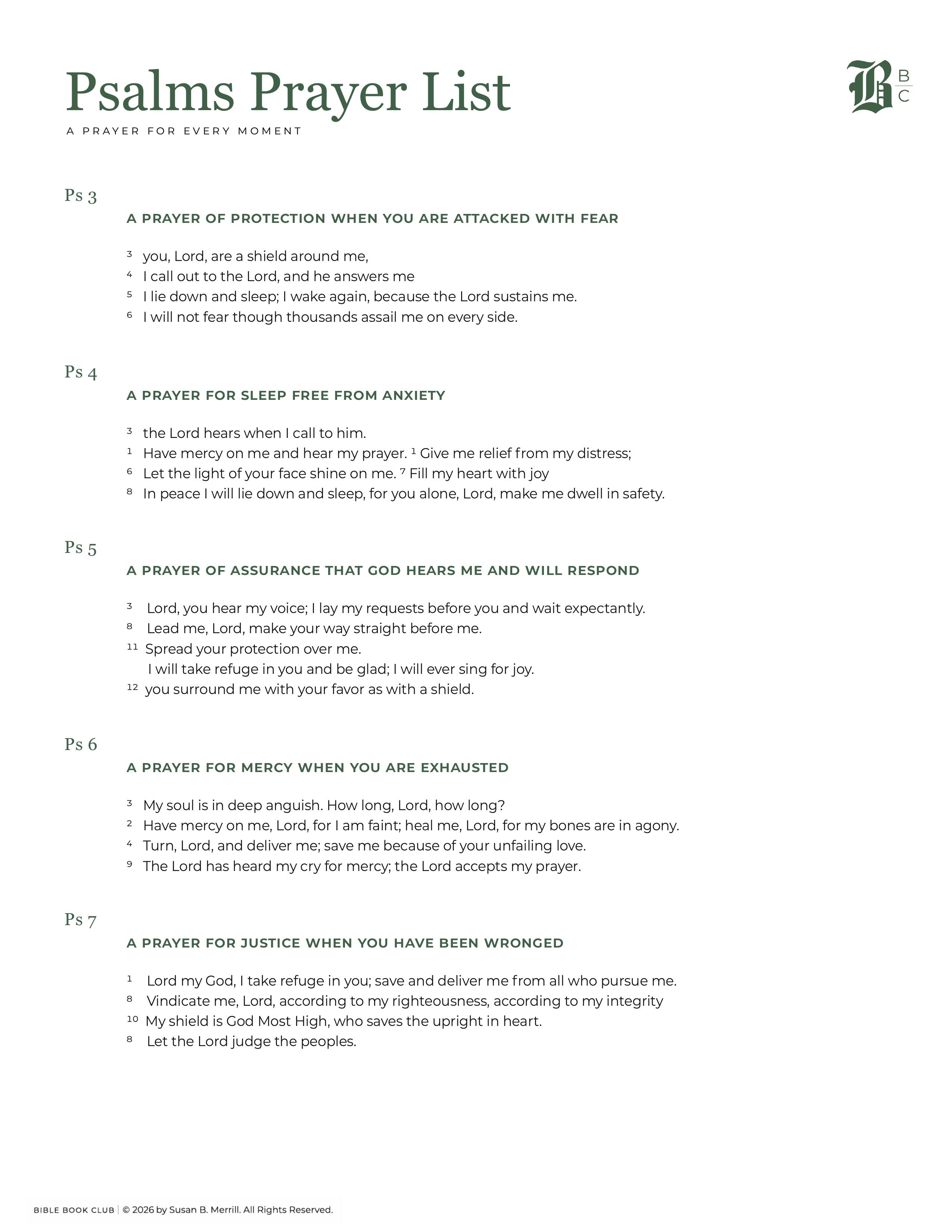
If you have ever felt your prayer time was a little dry or unrewarding, or felt a loss for words, know this: the words of the Psalms will pull you closer to God in a way no other book in the Bible can. At the end of Psalms, you will have a Psalms Playlist of songs and a Psalms Prayer List. One has a link to songs on iTunes or Spotify, and the other has a link to a list of prayers taken from the Psalms. We will add to both lists as we walk through the Psalms.
What is a psalm of lament?
A psalm of lament is a cry to God followed by a request. The laments are examples of the emotional roller coaster we experience in life’s struggles. You will want to read laments when you need hope because you are experiencing despair, sorrow, fear, frustration, loneliness, etc. Psalms 3-7 are all lament psalms.
Psalm 3: A Cry for Protection When You Are Afraid
The backstory to when and why Psalm 3 was written by David can be found in 2 Samuel 13, 2 Samuel 14-15, and 2 Samuel 16-18. David had many wives and children, which led to multiple households and sibling rivalry.
- Amnon was David’s firstborn child, and his mother was Ahinoam
- Absalom is David’s third son, and his mother was Maacah
- Tamar was also born to Maacah, so Absalom and Tamar are close because they have the same mother and father
Amnon, the heir apparent, raped his half-sister Tamar. David didn’t address it, and Absalom grew to hate Amnon. Several years later, Absalom murdered Amnon to avenge his sister. Then Absalom fled.
Why did King David have to flee Jerusalem in 2 Samuel Chapters 13-18?
When Absalom is allowed to come back, he stages a rebellion against David. As a result, David is forced to flee from his own son and abandon Jerusalem and all he has worked for to build Israel. The betrayal is deeply personal and painful.
David’s failure to address Tamar’s rape led to rebellion. I am sure that thought weighed heavily on David’s heart. Psalm 3 is his song of lament.
Psalms 3
A psalm of David. When he fled from his son Absalom.
1 Lord, how many are my foes!
How many rise up against me!
2 Many are saying of me,
“God will not deliver him.”3 But you, Lord, are a shield around me,
my glory, the One who lifts my head high.
4 I call out to the Lord,
and he answers me from his holy mountain.5 I lie down and sleep;
I wake again, because the Lord sustains me.
6 I will not fear though tens of thousands
assail me on every side.7 Arise, Lord!
Deliver me, my God!
Strike all my enemies on the jaw;
break the teeth of the wicked.8 From the Lord comes deliverance.
May your blessing be on your people.
What is Psalm 3 about?
Psalm 3 is about fear and betrayal. David is on the run as a fugitive for the first time in a long time, since Saul died. Running from the king you know God has anointed you to replace is one thing. But running from your son, whom you know is not anointed to be the next king, is painful in many ways.
Either Amnon is going to kill his father, and then Solomon and Absalom will have to fight for the throne. Or God is going to kill Absalom. Either way, David loses a son. Spoiler alert — it was the latter; God took care of Absalom by way of a donkey; see 2 Samuel 18.
Years may have passed since David was last on the run, but David’s way of connecting with God has not. He turns to God and cries out to Yahweh.
What is the difference between the names Yahweh and Elohim in the psalms?
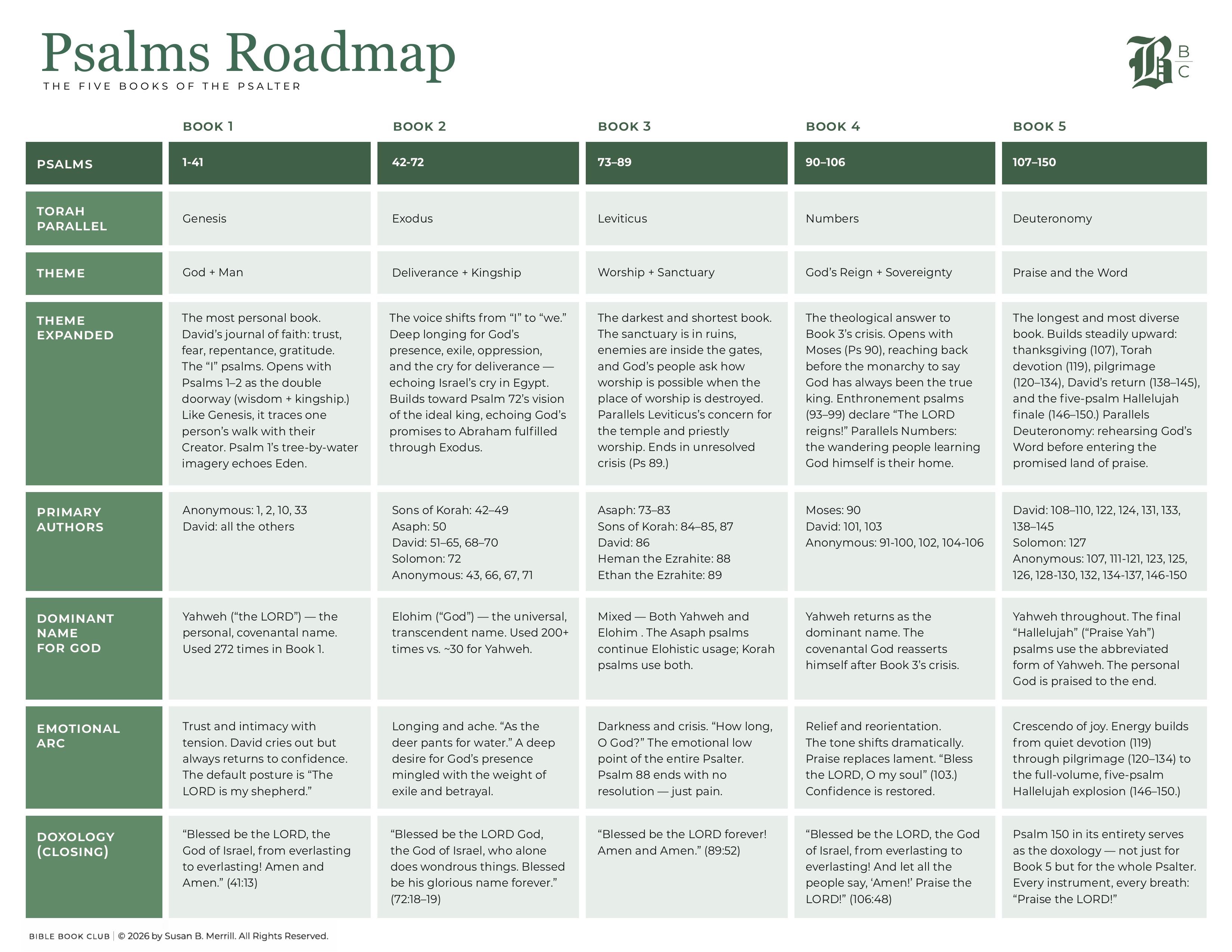
Yahweh is the personal name for God, and Elohim is a general name. Book 1 is filled with David’s personal struggles and joys. Therefore, the name of God that is central to this book is Yahweh, versus the more general Elohim. However, Elohim will be the focus in Book 2.
Psalm 3 was David’s cry for protection when he felt afraid for his life. This is the heart of the man we came to love in 2 Samuel. His unwavering faith, his confidence in God, his knowledge of God’s promises, and his humility made him a mighty warrior for the Lord. And a worthy foreshadowing of the king to come, his greater-grandson, Christ. He was a fighter and an exhortation to us to fight the opposition around us. No matter what it is, no matter what form it comes in — personal, medical, spiritual, financial — we must fight and trust in God’s outcome. And there is much said in the Bible about how to fight. David said in verse 3, “But you, Lord, are a shield around me.”
Ephesians 6:16 16 take up the shield of faith, with which you can extinguish all the flaming arrows of the evil one.
What does ‘the Lord is a shield around me’ mean?
Faith can be a shield to protect us from the emotion of fear. Fear leads to panic, and when we are paralyzed by panic, we cannot fight. To fight effectively, we must make a conscious effort to pick up the shield of faith and trust that God has the power to extinguish the flaming arrows of evil.
If you feel attacked, praying this psalm will provide the peace you need to quiet the panic.
A Prayer of Protection When You Are Attacked with Fear
4 I call out to the Lord, and he answers me
5 I lie down and sleep; I wake again, because the Lord sustains me.
6 I will not fear though thousands assail me on every side.
Psalm 4: A Cry for Peace so You Can Sleep
Anxiety is the antithesis of peace and one of the most talked-about emotions of this generation. It steals your joy and your sleep.
Psalm 4
For the director of music. With stringed instruments. A psalm of David.
1 Answer me when I call to you,
my righteous God.
Give me relief from my distress;
have mercy on me and hear my prayer.2 How long will you people turn my glory into shame?
How long will you love delusions and seek false gods?
3 Know that the Lord has set apart his faithful servant for himself;
the Lord hears when I call to him.4 Tremble and do not sin;
when you are on your beds,
search your hearts and be silent.
5 Offer the sacrifices of the righteous
and trust in the Lord.6 Many, Lord, are asking, “Who will bring us prosperity?”
Let the light of your face shine on us.
7 Fill my heart with joy
when their grain and new wine abound.8 In peace I will lie down and sleep,
for you alone, Lord,
make me dwell in safety.
What is Psalm 4 about?
Psalm 4 is about anxiety. Anxiety is the antithesis of peace and one of the most talked-about emotions of this generation. It steals your joy and your sleep. David is in danger, and in his distress he cries out to God for mercy. Psalms 3 and 4 are thought to go together as morning and evening prayers.
How do Psalms 3 and 4 function together as morning and evening prayers?
Psalm 3 states: I wake again, because the Lord sustains me. Psalm 4 states: In peace I will lie down and sleep. As David was fleeing for his life, each morning he woke, thankful God had protected him from attack during the night. And each night he went to sleep in peace, trusting God to protect him until the morning.
Do you have trouble falling asleep? Is your mind ever anxious? Like David, the Hebrew priests used these two psalms to manage their daily anxieties in a daily prayer ritual as a circle of protection that provided peace. Combining the prayers from Psalm 3 with Psalm 4 can provide the circle of peace you need to manage your anxiety.
A Prayer for Sleep, Free from Anxiety
6Let the light of your face shine on me.
7 Fill my heart with joyfor you alone, Lord, make me dwell in safety.
Note: I took David’s words and rearranged them into a short prayer. See our complete Psalms Prayer List here.
Psalm 5: A Cry to Be Heard When Life Is Hard
Have you ever felt like it didn’t matter how or what you said; no one really heard you? If you are ever in a difficult place and life is hard, Psalm 5 will provide the words to vent your feelings to God.
Psalm 5
For the director of music. For pipes. A psalm of David.
1 Listen to my words, Lord,
consider my lament.
2 Hear my cry for help,
my King and my God,
for to you I pray.3 In the morning, Lord, you hear my voice;
in the morning I lay my requests before you
and wait expectantly.
4 For you are not a God who is pleased with wickedness;
with you, evil people are not welcome.
5 The arrogant cannot stand
in your presence.
You hate all who do wrong;
6 you destroy those who tell lies.
The bloodthirsty and deceitful
you, Lord, detest.
7 But I, by your great love,
can come into your house;
in reverence I bow down
toward your holy temple.8 Lead me, Lord, in your righteousness
because of my enemies—
make your way straight before me.
9 Not a word from their mouth can be trusted;
their heart is filled with malice.
Their throat is an open grave;
with their tongues they tell lies.
10 Declare them guilty, O God!
Let their intrigues be their downfall.
Banish them for their many sins,
for they have rebelled against you.
11 But let all who take refuge in you be glad;
let them ever sing for joy.
Spread your protection over them,
that those who love your name may rejoice in you.12 Surely, Lord, you bless the righteous;
you surround them with your favor as with a shield.
What is Psalm 5 about?
Psalm 5 is about God’s responsiveness. David is crying out for God to hear him and do something. He says, Listen to my words, hear my cry for help, hear my voice, I lay my requests before you. Lead me, make your way straight before me.
He needs God to hear him because he has no one else he can trust. His back is against the wall, and he needs God to hear him and provide a way out. What promise does David claim to turn his cry for help into a cry of confidence? God is a refuge. He spreads his protection over us and surrounds us with favor as a shield! We too can talk to God, and the Holy Spirit will fill us with the same confidence.
A Prayer of Assurance that God Hears Me and Will Respond
3 Lord, you hear my voice; I lay my requests before you and wait expectantly.
8 Lead me, Lord, make your way straight before me.
Lord I will take refuge in you be glad; I will ever sing for joy.
you surround me with your favor as with a shield.
Psalm 6: A Cry for Mercy When You Are Exhausted
Psalm 6
For the director of music. With stringed instruments. According to sheminith. A psalm of David.
1 Lord, do not rebuke me in your anger
or discipline me in your wrath.
2 Have mercy on me, Lord, for I am faint;
heal me, Lord, for my bones are in agony.
3 My soul is in deep anguish.
How long, Lord, how long?4 Turn, Lord, and deliver me;
save me because of your unfailing love.
5 Among the dead no one proclaims your name.
Who praises you from the grave?All night long I flood my bed with weeping
and drench my couch with tears.
7 My eyes grow weak with sorrow;
they fail because of all my foes.8 Away from me, all you who do evil,
for the Lord has heard my weeping.
9 The Lord has heard my cry for mercy;
the Lord accepts my prayer.
10 All my enemies will be overwhelmed with shame and anguish;
they will turn back and suddenly be put to shame.
What do the Hebrew musical terms sheminith and gittith mean in the psalms?
The word sheminith literally translates to “the eighth,” so it is thought to refer to either a melody, an octave, or the number of strings in an instrument. It appears in the superscriptions in Psalm 6 and Psalm 12. Gittith is another musical term we know nothing about.
What is Psalm 6 about?
Psalm 6 is about exhaustion and suffering. This lament may also have been written when David was older and fleeing from Absalom. The theory is supported by the opening statement, which describes David feeling as if he is being rebuked or disciplined by God.
In other words, he knows he deserves this for his failure as a father, but he is crying out for mercy. Three times he uses the word bahal, which means faint, worn out, troubled, anguished. He knows the end of his life is near, but begs that God would deliver him so that he can proclaim God’s name. And in this case, God did deliver him. David reunited the kingdom and went on to make all the preparations for the temple, down to the music mentioned so often in these psalms.
Exhaustion is a painfully real experience. And we all have or will suffer from it, whether from a new baby, caring for sick family members, personal illness, overworking, or a disaster.
All of these can create a never-ending state of exhaustion. If you are in the middle of an illness or a prolonged trial, this psalm of David’s is God’s example to us. He is giving us permission to cry out and validation that He sees our pain.
A Prayer for Mercy When You Are Exhausted
3 My soul is in deep anguish. How long, Lord, how long?
2 Have mercy on me, Lord, for I am faint; heal me, Lord, for my bones are in agony.
4 Turn, Lord, and deliver me; save me because of your unfailing love.
9 The Lord has heard my cry for mercy; the Lord accepts my prayer.
Psalm 7: A Cry for Justice When You Have Been Wronged
Psalm 7
A shiggaion of David, which he sang to the Lord concerning Cush, a Benjamite.
1 Lord my God, I take refuge in you;
save and deliver me from all who pursue me,
2 or they will tear me apart like a lion
and rip me to pieces with no one to rescue me.3 Lord my God, if I have done this
and there is guilt on my hands—
4 if I have repaid my ally with evil
or without cause have robbed my foe—
5 then let my enemy pursue and overtake me;
let him trample my life to the ground
and make me sleep in the dust.6 Arise, Lord, in your anger;
rise up against the rage of my enemies.
Awake, my God; decree justice.
7 Let the assembled peoples gather around you,
while you sit enthroned over them on high.
8 Let the Lord judge the peoples.
Vindicate me, Lord, according to my righteousness,
according to my integrity, O Most High.
9 Bring to an end the violence of the wicked
and make the righteous secure—
you, the righteous God
who probes minds and hearts.10 My shield is God Most High,
who saves the upright in heart.
11 God is a righteous judge,
a God who displays his wrath every day.
12 If he does not relent,
he will sharpen his sword;
he will bend and string his bow.
13 He has prepared his deadly weapons;
he makes ready his flaming arrows.14 Whoever is pregnant with evil
conceives trouble and gives birth to disillusionment.
15 Whoever digs a hole and scoops it out
falls into the pit they have made.
16 The trouble they cause recoils on them;
their violence comes down on their own heads.17 I will give thanks to the Lord because of his righteousness;
I will sing the praises of the name of the Lord Most High.
What does shiggaion mean?
The word shiggaion is thought to be an unknown musical term that most likely indicates a passionate, wandering form, almost breathless, which fits the fugitive period of David’s life. Unlike the other musical terms, shiggaion is only used in Psalm 7.
Add to that the information that this psalm concerns Cush, a Benjamite. Saul was from the tribe of Benjamin, so most scholars connect this psalm to the years when Saul was hunting David.
What is Psalm 7 about?
Psalm 7 is about being wrongly accused. David’s cry in this lament is for refuge. His complaint is that if he had done what his enemies say, then he would deserve to be pursued, but he hasn’t, which makes sense if you think about his relationship to Saul.
David was loyal to Saul to the end and could have defended himself against Saul by killing Saul. But he refused to kill God’s anointed, despite the fact that Saul was wrongly trying to kill him. His request is that God would vindicate him; he wants justice. Then again, for the third time in this episode, he puts his trust in God to be his shield. God will defend him. God is the unstoppable warrior at his side. David ends with praise and thanks for God’s righteousness.
At some point in time, all of us experience being wrongly accused. Often, it is an accusation that we did or said something that we didn’t. The accusation may come from a family member, an employer, an employee, a friend, or an enemy. When it does, this psalm is your prayer.
A Prayer for Justice When You Have Been Wronged
8 Let the Lord judge the peoples. Vindicate me,
Lord, according to my righteousness, according to my integrity
10 My shield is God Most High, who saves the upright in heart.
1 Lord my God, I take refuge in you; save and deliver me from all who pursue me,
The next psalm is a psalm of praise. Psalms of praise follow a different pattern than laments.
Psalm 8: Praise for the World and Our Place in It
Psalm 8
For the director of music. According to gittith. A psalm of David.
1 Lord, our Lord,
how majestic is your name in all the earth!You have set your glory
in the heavens.
2 Through the praise of children and infants
you have established a stronghold against your enemies,
to silence the foe and the avenger.
3 When I consider your heavens,
the work of your fingers,
the moon and the stars,
which you have set in place,
4 what is mankind that you are mindful of them,
human beings that you care for them?5 You have made them a little lower than the angels
and crowned them with glory and honor.
6 You made them rulers over the works of your hands;
you put everything under their feet:
7 all flocks and herds,
and the animals of the wild,
8 the birds in the sky,
and the fish in the sea,
all that swim the paths of the seas.9 Lord, our Lord,
how majestic is your name in all the earth!
What structural pattern do biblical psalms of praise follow?
Biblical psalms of praise begin with an invitation to praise, followed by a description of God’s character, evidence of what God has done, and a response to this knowledge. Praise is: call plus character of God plus evidence plus response. If you have never spent time praising God as a part of prayer, it is simple using our ACTS prayer guide.
What is Psalm 8 about?
Psalm 8 is about the wonder of creation and man. Verse 1 is the call to praise, and the mention of the majesty of the earth is a hint that this psalm will focus on creation. Verse 2 describes the character of God, His glory, His ability to use the weak, infants, and children to overcome the strong.
Jesus quotes verse 2 in Matthew 21 after cleansing the temple, a very public action that infuriated the Pharisees, who increased their attacks on him because of it.
Matthew 21:15-16 15 But when the chief priests and the teachers of the law saw the wonderful things he did and the children shouting in the temple courts, “Hosanna to the Son of David,” they were indignant.
16 “Do you hear what these children are saying?” they asked him.
“Yes,” replied Jesus, “have you never read,
“‘From the lips of children and infants
you, Lord, have called forth your praise’?”
Why does Jesus quote Psalm 8 in Matthew 21?
In these verses, Jesus is telling the Pharisees two things.
- As was written in Psalm 8: The Lord uses infants and children to praise the truth that he is the prophesied “son of David.” What Jesus leaves off is the rest of the phrase in Psalm 8: that God uses the praise of infants and children to silence the foe, the enemies.
But the Pharisees would have known the end of the psalm. Jesus was throwing a not so subtle insult. He was accusing the Pharisees of being the enemy of the promised Son of David, the Messiah.
- There is a subtle message that the Pharisees are on the wrong side and will be overturned by the likes of infants and children. For God used:
- The cry of baby Moses from a basket in the reeds to bring down Egypt
- The birth of Samuel to a barren Hannah, to Israel and put David on the throne
- And the cry of a baby in a manger, to overcome evil and bring salvation to the world
The next verses are evidence of God’s work, deserving our praise. This is the heart of the psalm, answering the why behind praising God. The evidence presented is the vastness of His creation. The work of his fingers includes the moon, stars, flocks, birds, fish, and man: a little lower than the angels but still crowned with glory.
David is not lamenting here; he is standing in awe of his own position on earth. He is pondering the glory of life laid out above and below him. It was a joyful time in his life. Most likely somewhere between 2 Samuel 5 and 10, before Bathsheba — perhaps when he was a young shepherd gazing up at a sky filled with stars.
Perhaps as a young king, after he unified the northern and southern kingdoms, 2 Samuel 5. Or maybe right after God told him of the Davidic Covenant in 2 Samuel 7 — standing on a hill, looking out at the promised land, awestruck at what God had done for Israel and for choosing him to be a part of it. In response to the glory before him, he says, “What is mankind that you are mindful of them?”
What does the phrase “what is mankind that you are mindful of them” mean?
We are significant because of what God was willing to do to save us. He gave His Son so that we could be citizens in that new paradise. The Apostle Paul quotes Psalm 8 to explain the answer to the question:
Hebrews 2:6-9 6 But there is a place where someone has testified:
“What is mankind that you are mindful of them,
a son of man that you care for him?
7 You made them a little lower than the angels;
you crowned them with glory and honor
8 and put everything under their feet.”In putting everything under them, God left nothing that is not subject to them. Yet at present we do not see everything subject to them. 9 But we do see Jesus, who was made lower than the angels for a little while, now crowned with glory and honor because he suffered death, so that by the grace of God he might taste death for everyone.
Paul tells us that we are all currently living in the ‘gap.’ The space between the perfection we were created for in the Garden of Eden and the promised coming of the new heaven and new earth. But the reality is that living in the gap is not easy; it is often frustrating, confusing, and filled with brokenness.
Paul is offering us encouragement and a radical way to view this ‘gap.’ He wants us to see it as a place of mission. And he points to Jesus as the example. Jesus stepped into that same gap — becoming ‘lower than the angels’ — to experience our humanity, our struggle, and even our death.
And this is the answer to that question, ‘What is man that you are mindful of him?’
But David didn’t know how the story would end when he wrote Psalm 8. He didn’t know how the promise that his line would be on the throne forever would play out. This psalm, used in Hebrews, is a circle completed. Jesus is on the throne forever. David sang of something he could only wonder at. We get so much more to praise.
Therefore, it is fitting that Psalm 8 ends in verse 9 exactly where it began in verse 1:
Psalm 8:9 9 Lord, our Lord, how majestic is your name in all the earth!
This psalm is a praise for when your heart ponders the wonder of the world and your place in it. At the top of every mountain you have ever been on. At the birth of a child, or the parting of a believer into eternity. Look up and praise God for the blessing of your place in this world. For who is mankind that God should give us such a world? God’s creation is proof of God’s care for us.
A Praise for the World and Your Place in It
1 Lord, our Lord, how majestic is your name in all the earth!
3 When I consider your heavens, the work of your fingers,
the moon and the stars, which you have set in place,
4 what is mankind that you are mindful of them,
Join us for our Bible study on Psalms 9-16 here.
New Psalms Playlist Song
- “Psalm 8 (Hallé)” by Phil Wickham.
This is a new version, one of my favorites, and it has a music video he created for it in 2025. Listen to the entire Psalms Playlist on Apple Music or Spotify.
Group Discussion Questions for Psalms 3-8
- David used very raw, unfiltered language in his laments: exhaustion, anguish, weeping all night, begging God to vindicate him. Does that kind of honesty in prayer come naturally to you, or do you soften what you bring to God? What would it look like to pray more like David?
- The Hebrew priests used Psalms 3 and 4 together daily as a circle of protection to manage their anxieties. Is there a certain psalm or prayer you return to in tough seasons?
- Paul describes our current life as living in the “gap” between the perfection we are created for and the new heaven and new earth still to come. Where in your life right now do you feel that gap most acutely, and how does knowing that Jesus stepped into it change how you hold that tension?