← Back to All Resources About This Resource
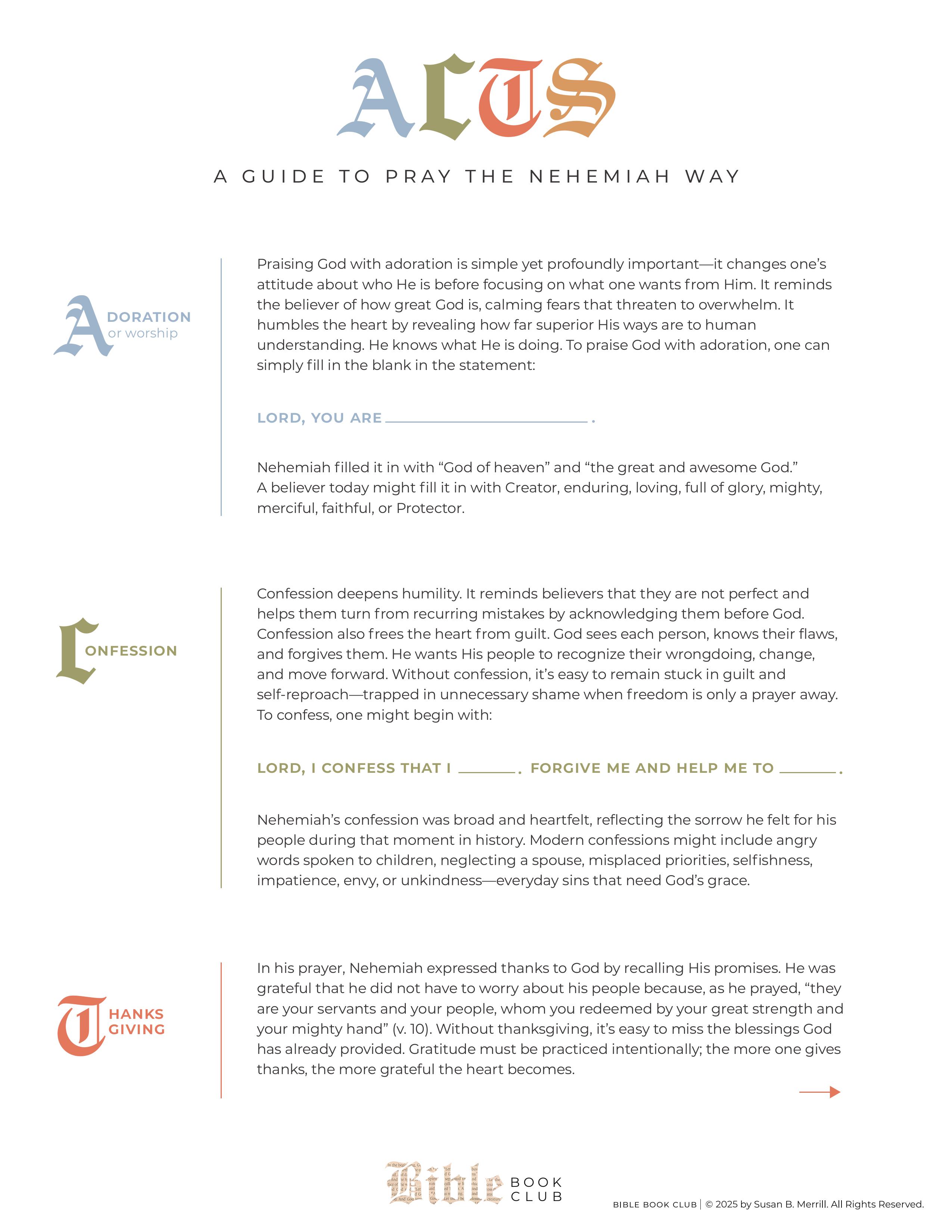
The ACTS prayer guide offers a powerful framework for deepening your prayer life, and Nehemiah’s prayer is a perfect biblical example. ACTS stands for Adoration, Confession, Thanksgiving, and Supplication, four essential elements that create balanced, meaningful conversations with God.
Adoration: Beginning with Who God Is
Nehemiah starts his prayer by acknowledging God as “the great and awesome God” and “God of heaven.” This ACTS prayer guide principle reminds us to begin by focusing on God’s character rather than our needs.
When you fill in the blank “LORD, YOU ARE _______,” you might choose attributes like faithful, mighty, merciful, or loving. This adoration changes your perspective and calms fears before you bring requests.
Confession: Acknowledging Our Need
The confession component of this ACTS prayer guide deepens humility. Nehemiah confessed the sins of his people, recognizing their wrongdoing before God. Modern believers can confess everyday struggles: angry words, misplaced priorities, selfishness, or impatience.
Using the prompt “LORD, I CONFESS THAT I _______, FORGIVE ME AND HELP ME TO _______” creates space for honest acknowledgment and genuine repentance.
Thanksgiving: Remembering God’s Faithfulness
Nehemiah expressed gratitude by recalling God’s promises and provision. He thanked God for redeeming His people “by your great strength and your mighty hand.”
The ACTS prayer guide emphasizes that thanksgiving must be intentional. The more you give thanks, the more grateful your heart becomes. Without this practice, it’s easy to miss the blessings God has already provided.
Supplication: Bringing Your Requests
After adoration, confession, and thanksgiving, the ACTS prayer guide leads naturally to supplication, presenting your needs to God. Nehemiah’s approach shows when prayer begins with worship and honest confession requests come from a heart properly aligned with God’s character and purposes.
This ACTS prayer guide transforms prayer from a shopping list into meaningful communion with your Creator.
Nehemiah’s confession was broad and heartfelt, reflecting the sorrow he felt for his people during that moment in history. Modern confessions might include angry words spoken to children, neglecting a spouse, misplaced priorities, selfishness, impatience, envy, or unkindness—everyday sins that need God’s grace. , Confession deepens humility. It reminds believers that they are not perfect and helps them turn from recurring mistakes by acknowledging them before God. Confession also frees the heart from guilt. God sees each person, knows their flaws, and forgives them. He wants His people to recognize their wrongdoing, change, and move forward. Without confession, it’s easy to remain stuck in guilt and self-reproach—trapped in unnecessary shame when freedom is only a prayer away. To confess, one might begin with: Praising God with adoration is simple yet profoundly important—it changes one’s attitude about who He is before focusing on what one wants from Him. It reminds the believer of how great God is, calming fears that threaten to overwhelm. It humbles the heart by revealing how far superior His ways are to human understanding. He knows what He is doing. To praise God with adoration, one can simply fill in the blank in the statement: , Nehemiah filled it in with “God of heaven” and “the great and awesome God.” A believer today might fill it in with Creator, enduring, loving, full of glory, mighty, merciful, faithful, or Protector. In his prayer, Nehemiah expressed thanks to God by recalling His promises. He was grateful that he did not have to worry about his people because, as he prayed, “they are your servants and your people, whom you redeemed by your great strength and your mighty hand” (v. 10). Without thanksgiving, it’s easy to miss the blessings God has already provided. Gratitude must be practiced intentionally; the more one gives thanks, the more grateful the heart becomes. AcTS 5 c T Aor worship To express thanks, begin with: By the time one reaches supplication—after adoration, confession, and thanksgiving—a transformation has already occurred. The heart is often calmer, humbler, and more aligned with God’s will. To supplicate means “to pray humbly; to make an earnest request or petition.” Nehemiah said it like this: “Give your servant success today by granting him favor in the presence of this man.” His single request was for favor with the king—trusting that God would handle the rest. It really can be that simple. One can pray: , , Examples of thanksgiving might include gratitude for medical technology and skilled doctors, the health of children, the faithfulness of a spouse, the home God has provided, opportunities for ministry, meaningful friendships, and the beauty of creation. Supplication may also become more detailed as one reflects on life’s complexities—and that is perfectly fine. God cares about every concern and detail of His people’s lives. AcTS (continued) 5 T Sa fancy name for a request