1 Chronicles 16-17 Introduction
When we last left David, he was dancing and celebrating before the Ark as it entered Jerusalem, the capital of Israel, the City of David. With the Ark, the symbol of God’s presence, restored to the center of life in Israel, the people can return to God’s original plan for worship given to Moses.
Scene 1: Israel Worships with Sacrifices
1 Chronicles 16:1-3
1 They brought the ark of God and set it inside the tent that David had pitched for it, and they presented burnt offerings and fellowship offerings before God. 2 After David had finished sacrificing the burnt offerings and fellowship offerings, he blessed the people in the name of the Lord. 3 Then he gave a loaf of bread, a cake of dates and a cake of raisins to each Israelite man and woman.
David created a temporary tent to house the Ark until a Temple could be built. Then he led Israel in worship with a ceremony of covenant renewal.
What sacrifices did David offer when the Ark arrived in Jerusalem?
Two offerings are mentioned: burnt offering and fellowship offering. A burnt offering is a sacrifice made for the atonement of sin (Leviticus 1:1), and a fellowship offering, also called a peace offering, is made as a sign of fellowship between God and the people (Leviticus 3).
In Leviticus, Moses gave instructions for five different offerings. See our chart of those offerings here. It is interesting that David sacrifices and gives the bread and cake to the people because this is usually an activity carried out by priests.
Scene 2: Israel Worships with Songs of Praise
1 Chronicles 16:4-36
4 He appointed some of the Levites to minister before the ark of the Lord, to extol, thank, and praise the Lord, the God of Israel: 5 Asaph was the chief, and next to him in rank were Zechariah, then Jaaziel, Shemiramoth, Jehiel, Mattithiah, Eliab, Benaiah, Obed-Edom and Jeiel. They were to play the lyres and harps, Asaph was to sound the cymbals, 6 and Benaiah and Jahaziel the priests were to blow the trumpets regularly before the ark of the covenant of God.
7 That day David first appointed Asaph and his associates to give praise to the Lord in this manner: 8 Give praise to the Lord, proclaim his name; make known among the nations what he has done. 9 Sing to him, sing praise to him; tell of all his wonderful acts. 10 Glory in his holy name; let the hearts of those who seek the Lord rejoice. 11 Look to the Lord and his strength; seek his face always.
12 Remember the wonders he has done, his miracles, and the judgments he pronounced, 13 you his servants, the descendants of Israel, his chosen ones, the children of Jacob. 14 He is the Lord our God; his judgments are in all the earth.
15 He remembers his covenant forever, the promise he made, for a thousand generations, 16 the covenant he made with Abraham, the oath he swore to Isaac. 17 He confirmed it to Jacob as a decree, to Israel as an everlasting covenant: 18 “To you I will give the land of Canaan as the portion you will inherit.”
19 When they were but few in number, few indeed, and strangers in it, 20 they wandered from nation to nation, from one kingdom to another. 21 He allowed no one to oppress them; for their sake he rebuked kings: 22 “Do not touch my anointed ones; do my prophets no harm.”
23 Sing to the Lord, all the earth; proclaim his salvation day after day. 24 Declare his glory among the nations, his marvelous deeds among all peoples.
25 For great is the Lord and most worthy of praise; he is to be feared above all gods. 26 For all the gods of the nations are idols, but the Lord made the heavens. 27 Splendor and majesty are before him; strength and joy are in his dwelling place.
28 Ascribe to the Lord, all you families of nations, ascribe to the Lord glory and strength. 29 Ascribe to the Lord the glory due his name; bring an offering and come before him. Worship the Lord in the splendor of his holiness. 30 Tremble before him, all the earth! The world is firmly established; it cannot be moved.
31 Let the heavens rejoice, let the earth be glad; let them say among the nations, “The Lord reigns!” 32 Let the sea resound, and all that is in it; let the fields be jubilant, and everything in them! 33 Let the trees of the forest sing, let them sing for joy before the Lord, for he comes to judge the earth.
34 Give thanks to the Lord, for he is good; his love endures forever. 35 Cry out, “Save us, God our Savior; gather us and deliver us from the nations, that we may give thanks to your holy name, and glory in your praise.” 36 Praise be to the Lord, the God of Israel, from everlasting to everlasting.
Then all the people said “Amen” and “Praise the Lord.”
Who did David appoint as the chief musician for Israel's worship?
David appoints Asaph as chief over the Levites to minister before the Ark with thanks and praise. Asaph was musically gifted and wrote Psalm 50, Psalms 73-80 and Psalms 81-83. Then David gave specific instructions about what and how to praise.
Which specific psalms make up David's song of thanksgiving in 1 Chronicles 16?
The psalm of thanksgiving that David provided is a composite of three psalms: Psalm 105, Psalm 96, and Psalm 106.
Psalm 105
The first 14 verses are from Psalm 105. The song begins with praise, which does wonders for our hearts. When we praise God for who He is, we are reminded of his greatness. This puts our hearts in the right place to worship. He is on the throne. He is above. We are to look up at Him in awe.
Next, the song calls Israel (and us) to remember what God has done. The recalling of God's works is a faith boost. It reminds us of all He can do. Nothing is impossible for God. This builds our faith, our hope that He will accomplish all He has planned.
This first section from Psalm 105 ends with a reminder that God is a covenant maker and keeper. We can trust God to do what He says. He chose Israel to have a unique position among the nations, and He will protect and provide for them. Just as God has chosen us to be heirs in Christ, and He will protect and provide for us.
Psalm 96
The next 10 verses are from Psalm 96 and remind Israel (and us) that there is just one true God. He is sovereign over all the nations, and we are supposed to share that in joy for all the nations to hear.
Psalm 106
The last three verses are from Psalm 106. The song ends as it began with a call to give thanks and praise to God. Why? Because God is good, and His love endures forever. God is the savior, deliverer, and eternal king, and all glory and honor are His forever and ever, amen!
This song, to be sung regularly in Jerusalem before the Ark, was a constant reminder to the people that God is good. It would be especially uplifting for the returned remnant. The Ark is no more, but the words still hold true. The returned people are a testament to it. They are there in the City of David rebuilding. The words should have encouraged them.
Are there any musicians who returned? Do they sing this song again? More to come on that in our Ezra Bible study, when the foundation of the Temple is poured.
Ezra 3:10-11 10 When the builders laid the foundation of the temple of the Lord, the priests in their vestments and with trumpets, and the Levites (the sons of Asaph) with cymbals, took their places to praise the Lord, as prescribed by David king of Israel. 11 With praise and thanksgiving they sang to the Lord: “He is good; his love toward Israel endures forever.”
And all the people gave a great shout of praise to the Lord, because the foundation of the house of the Lord was laid.
Yes, they sing just as David, king of Israel, had prescribed, because God was indeed good. And still is. There will be more singing in the Book of Nehemiah, when the wall is finished. It seems that whenever the Israelites accomplish something, they make a practice of praising and thanking God.
Note for Us to Ponder
Do our hearts rejoice at what God accomplishes through us or for us? Are we even aware of what God is doing in our own little world? Or are we too distracted scrolling and watching to give it much thought? Do we share the news of how good God is with others? Or are we too busy to pick up the phone and sing about it to our friends or stop to share it with our neighbors? Or even tell the stories of God’s goodness to our children as we tuck them in at night.
God is good. That much is clear. What is not clear is the news of his goodness. The signal seems weak. The enemy is drowning it out with noise, and people cannot hear it. Perhaps the application for us is: How can we amplify the good news of all God has done for us? In our circle of influence, who can we tell? How can we share what God has done? Is doing? In our own lives?
Scene 3: David Appoints Leaders for Worship
1 Chronicles 16:37-43
37 David left Asaph and his associates before the ark of the covenant of the Lord to minister there regularly, according to each day’s requirements. 38 He also left Obed-Edom and his sixty-eight associates to minister with them. Obed-Edom son of Jeduthun, and also Hosah, were gatekeepers.
39 David left Zadok the priest and his fellow priests before the tabernacle of the Lord at the high place in Gibeon 40 to present burnt offerings to the Lord on the altar of burnt offering regularly, morning and evening, in accordance with everything written in the Law of the Lord, which he had given Israel. 41 With them were Heman and Jeduthun and the rest of those chosen and designated by name to give thanks to the Lord, “for his love endures forever.” 42 Heman and Jeduthun were responsible for the sounding of the trumpets and cymbals and for the playing of the other instruments for sacred song. The sons of Jeduthun were stationed at the gate.
43 Then all the people left, each for their own home, and David returned home to bless his family.
How did David organize worship between Jerusalem and Gibeon?
With the Ark moved, Israel had two places of worship. In Jerusalem, the people worshiped before the Ark with music and praise. In Gibeon, the people offered regular sacrifices at the Tabernacle. So David appointed leaders at each location.
In Jerusalem, Asaph and Obed-Edom ministered before the Ark, leading the music and guarding the gates. At Gibeon, Zadok and the priests continued to minister before the Tabernacle, sacrificing and following the ritual instructions laid out by Moses.
Scene 4: David's Desire for God, God's Blessing for David
With Israel united, Jerusalem established as the capital, the palace completed, and the Ark in place, David, a man of action with a heart for God, became restless and wanted to know what he should do next. Then he had a great idea.
1 Chronicles 17:1-15
1 After David was settled in his palace, he said to Nathan the prophet, “Here I am, living in a house of cedar, while the ark of the covenant of the Lord is under a tent.”
2 Nathan replied to David, “Whatever you have in mind, do it, for God is with you.”
3 But that night the word of God came to Nathan, saying:
4 “Go and tell my servant David, ‘This is what the Lord says: You are not the one to build me a house to dwell in. 5 I have not dwelt in a house from the day I brought Israel up out of Egypt to this day. I have moved from one tent site to another, from one dwelling place to another. 6 Wherever I have moved with all the Israelites, did I ever say to any of their leaders whom I commanded to shepherd my people, “Why have you not built me a house of cedar?”’
7 “Now then, tell my servant David, ‘This is what the Lord Almighty says: I took you from the pasture, from tending the flock, and appointed you ruler over my people Israel. 8 I have been with you wherever you have gone, and I have cut off all your enemies from before you. Now I will make your name like the names of the greatest men on earth. 9 And I will provide a place for my people Israel and will plant them so that they can have a home of their own and no longer be disturbed. Wicked people will not oppress them anymore, as they did at the beginning 10 and have done ever since the time I appointed leaders over my people Israel. I will also subdue all your enemies.
“‘I declare to you that the Lord will build a house for you: 11 When your days are over and you go to be with your ancestors, I will raise up your offspring to succeed you, one of your own sons, and I will establish his kingdom. 12 He is the one who will build a house for me, and I will establish his throne forever. 13 I will be his father, and he will be my son. I will never take my love away from him, as I took it away from your predecessor. 14 I will set him over my house and my kingdom forever; his throne will be established forever.’”
15 Nathan reported to David all the words of this entire revelation.
David’s Big Idea
David was finally settled, but being a man of action, he needed a project. And because he had a heart for the Lord, the first project that came to mind was a house for the Lord. He was very excited. Nothing would give him more pleasure than to build a Temple. A glorious place for the Ark and for the presence of the Lord to live. So he consulted the prophet Nathan. Nathan said, “Go for it.” But Nathan spoke too soon. God had reasons why David was not to have the honor of building His house, but they are not listed here.
Why did God prevent David from building the Temple?
David had too much blood on his hands to build a holy Temple, according to 1 Chronicles 22:
1 Chronicles 22:6-8 6 Then he called for his son Solomon and charged him to build a house for the Lord, the God of Israel. 7 David said to Solomon: “My son, I had it in my heart to build a house for the Name of the Lord my God. 8 But this word of the Lord came to me: ‘You have shed much blood and have fought many wars. You are not to build a house for my Name, because you have shed much blood on the earth in my sight.
God explained to David that He had no need for a house right now. God had been moving around with the Israelites for hundreds of years in a tent. And if God wanted a house, he would have commanded one to be built. God had other plans for David.
God stated what He had done and moved to what He would do. He gave David a future prophecy. A promise. This plan, this promise, is called the Davidic Covenant.
What were the specific promises contained in the Davidic Covenant?
Rather than David building a house for God, God would build a house for David, not literally but metaphorically. God would build David a legacy that would live on into eternity through Jesus Christ. God, in his direct way, was pointing out that our ways are not His ways.
David’s idea was good, but God’s was better. God would eventually get a house, but David would get a dynasty. This was God’s covenant with David, called the Davidic Covenant.
God's covenant with David is characterized by "I will" statements, and many should be familiar. They were promises made to Abraham and to Moses and the Israelites. God promised in this covenant, I will:
- Make your name great, which He also promised to Abraham.
- Provide a place for my people, also promised to Abraham and Moses.
- Give you rest, promised to Moses and the Israelites.
- Raise up your offspring to succeed you, also promised to Abraham.
- Establish your offspring's kingdom.
- Establish the throne of your son's kingdom forever.
- Be his father, and he will be my son, promised to Israel.
What are the four major covenants found in the Old Testament?
The four major covenants in the Old Testament are the Noahic Covenant, Abrahamic Covenant, Mosaic Covenant, and the Davidic Covenant, the fourth and final covenant of the Old Testament. The Davidic Covenant is the Old Testament tied to the final covenant: the New Covenant in the New Testament.
How does the New Testament link Jesus to the Davidic Covenant?
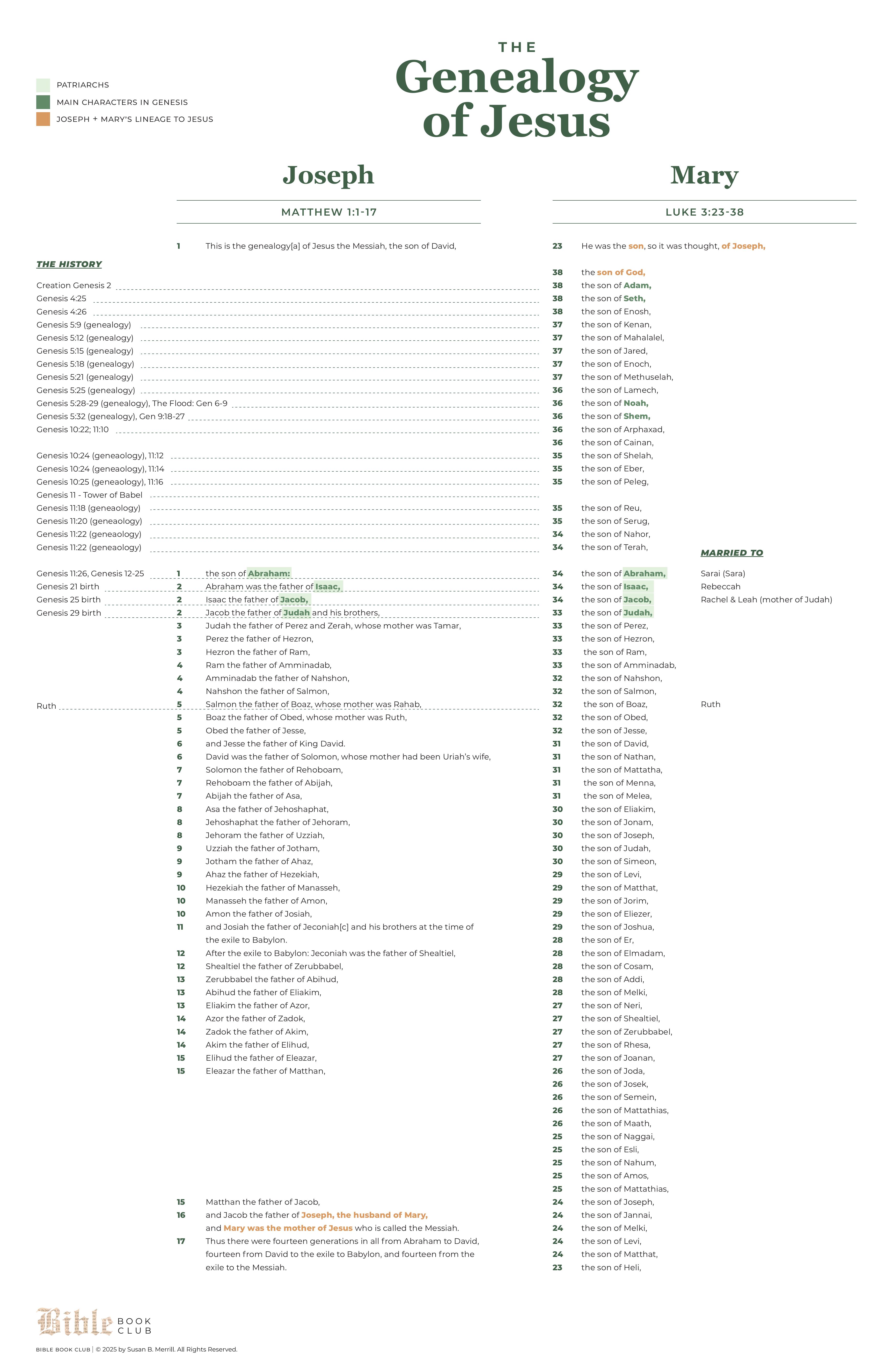
The link between the two is most clearly seen in Luke 1, where the angel meets Mary:
Luke 1:26-33 26 In the sixth month of Elizabeth’s pregnancy, God sent the angel Gabriel to Nazareth, a town in Galilee, 27 to a virgin pledged to be married to a man named Joseph, a descendant of David. The virgin’s name was Mary. 28 The angel went to her and said, “Greetings, you who are highly favored! The Lord is with you.”
29 Mary was greatly troubled at his words and wondered what kind of greeting this might be. 30 But the angel said to her, “Do not be afraid, Mary; you have found favor with God. 31 You will conceive and give birth to a son, and you are to call him Jesus. 32 He will be great and will be called the Son of the Most High. The Lord God will give him the throne of his father David, 33 and he will reign over Jacob’s descendants forever; his kingdom will never end.”
- Be great.
- Be the son of God.
- Sit on the throne of His father David.
- Reign forever.
And His kingdom will never end. Jesus is the fulfillment of all of the Old Testament covenants and their promises.
Scene 5: David Responded in Wonder with a Humble Heart
David accepted this covenant with wonder. His son, Solomon, would build the Lord's physical house, the Temple. And his future descendant son, unknown, would rule the world. Did David realize the eternal significance of this statement? Did he remember the prophecy in the beginning at the Fall? In Genesis 3:15, that one day there would come an offspring that would crush the serpent? Did David understand that that offspring would be his?
1 Chronicles 17:16-27
16 Then King David went in and sat before the Lord, and he said:
“Who am I, Lord God, and what is my family, that you have brought me this far? 17 And as if this were not enough in your sight, my God, you have spoken about the future of the house of your servant. You, Lord God, have looked on me as though I were the most exalted of men.
18 “What more can David say to you for honoring your servant? For you know your servant, 19 Lord. For the sake of your servant and according to your will, you have done this great thing and made known all these great promises.
20 “There is no one like you, Lord, and there is no God but you, as we have heard with our own ears. 21 And who is like your people Israel—the one nation on earth whose God went out to redeem a people for himself, and to make a name for yourself, and to perform great and awesome wonders by driving out nations from before your people, whom you redeemed from Egypt? 22 You made your people Israel your very own forever, and you, Lord, have become their God.
23 “And now, Lord, let the promise you have made concerning your servant and his house be established forever. Do as you promised, 24 so that it will be established and that your name will be great forever. Then people will say, ‘The Lord Almighty, the God over Israel, is Israel’s God!’ And the house of your servant David will be established before you.
25 “You, my God, have revealed to your servant that you will build a house for him. So your servant has found courage to pray to you. 26 You, Lord, are God! You have promised these good things to your servant. 27 Now you have been pleased to bless the house of your servant, that it may continue forever in your sight; for you, Lord, have blessed it, and it will be blessed forever.”
How did King David respond to God's promise of an eternal dynasty?
David sat before the Lord. David pondered, praised, and prayed to God.
David's humility.
David questioned, as if in unbelief, "Who am I Lord that you have brought me this far?" David was humbly expressing his surprise that such a great promise, this decree of an eternal kingdom, should be given to him and his future lineage. And because he seemed so overwhelmed by the promise, it is believed that he did understand the future fulfillment of the promise.
David's awareness and acceptance of God's sovereignty and favor.
David professed, "There is no one like you, Lord," and "you made your people your very own forever." David clearly believed that all that had been accomplished was the direct result of God, His will, His power, and His choice.
David prayed with complete confidence.
He said, "Now you have been pleased to bless the house of your servant, that it may continue forever in your sight; for you, Lord, have blessed it, and it will be blessed forever." David believed. And because he believed, he was confident that what God promised would become a reality.
Surely, this is the Chronicler's point in recounting this story to the returned exiles. Could they develop a faith like David's? Could they humbly wonder at how God had brought them out of exile? Could they be made aware of God's sovereignty and His plan for them and Israel? Could they be confident in God's promise to bring the world a Messiah through the line of David?
Surely, God wants the same for us, and that is why this story is in the Bible. It was not just for the Israelites to read thousands of years ago. The Chronicler is inspired to encourage the poor remnant before him. But God knew where those words would land on pages for us to read now so that we too will be inspired to have a faith like David's. Humbly wonder at all God has done for us. Accept God's sovereignty. His plan for us and the world. And lastly, have confidence in God's promise that we will be with Him and with Jesus. In the end, that is really a beginning.
Join us for our 1 Chronicles 18-20 commentary!
Group Discussion Questions for 1 Chronicles 16-17
- David set up regular songs and leaders to make sure the people never forgot God’s goodness. In our busy, noisy daily lives filled with scrolling, schedules, and distractions, what are some practical, gentle ways we can keep God’s goodness at the center of our homes? Who in your circle, whether a friend, a neighbor, or a child at bedtime, might need to hear a story of God's goodness from you this week?
- David had a genuine, heartfelt desire to build a temple for God, but God said no and redirected his plan. Have you ever felt eager to do something for God, only to feel Him close that door? How did you handle that pivot, and looking back, can you see how His plan was better?
- David responded to God's overwhelming promise with humility, wonder, and confident prayer. When you reflect on what God has promised you in Christ, which of those three responses comes most naturally to you, and which is hardest? How might your prayers change if you prayed with David's kind of confidence in God's promises?