Psalms 68
For the director of music. Of David. A psalm. A song.
1 May God arise, may his enemies be scattered; may his foes flee before him. 2 May you blow them away like smoke— as wax melts before the fire, may the wicked perish before God. 3 But may the righteous be glad and rejoice before God; may they be happy and joyful.
4 Sing to God, sing in praise of his name, extol him who rides on the clouds; rejoice before him—his name is the Lord. 5 A father to the fatherless, a defender of widows, is God in his holy dwelling. 6 God sets the lonely in families, he leads out the prisoners with singing; but the rebellious live in a sun-scorched land.
7 When you, God, went out before your people, when you marched through the wilderness, 8 the earth shook, the heavens poured down rain, before God, the One of Sinai, before God, the God of Israel. 9 You gave abundant showers, O God; you refreshed your weary inheritance. 10 Your people settled in it, and from your bounty, God, you provided for the poor.
11 The Lord announces the word, and the women who proclaim it are a mighty throng: 12 “Kings and armies flee in haste; the women at home divide the plunder. 13 Even while you sleep among the sheep pens, the wings of my dove are sheathed with silver, its feathers with shining gold.” 14 When the Almighty scattered the kings in the land, it was like snow fallen on Mount Zalmon.
15 Mount Bashan, majestic mountain, Mount Bashan, rugged mountain, 16 why gaze in envy, you rugged mountain, at the mountain where God chooses to reign, where the Lord himself will dwell forever? 17 The chariots of God are tens of thousands and thousands of thousands; the Lord has come from Sinai into his sanctuary. 18 When you ascended on high, you took many captives; you received gifts from people, even from the rebellious—that you, Lord God, might dwell there.
19 Praise be to the Lord, to God our Savior, who daily bears our burdens. 20 Our God is a God who saves; from the Sovereign Lord comes escape from death. 21 Surely God will crush the heads of his enemies, the hairy crowns of those who go on in their sins. 22 The Lord says, “I will bring them from Bashan; I will bring them from the depths of the sea, 23 that your feet may wade in the blood of your foes, while the tongues of your dogs have their share.”
24 Your procession, God, has come into view, the procession of my God and King into the sanctuary. 25 In front are the singers, after them the musicians; with them are the young women playing the timbrels. 26 Praise God in the great congregation; praise the Lord in the assembly of Israel. 27 There is the little tribe of Benjamin, leading them, there the great throng of Judah’s princes, and there the princes of Zebulun and of Naphtali.
28 Summon your power, God; show us your strength, our God, as you have done before. 29 Because of your temple at Jerusalem kings will bring you gifts. 30 Rebuke the beast among the reeds, the herd of bulls among the calves of the nations. Humbled, may the beast bring bars of silver. Scatter the nations who delight in war. 31 Envoys will come from Egypt; Cush will submit herself to God.
32 Sing to God, you kingdoms of the earth, sing praise to the Lord, 33 to him who rides across the highest heavens, the ancient heavens, who thunders with mighty voice. 34 Proclaim the power of God, whose majesty is over Israel, whose power is in the heavens. 35 You, God, are awesome in your sanctuary; the God of Israel gives power and strength to his people.
Why does Psalm 68:1 open with the Exodus wilderness chant from Numbers 10:35?
This psalm begins with a direct link to those days of wandering homelessly in the wilderness after the Exodus from Egypt. Whenever Israel moved camp, they would chant the same words David quoted in Psalm 68:1. David is calling on the Lord to go before him in this psalm, as Moses had years before in Numbers 10.
Numbers 10:33-35 33 So they set out from the mountain of the Lord and traveled for three days. The ark of the covenant of the Lord went before them during those three days to find them a place to rest. 34 The cloud of the Lord was over them by day when they set out from the camp.
35 Whenever the ark set out, Moses said, “Rise up, Lord! May your enemies be scattered; may your foes flee before you.”
How does God care for the lonely and the orphaned?
God can place the lonely in families, whether through adoption or into a church family. I love these verses, maybe because I have experienced the life change of adoption personally in my own family. God has compassion for those who do not have the means to care for themselves.
- Widows
- Orphans
- Elderly
- Sick
- Poor
- Prisoners
- Broken-hearted
God sees them all, and He desires that we see and love them well. He commanded it throughout the Old Testament and again in the New Testament in James 1, Acts 6, and 1 Timothy 3. Jesus said quite clearly in Matthew 6 that the second greatest commandment is for us to love our neighbor as ourselves.
Psalm 68:7-8 is another reference to Exodus 19, when God displayed his power to the people and met with Moses on Mount Sinai. The meeting scared the people, but also gave them insight into how mighty God is. God’s power was to them, and should be, to us, a comfort.
How is Psalm 68 quoted by Paul in Ephesians regarding Jesus?
Paul uses Psalm 68:18 to explain that Christ’s ascension is a fulfillment of God’s establishment of his kingdom through Christ. Paul quotes this verse in Ephesians:
Ephesians 4:7-9 7 But to each one of us grace has been given as Christ apportioned it. 8 This is why it says:
“When he ascended on high, he took many captives and gave gifts to his people.”
9 (What does “he ascended” mean except that he also descended to the lower, earthly regions? 10 He who descended is the very one who ascended higher than all the heavens, in order to fill the whole universe.)
Paul adds that first Christ descended, which we can take to mean either of two things:
- He descended from heaven to earth at his birth or incarnation.
- He descended to the realms beneath, or hell, at his crucifixion.
The other way Paul changes the quote from Psalm 68 is that in the psalm God receives gifts from the people, and in Ephesians He gives gifts to the people.
What is Psalm 68 about?
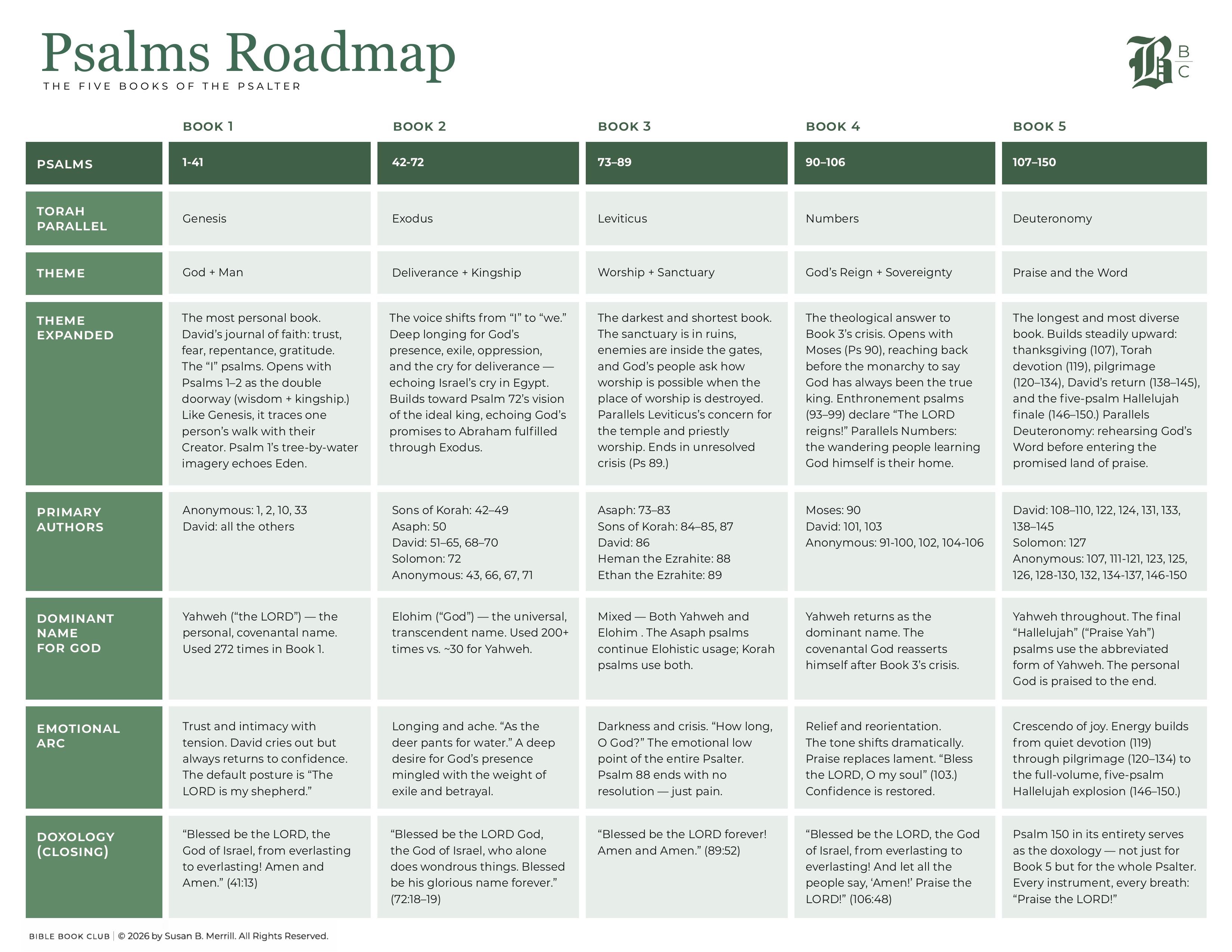
Psalm 68 is about God’s journey of triumph from Mount Sinai to Mount Zion. As I mentioned earlier, Psalms Book 2 is meant to parallel the book of Exodus. As the Israelites sang these songs, they were to be reminded of their journey from deliverance to kingship. From the Mosaic Covenant to the Davidic Covenant.
Psalm 68 is a great representation of the book’s theme. It describes the Israelites’ relationship with God as a journey: God delivered his people from Egypt and brought them to Jerusalem. The psalm opens with the words Israel spoke every time the Ark set out through the wilderness: “May God arise, may his enemies be scattered.” It starts with the departure at Sinai, the mountain of Exodus itself, and it marches all the way to Zion where God takes His throne.
Zion itself as a place changes in meaning throughout the Old Testament. Originally, Zion was a specific, physical place. It was a Canaanite fortress on a hill in the southeast corner of Jerusalem. In 2 Samuel 5:7, King David conquered this stronghold.
2 Samuel 5:7 7 David captured the fortress of Zion—which is the City of David.
At this stage, Zion referred strictly to that specific hill and the military outpost built upon it.
How did Mount Zion shift from a Canaanite stronghold to a symbol of God’s presence?
Once King David brought the Ark of the Covenant to Jerusalem and his son King Solomon built the Holy Temple on the adjacent Mount Moriah, the name “Zion” expanded. It comes to mean the Temple Mount itself. The dwelling place of God.
Over time, through poetic expansion, especially in the psalms and the prophets, “Zion” becomes a metaphor for the entire city of Jerusalem and the people who live there. This is what our David is describing here in Psalm 68. In the later books of the Old Testament, particularly during and after the Babylonian exile, when the Jewish people were forced from their homeland, Zion transformed from a literal dot on a map into a spiritual concept.
- The Presence of God: Zion represents the place where God rules and meets with humanity.
- Future Hope: In books like Isaiah, Zion is used to describe a future era of peace when all nations will gather to learn from God.
Psalm 68 is David’s expression of praise from the deliverance in Egypt to the promise of an eternal kingship in Jerusalem, promised in the Davidic Covenant. No other psalm in Book 2 carries the whole arc in a single procession, Exodus to Zion.
- Deliverance is the journey.
- Kingship is the destination.
This is a journey we have all taken. We have all been delivered from slavery, not from Egypt but from sin. And we were delivered to the kingship, not of David or the other Israelite kings, but to the Messiah. The promised eternal King from the line of David. And within that kingship, there is:
- A family of believers, the body of Christ
- An eternal home, which points to the verse about God setting the lonely in families.
The epidemic of loneliness in our culture could be solved by the church.
A Prayer to Praise God for Being Our Father and Savior
19 Praise be to the Lord, to God our Savior, 20 Our God is a God who saves;
5 A father to the fatherless, a defender of widows, is God in his holy dwelling.
6 God sets the lonely in families, but the rebellious live in a sun-scorched land.2 May the wicked perish before God. 3 But may the righteous be happy and joyful.
4 Sing to God, sing in praise of his name; rejoice before him—his name is the Lord.
Psalm 69: A Cry for Help When You Feel As If You Are Drowning
This psalm is one of the most heavily quoted or alluded to psalms in the New Testament because it contains several prophecies about Jesus.
Psalm 69
For the director of music. To the tune of “Lilies.” Of David.
1 Save me, O God, for the waters have come up to my neck. 2 I sink in the miry depths, where there is no foothold. I have come into the deep waters; the floods engulf me. 3 I am worn out calling for help; my throat is parched. My eyes fail, looking for my God. 4 Those who hate me without reason outnumber the hairs of my head; many are my enemies without cause, those who seek to destroy me. I am forced to restore what I did not steal.
5 You, God, know my folly; my guilt is not hidden from you.
6 Lord, the Lord Almighty, may those who hope in you not be disgraced because of me; God of Israel, may those who seek you not be put to shame because of me. 7 For I endure scorn for your sake, and shame covers my face. 8 I am a foreigner to my own family, a stranger to my own mother’s children; 9 for zeal for your house consumes me, and the insults of those who insult you fall on me. 10 When I weep and fast, I must endure scorn; 11 when I put on sackcloth, people make sport of me. 12 Those who sit at the gate mock me, and I am the song of the drunkards.
13 But I pray to you, Lord, in the time of your favor; in your great love, O God, answer me with your sure salvation. 14 Rescue me from the mire, do not let me sink; deliver me from those who hate me, from the deep waters. 15 Do not let the floodwaters engulf me or the depths swallow me up or the pit close its mouth over me.
16 Answer me, Lord, out of the goodness of your love; in your great mercy turn to me. 17 Do not hide your face from your servant; answer me quickly, for I am in trouble. 18 Come near and rescue me; deliver me because of my foes.
19 You know how I am scorned, disgraced and shamed; all my enemies are before you. 20 Scorn has broken my heart and has left me helpless; I looked for sympathy, but there was none, for comforters, but I found none. 21 They put gall in my food and gave me vinegar for my thirst.
22 May the table set before them become a snare; may it become retribution and a trap. 23 May their eyes be darkened so they cannot see, and their backs be bent forever. 24 Pour out your wrath on them; let your fierce anger overtake them. 25 May their place be deserted; let there be no one to dwell in their tents. 26 For they persecute those you wound and talk about the pain of those you hurt. 27 Charge them with crime upon crime; do not let them share in your salvation. 28 May they be blotted out of the book of life and not be listed with the righteous.
29 But as for me, afflicted and in pain— may your salvation, God, protect me.
30 I will praise God’s name in song and glorify him with thanksgiving. 31 This will please the Lord more than an ox, more than a bull with its horns and hooves. 32 The poor will see and be glad— you who seek God, may your hearts live! 33 The Lord hears the needy and does not despise his captive people.
34 Let heaven and earth praise him, the seas and all that move in them, 35 for God will save Zion and rebuild the cities of Judah. Then people will settle there and possess it; 36 the children of his servants will inherit it, and those who love his name will dwell there.
How is Psalm 69 fulfilled by Jesus in the New Testament?
There are four ways Psalm 69 alludes to Christ: His rejection, the Temple cleansing, the insults, and the crucifixion.
His Rejection is the first way Jesus fulfills Psalm 69 in the New Testament.
During the Last Supper, Jesus warns his disciples that the world will hate them because it first hated Him. He explains that this groundless animosity fulfills what was written in the Law, “They hated me without a cause.” That’s Psalm 69.
John 15:24-25 they have hated both me and my Father. 25 But this is to fulfill what is written in their Law: ‘They hated me without reason.’
The Temple Cleansing is the second way Jesus fulfills Psalm 69 in the New Testament.
When Jesus flips the tables of the money changers in the Temple court, His disciples see a prophecy fulfilled from Psalm 69. Jesus is so fiercely loyal to the holiness of God’s house that it would ultimately consume Him (lead to his death).
John 2:16 To those who sold doves he said, “Get these out of here! Stop turning my Father’s house into a market!” 17 His disciples remembered that it is written: “Zeal for your house will consume me.”
Bearing insults is the third way Jesus fulfills Psalm 69 in the New Testament.
Paul uses Psalm 69 to explain the character of Jesus in the book of Romans. He argues we should bear insults, pointing to Jesus as the ultimate example, because He willingly took on the abuse meant for God.
Romans 15:3-4 For even Christ did not please himself but, as it is written: “The insults of those who insult you have fallen on me.” 4 For everything that was written in the past was written to teach us, so that through the endurance taught in the Scriptures and the encouragement they provide we might have hope.
The crucifixion is the fourth way Jesus fulfills Psalm 69 in the New Testament.
This is the most direct fulfillment of Psalm 69. While hanging on the cross, Jesus says, “I thirst.” John notes that this is said specifically “to fulfill Scripture,” prompting the soldiers to lift a sponge soaked in vinegar to his lips.
Matthew 27:34 There they offered Jesus wine to drink, mixed with gall; but after tasting it, he refused to drink it.
John 19:28-30 Later, knowing that everything had now been finished, and so that Scripture would be fulfilled, Jesus said, “I am thirsty.” 29 A jar of wine vinegar was there, so they soaked a sponge in it, put the sponge on a stalk of the hyssop plant, and lifted it to Jesus’ lips. 30 When he had received the drink, Jesus said, “It is finished.” With that, he bowed his head and gave up his spirit.
What is Psalm 69 about?
Psalm 69 is a desperate cry for rescue when you are drowning in scorn and hate. Psalm 69 is intense and one of the most anguished laments in the entire book. It’s a cry from David when he feels like he is drowning. He’s being publicly mocked and humiliated.
Why? All because of his devotion to God. He cries out for deliverance, admitting his own faults, but also defending his position of faith. He asks God to take action against his persecutors and closes in praise and confidence that God will ultimately judge.
A Prayer for When You’re Drowning in Scorn or Hate from the World
1 Save me, O God, 2 I sink in the miry depths, where there is no foothold. The floods engulf me.
4 Those who hate me without reason outnumber the hairs of my head;7 For I endure scorn for your sake, 9 and the insults of those who insult you fall on me.
13 But I pray to you, Lord, in your great love, O God, answer me with your sure salvation.
14 Rescue me from the mire, do not let me sink; deliver me from those who hate me.
15 Do not let the floodwaters engulf me or the depths swallow me up.
Psalms 70-71: A Cry for God’s Rescue and Ongoing Protection
Psalm 70 is a direct quote from David in Psalm 40:13-17, and because Psalm 71 has no superscription, it reads as a continuation of Psalm 70. Both have the same lamenting theme of rescue and refuge, so we will cover them together.
Psalm 70
For the director of music. Of David. A petition.
1 Hasten, O God, to save me; come quickly, Lord, to help me.
2 May those who want to take my life be put to shame and confusion; may all who desire my ruin be turned back in disgrace. 3 May those who say to me, “Aha! Aha!” turn back because of their shame. 4 But may all who seek you rejoice and be glad in you; may those who long for your saving help always say, “The Lord is great!”
5 But as for me, I am poor and needy; come quickly to me, O God. You are my help and my deliverer; Lord, do not delay.
Psalm 71
1 In you, Lord, I have taken refuge; let me never be put to shame. 2 In your righteousness, rescue me and deliver me; turn your ear to me and save me. 3 Be my rock of refuge, to which I can always go; give the command to save me, for you are my rock and my fortress. 4 Deliver me, my God, from the hand of the wicked, from the grasp of those who are evil and cruel.
5 For you have been my hope, Sovereign Lord, my confidence since my youth. 6 From birth I have relied on you; you brought me forth from my mother’s womb. I will ever praise you. 7 I have become a sign to many; you are my strong refuge. 8 My mouth is filled with your praise, declaring your splendor all day long.
9 Do not cast me away when I am old; do not forsake me when my strength is gone. 10 For my enemies speak against me; those who wait to kill me conspire together. 11 They say, “God has forsaken him; pursue him and seize him, for no one will rescue him.” 12 Do not be far from me, my God; come quickly, God, to help me. 13 May my accusers perish in shame; may those who want to harm me be covered with scorn and disgrace.
14 As for me, I will always have hope; I will praise you more and more.
15 My mouth will tell of your righteous deeds, of your saving acts all day long—though I know not how to relate them all. 16 I will come and proclaim your mighty acts, Sovereign Lord; I will proclaim your righteous deeds, yours alone. 17 Since my youth, God, you have taught me, and to this day I declare your marvelous deeds. 18 Even when I am old and gray, do not forsake me, my God, till I declare your power to the next generation, your mighty acts to all who are to come.
19 Your righteousness, God, reaches to the heavens, you who have done great things. Who is like you, God? 20 Though you have made me see troubles, many and bitter, you will restore my life again; from the depths of the earth you will again bring me up. 21 You will increase my honor and comfort me once more.
22 I will praise you with the harp for your faithfulness, my God; I will sing praise to you with the lyre, Holy One of Israel. 23 My lips will shout for joy when I sing praise to you—I whom you have delivered. 24 My tongue will tell of your righteous acts all day long, for those who wanted to harm me have been put to shame and confusion.
What is Psalm 71 about?
Psalm 71 is a prayer for God’s rescue and ongoing protection through yet another trial. This psalm covers a common emotion: the drain of years of struggle. Whether financial, physical, or relational, they all cause fatigue. Most commentators assume the author of this psalm is older and familiar with recurring trials of some sort. He has been here before and often.
What does Psalm 71 teach us about faith and fatigue in old age?
The author of Psalm 71 is worn out and just wants God to see him through. He trusts God to do it because he has a history with God that gives him confidence that God will do it again. This time, next time, and every time. That is his prayer. Maybe it’s meant to be yours as well.
A Prayer for When You’re Worn Out from Trials
1 In you, Lord, I have taken refuge; 2rescue me and deliver me.
20 Though you have made me see troubles, many and bitter, you will restore my life again;
18 Even when I am old and gray,9 do not forsake me when my strength is gone.
12 Do not be far from me, my God; come quickly, God, to help me.
Psalm 72: A Song of Praise for the King and for Our Messiah
With Psalm 72, we arrive at another doxology, our sign that Book 2 is complete. Think about how far this book has carried us. We started with a downcast soul, thirsting like a deer for streams of water. Then we took an Exodus journey through suffering, attack, and betrayal. Here at the end, we are not crying in the wilderness anymore. We have arrived at a coronation.
Psalm 72
Of Solomon.
1 Endow the king with your justice, O God, the royal son with your righteousness. 2 May he judge your people in righteousness, your afflicted ones with justice.
3 May the mountains bring prosperity to the people, the hills the fruit of righteousness. 4 May he defend the afflicted among the people and save the children of the needy; may he crush the oppressor. 5 May he endure as long as the sun, as long as the moon, through all generations. 6 May he be like rain falling on a mown field, like showers watering the earth. 7 In his days may the righteous flourish and prosperity abound till the moon is no more.
8 May he rule from sea to sea and from the River to the ends of the earth. 9 May the desert tribes bow before him and his enemies lick the dust. 10 May the kings of Tarshish and of distant shores bring tribute to him. May the kings of Sheba and Seba present him gifts. 11 May all kings bow down to him and all nations serve him.
12 For he will deliver the needy who cry out, the afflicted who have no one to help. 13 He will take pity on the weak and the needy and save the needy from death. 14 He will rescue them from oppression and violence, for precious is their blood in his sight.
15 Long may he live! May gold from Sheba be given him. May people ever pray for him and bless him all day long. 16 May grain abound throughout the land; on the tops of the hills may it sway. May the crops flourish like Lebanon and thrive like the grass of the field. 17 May his name endure forever; may it continue as long as the sun.
Then all nations will be blessed through him, and they will call him blessed.
18 Praise be to the Lord God, the God of Israel, who alone does marvelous deeds. 19 Praise be to his glorious name forever; may the whole earth be filled with his glory. Amen and Amen.
20 This concludes the prayers of David, son of Jesse.
Why does Psalm 72:20 say the prayers of David are ended when more psalms follow?
The psalms are not in chronological order. So while this may have concluded the prayers of David, it is not the last psalm from him. There are more psalms from David to come.
Was Psalm 72 written for King Solomon’s coronation or as a messianic prophecy?
Psalm 72 is a royal psalm, and the superscription attributes it to Solomon. Maybe it was not written by Solomon but for him by his father, David, because it ends with:
Psalm 72:20 20 This concludes the prayers of David son of Jesse.
Is Psalm 72 a prophecy about the Messiah?
As much as Psalm 72 is about Solomon, it is also about the ultimate King. Reread Psalm 72 while thinking about Jesus, because this is a Messianic Psalm. David is a prophet, and his vision, his desire for his son, is a picture of what Christ as King fulfilled.
Solomon’s Two Coronations in the Bible
Solomon had two coronations, and both happened when David was old.
Solomon’s First Coronation
Solomon’s first coronation is recorded in 1 Kings 1. It was an emergency coronation, and David was not present. He was bedridden, but he ordered it to prevent his other son, Adonijah, from stealing the throne.
Solomon’s Second Coronation
The second was more of an official celebration in 1 Chronicles 29. David rose and spoke, then died shortly thereafter. The thought, although not a proven fact, is that David may have prayed Psalm 72 over Solomon at his second coronation, and it was recorded with a superscription of Solomon because it is about Solomon.
How does Psalm 72 describe the ideal king?
Psalm 72 describes the ideal king as one who:
- Defends the weak and the poor.
- Saves the children of the needy.
- Crushes the oppressor.
- Rules “from sea to sea” so that “all nations will be blessed through him.”
That last line is from the Abrahamic Covenant, and no earthly king ever came close to its promise. Not Solomon, not David.
What covenants did Jesus fulfill?
Jesus Christ, the Messiah, is the fulfillment of all the covenants and their promises. He is the ideal king. The one whom not even David or Solomon could become. His name will endure as long as the sun, as long as the moon, through all generations.
That fact alone, then and now, is cause for great celebration. So if we could hear the music written for Psalm 72, these last verses would be the crescendo.
Psalm 72:18-19 18 Praise be to the Lord God, the God of Israel, who alone does marvelous deeds. 19 Praise be to his glorious name forever; may the whole earth be filled with his glory. Amen and Amen.
This is the closing doxology. Exodus and Psalms Book 2: deliverance and kingship, together.
A Prayer of Praise for the King, Our Messiah
1 O God, endow the king, the royal son, with your righteousness.
8 May he rule from sea to sea and to the ends of the earth.
17 May his name endure forever; may it continue as long as the sun.Then all nations will be blessed through him, and they will call him blessed.
18 Praise be to the Lord God, who alone does marvelous deeds.
19 Praise be to his glorious name forever; may the whole earth be filled with his glory.
Amen and Amen.
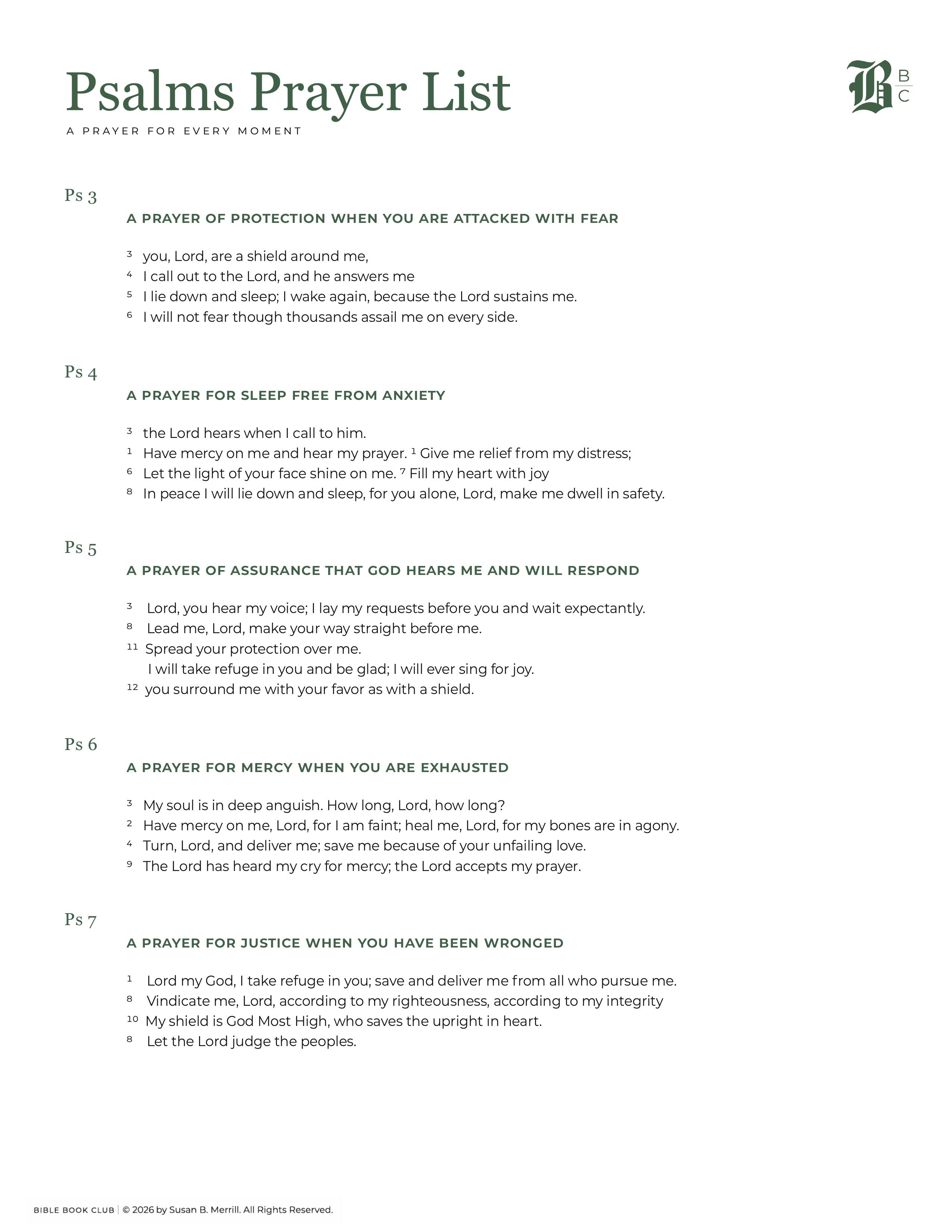
With the end of Book 2, the Psalms Prayer List has grown to 64 different prayers for you to deepen your prayer time. Next up: Psalms Book 3, a short book of just two packed podcast episodes focused on worship and sanctuary.
New Psalms Playlist Song
- “In Thee, O Lord, Do I Put My Trust” by Preacher Son (Psalm 71)
Listen to the entire Psalms Playlist on Apple Music or Spotify.
Group Discussion Questions for Psalms 68-72
- Psalm 68:6 says God sets the lonely in families. When in your life have you witnessed God place “the lonely” in a family, whether by blood, adoption, or church community?
- Psalm 69 is fulfilled when people reject Jesus. Jesus warned us the world would hate us because it first hated Him. Have you ever shared your faith and watched someone’s reaction turn cold? Or stayed quiet to avoid that awkwardness? How would it build your confidence if you truly believed their reaction wasn’t personal but a reflection of their response to Jesus?
- Psalm 71 is the prayer of someone worn out by years of trials who still trusts God to rescue him. Why? Because God has always rescued him in the past. In your own life, what is an example of a time when God has gotten you through a difficult situation, and does that build your trust that He will get you through again?