Previously on Bible Book Club
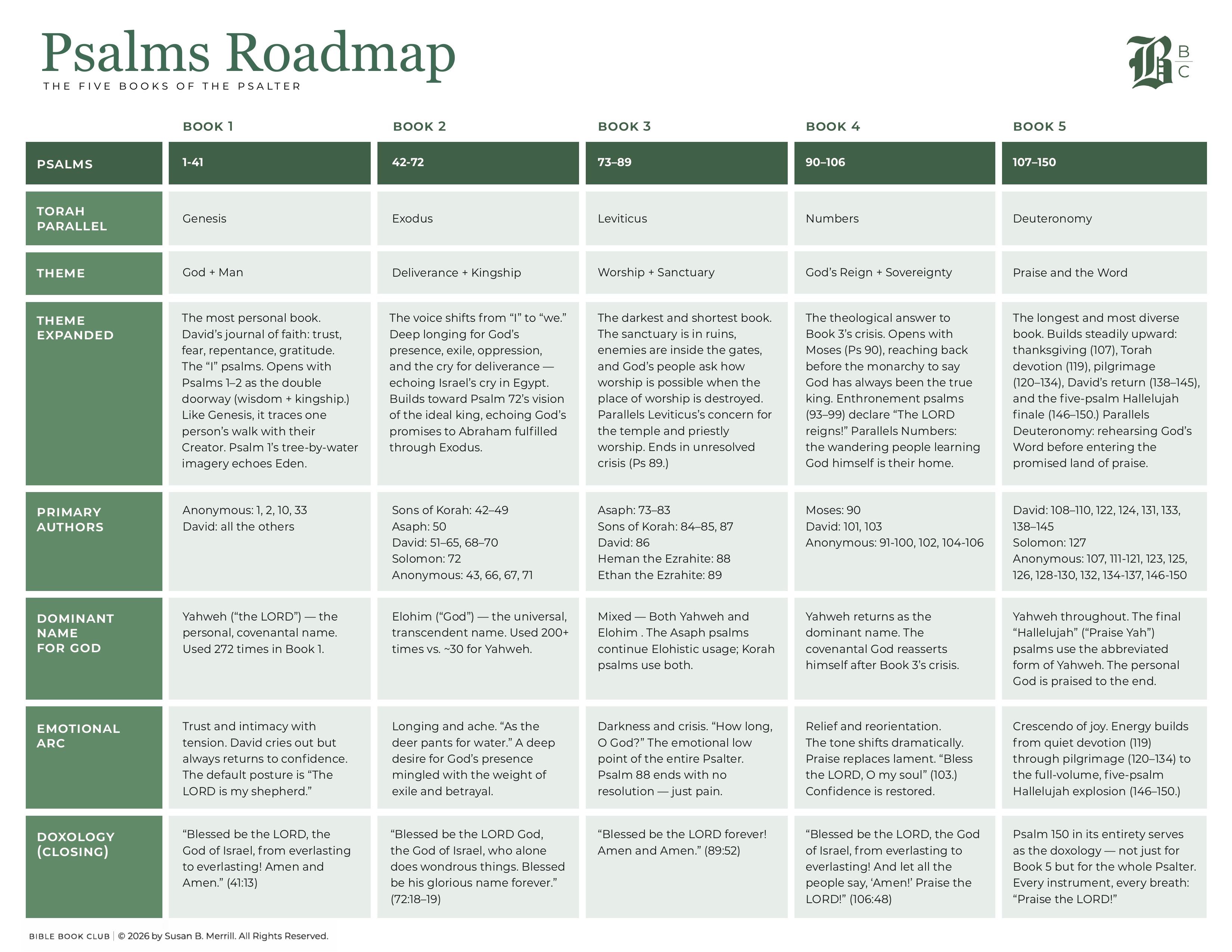
In Psalms 25-30, we explored what scholars call the Shepherd’s Trilogy or the “Cross, the Crook, and the Crown.” That trilogy answered the big question: What has God done? Which left us with the question: In light of what God has done, what do I do?
Psalms 25-30 answered the question: What do I do?
- Psalm 25: Ask God for forgiveness for the past and a path toward God’s future
- Psalm 26: Ask God for vindication when I am accused and innocent
- Psalm 27: Overcome fear with the confidence that God is our light and salvation
- Psalm 28: Ask God for deliverance from evil people
- Psalm 29: Praise for the power of God that provides peace
- Psalm 30: Thank God for joy after suffering.
Psalms 31-36 Introduction
Psalm 30 ended with David dancing with joy. The dance didn’t last. It never does. Psalm 31 opens with David back in the pit of despair. This is life, yesterday and today. David’s life is filled with extremes. His willingness to return to God again and again, from a hundred different emotional places, is why his psalm playlist is so universally comforting.
What is the main question addressed in Psalms 31-36?
The thread running through Psalms 31-36 is a single question: Can I really trust God with my fear, my sin, my enemies, my future? David answers this question six different ways, all with a resounding yes. Not because life gets easier, but because he keeps coming back to God until something in him shifts.
This arc could be framed as: “What does it look like to trust God when life is hard, when you’ve sinned, when enemies are real, and when evil seems to win?”
Psalm 31: A Cry for Refuge When You Feel Forgotten
Psalm 31
For the director of music. A psalm of David.
1 In you, Lord, I have taken refuge; let me never be put to shame; deliver me in your righteousness. 2 Turn your ear to me come quickly to my rescue be my rock of refuge, a strong fortress to save me. 3 Since you are my rock and my fortress, for the sake of your name lead and guide me. 4 Keep me free from the trap that is set for me, for you are my refuge. 5 Into your hands I commit my spirit; deliver me, Lord, my faithful God.
6 I hate those who cling to worthless idols; as for me, I trust in the Lord. 7 I will be glad and rejoice in your love, for you saw my affliction and knew the anguish of my soul. 8 You have not given me into the hands of the enemy but have set my feet in a spacious place.
9 Be merciful to me, Lord, for I am in distress; my eyes grow weak with sorrow, my soul and body with grief. 10 My life is consumed by anguish and my years by groaning; my strength fails because of my affliction, and my bones grow weak. 11 Because of all my enemies, I am the utter contempt of my neighbors and an object of dread to my closest friends— those who see me on the street flee from me. 12 I am forgotten as though I were dead; I have become like broken pottery. 13 For I hear many whispering, “Terror on every side!” They conspire against me and plot to take my life.
14 But I trust in you, Lord; I say, “You are my God.” 15 My times are in your hands; deliver me from the hands of my enemies, from those who pursue me. 16 Let your face shine on your servant; save me in your unfailing love. 17 Let me not be put to shame, Lord, for I have cried out to you; but let the wicked be put to shame and be silent in the realm of the dead. 18 Let their lying lips be silenced, for with pride and contempt they speak arrogantly against the righteous.
19 How abundant are the good things that you have stored up for those who fear you, that you bestow in the sight of all, on those who take refuge in you. 20 In the shelter of your presence you hide them from all human intrigues; you keep them safe in your dwelling from accusing tongues.
21 Praise be to the Lord, for he showed me the wonders of his love when I was in a city under siege. 22 In my alarm I said, “I am cut off from your sight!” Yet you heard my cry for mercy when I called to you for help.
23 Love the Lord, all his faithful people! The Lord preserves those who are true to him, but the proud he pays back in full. 24 Be strong and take heart, all you who hope in the Lord.
What is Psalm 31 about?
Psalm 31 is about trusting God for refuge and rescue. Psalm 31 is technically a lament, but this first section has a strong undertone of trust. David is crying out to God on the one hand, and on the other hand emphatically asserting that his trust is in God for the outcome.
David has taken refuge in the Lord. God is his rock and fortress, and he has committed his spirit in God’s hands. All of this speaks of complete surrender to God. A surrender that is made complete when Jesus utters the same phrase.
Luke 23:44 44 It was now about noon, and darkness came over the whole land until three in the afternoon, 45 for the sun stopped shining. And the curtain of the temple was torn in two. 46 Jesus called out with a loud voice, “Father, into your hands I commit my spirit.” When he had said this, he breathed his last.
When David writes “Into your hands I commit my spirit,” he is a man surrounded by enemies, physically depleted, socially abandoned.
What is the Hebrew meaning of the word “commit” David used in Psalm 31:5?
In Psalm 31:5, David uses the Hebrew word paqad, which means to entrust, to deposit, the way you would hand over something precious to a trusted keeper. David is a man who has run out of options and is saying: I cannot hold this anymore. You hold it.
David survives. He goes on to rule. David’s surrender is real, but it is provisional. He is giving his life over to God, not giving it up. The prayer is genuine, but it isn’t final.
How Jesus Completes the Commitment
In Luke 23:46, Jesus completes this sentiment. He quotes Psalm 31:5 from the cross, but with one critical addition. David’s original line reads, “Into your hands I commit my spirit.” Jesus says, “Father, into your hands I commit my spirit.” David cries out to the Lord, to Yahweh, his God and king. Jesus addresses God as Father. He surrenders not as a servant handing something to a master, but as a Son returning to a Father.
And this is what makes it complete…Jesus dies.
- David’s surrender preserves his life.
- Jesus’s surrender ends his.
Jesus doesn’t just pray for surrender. He endures it until it is finished, accomplishing what no amount of David’s suffering ever could: the redemption of every person who would ever pray that same prayer.
How can I commit my spirit to God?
To commit your spirit to God, in prayer you must surrender your will to God’s will. Every time a believer surrenders something to God, whether it’s a relationship, a diagnosis, a dream that died, a struggling child, or marriage, you are praying like David.
When you surrender like David, you are also praying through Christ, who, through that same prayer, opens the door to the Father for us. From Psalm 31:5 to Luke 23, today it looks like this:
- David modeled surrender.
- Jesus finished the ultimate surrender.
- We have the opportunity to live a surrendered life through Christ.
This is what it means to trust God…surrender.
So, what does it look like to trust God?
In Psalm 31, to trust God looks like surrender to God even when life is hard, enemies are real, and evil seems to win. In verse 9, David pivots from trust to a cry for mercy from the danger and darkness surrounding him.
Psalm 31:9 9 Be merciful to me, Lord, for I am in distress;
Psalm 31:16 16 Let your face shine on your servant; save me in your unfailing love.
Where does the phrase “make your face shine” originate in scripture?
The phrase “make your face shine” comes directly from the Aaronic Blessing in Numbers 6:24-26, which God Himself dictated to Moses to give to Aaron to speak over Israel.
Numbers 6:24-26 24 “The Lord bless you and keep you; the Lord make his face shine on you and be gracious to you; the Lord turn his face toward you and give you peace.”
So when David sang “make your face shine on your servant,” every Israelite hearing it would have recognized it immediately. David is essentially saying: Give me what you promised. The blessing you spoke over your people. I need it right now, personally.
What does it mean for God’s face to shine on you?
This is an expression used in the ancient Near East, because a king’s face was the expression of his disposition toward you. A king who turned his face away was withdrawing his favor and protection. But a king whose face shone on you indicated favor and access.
In Psalm 31, David describes feeling like broken pottery, cut off from God’s sight, forgotten. In asking God to shine his face upon him, David is asking for the exact reversal of everything he feels. He feels unseen; he asks to be seen.
Completion in the New Testament
This image of a shining face finds its completion in two New Testament stories.
- The Transfiguration. The disciples caught a glimpse of the light of God in Jesus’s transfiguration.
Matthew 17:1-2 1 After six days Jesus took with him Peter, James and John the brother of James, and led them up a high mountain by themselves. 2 There he was transfigured before them. His face shone like the sun, and his clothes became as white as the light.
- The final promise of Scripture. Most ultimately, in Revelation 22.
Revelation 22:3-5 3 No longer will there be any curse. The throne of God and of the Lamb will be in the city, and his servants will serve him. 4 They will see his face, and his name will be on their foreheads. 5 There will be no more night. They will not need the light of a lamp or the light of the sun, for the Lord God will give them light.
The shining face of God that David begged for in Psalm 31, the face that Moses could not look at directly, we will see fully without a veil. Forever!
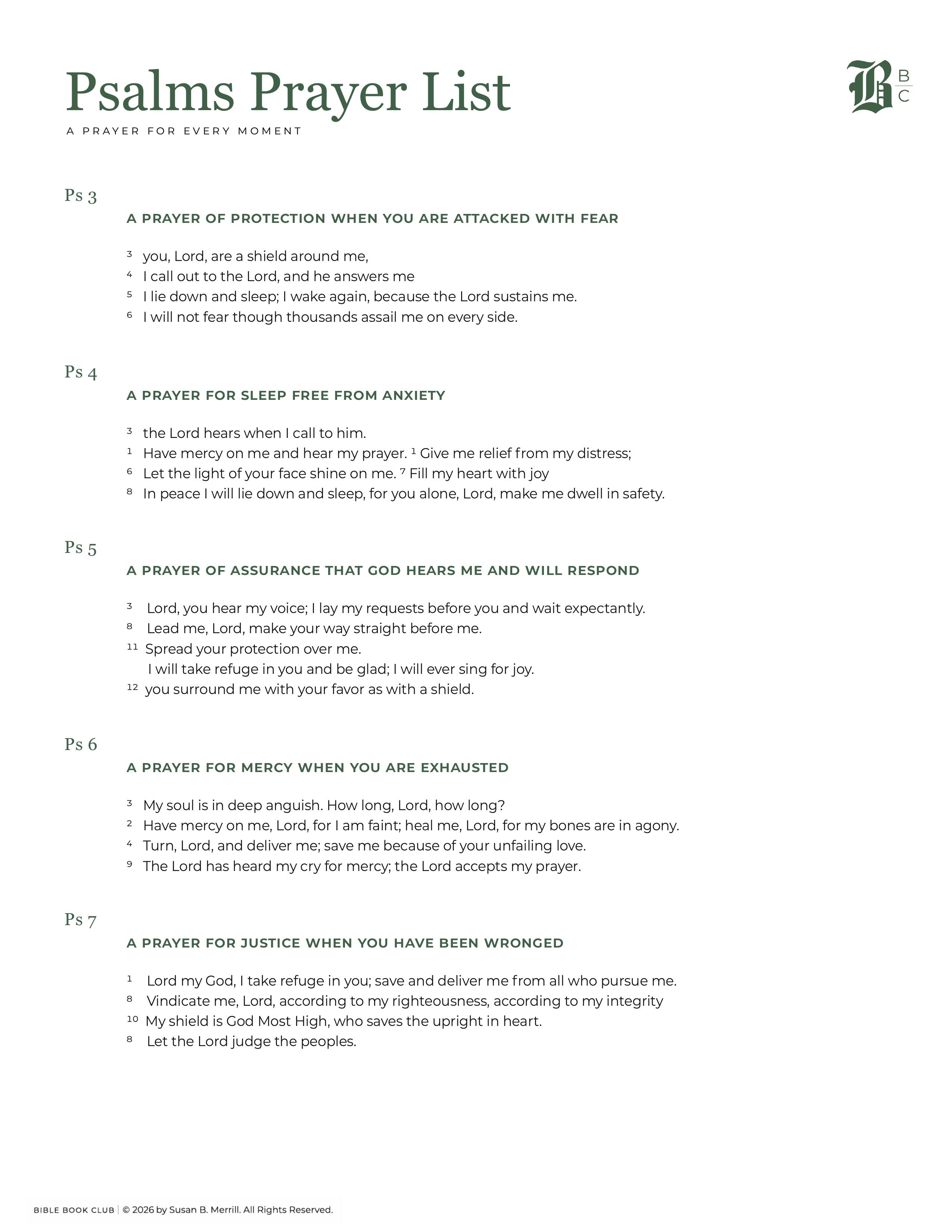
A prayer of trust for refuge and rescue
3 Since you are my rock and my fortress,
15 My times are in your hands; deliver me from the hands of my enemies,
16 Let your face shine on your servant; save me in your unfailing love.
Psalm 32: Thanks for the Forgiveness of Sin
Psalm 32
1 Blessed is the one whose transgressions are forgiven, whose sins are covered. 2 Blessed is the one whose sin the Lord does not count against them and in whose spirit is no deceit.
3 When I kept silent, my bones wasted away through my groaning all day long. 4 For day and night your hand was heavy on me; my strength was sapped as in the heat of summer.
5 Then I acknowledged my sin to you and did not cover up my iniquity. I said, “I will confess my transgressions to the Lord.” And you forgave the guilt of my sin.
6 Therefore let all the faithful pray to you while you may be found; surely the rising of the mighty waters will not reach them. 7 You are my hiding place; you will protect me from trouble and surround me with songs of deliverance.
8 I will instruct you and teach you in the way you should go; I will counsel you with my loving eye on you. 9 Do not be like the horse or the mule, which have no understanding but must be controlled by bit and bridle or they will not come to you. 10 Many are the woes of the wicked, but the Lord’s unfailing love surrounds the one who trusts in him.
11 Rejoice in the Lord and be glad, you righteous; sing, all you who are upright in heart!
What is Psalm 32 about?
Psalm 32 is about the relief and joy of being fully forgiven. In fact, Psalm 32 is one of the greatest psalms of forgiveness in all of Scripture.
Why did David write Psalm 32?
Most commentators believe David wrote this psalm after his affair with Bathsheba and the murder of her husband, Uriah. Recall that David doesn’t voluntarily confess his sin. He tries to cover it up in 2 Samuel 11-12, and you can hear that regret in this phrase:
Psalm 32:3 3 When I kept silent, my bones wasted away
It is almost a year before Nathan arrives and forces David’s confession. The sin is a defining part of David’s spiritual journey. One covered in depth in our Bible Study of 2 Samuel.
What verses does Paul quote from Psalm 32?
Paul quotes the first two verses of Psalm 32 in Romans 4 to make the case that all who seek forgiveness of sin are blessed, whether Jew or Gentile, circumcised or not.
Romans 4:6-10 6 David says the same thing when he speaks of the blessedness of the one to whom God credits righteousness apart from works:
7 “Blessed are those
whose transgressions are forgiven,
whose sins are covered.8 Blessed is the one
whose sin the Lord will never count against them.”9 Is this blessedness only for the circumcised, or also for the uncircumcised? We have been saying that Abraham’s faith was credited to him as righteousness. 10 Under what circumstances was it credited? Was it after he was circumcised, or before? It was not after, but before!
Which historical church figure had Psalm 32 placed on his deathbed wall?
According to legend taken from Saint Augustine’s biographer, when Augustine was on his deathbed in 430 AD, he had Psalm 32 plastered onto his bedroom wall to comfort his soul.
What does it look like to trust God when you’ve sinned?
David instructs us from experience that when you carry unconfessed sin, the heavy hand of God will press in on you day and night. When you confess sin, it will be a sweet blessing to your soul.
A prayer of thanks for the forgiveness of sin
5 I acknowledged my sin to you and did not cover up my iniquity.
but the Lord’s unfailing love surrounds the one who trusts in him.
Psalm 33: Praise for the Word of God
Psalm 33
1 Sing joyfully to the Lord, you righteous; it is fitting for the upright to praise him. 2 Praise the Lord with the harp; make music to him on the ten-stringed lyre. 3 Sing to him a new song; play skillfully, and shout for joy.
4 For the word of the Lord is right and true; he is faithful in all he does. 5 The Lord loves righteousness and justice; the earth is full of his unfailing love.
6 By the word of the Lord the heavens were made, their starry host by the breath of his mouth. 7 He gathers the waters of the sea into jars; he puts the deep into storehouses. 8 Let all the earth fear the Lord; let all the people of the world revere him. 9 For he spoke, and it came to be; he commanded, and it stood firm.
10 The Lord foils the plans of the nations; he thwarts the purposes of the peoples. 11 But the plans of the Lord stand firm forever, the purposes of his heart through all generations.
12 Blessed is the nation whose God is the Lord, the people he chose for his inheritance. 13 From heaven the Lord looks down and sees all mankind; 14 from his dwelling place he watches all who live on earth—15 he who forms the hearts of all, who considers everything they do.
16 No king is saved by the size of his army; no warrior escapes by his great strength. 17 A horse is a vain hope for deliverance; despite all its great strength it cannot save. 18 But the eyes of the Lord are on those who fear him, on those whose hope is in his unfailing love, 19 to deliver them from death and keep them alive in famine.
20 We wait in hope for the Lord; he is our help and our shield. 21 In him our hearts rejoice, for we trust in his holy name. 22 May your unfailing love be with us, Lord, even as we put our hope in you.
What is Psalm 33 about?
Psalm 33 is about God’s unchanging Word and plans.
What does it look like to trust God’s Word and plans?
Trusting God’s Word and plans looks like praise for God’s Word: the promises, the blessings, the hope, and all that is right and true from Genesis to Revelation. In order to praise the value of God’s Word and trust His plans, you have to know God’s Word.
A prayer of praise for the Word of God
4 For the word of the Lord is right and true.
6 By the word of the Lord the heavens were made.
11 The plans of the Lord stand firm forever, the purposes of his heart through all generations.
21 In him our hearts rejoice, for we trust in his holy name.
Psalm 34: Thanks for the Deliverance of the Brokenhearted
Psalm 34
Of David. When he pretended to be insane before Abimelek, who drove him away, and he left.
1 I will extol the Lord at all times; his praise will always be on my lips. 2 I will glory in the Lord; let the afflicted hear and rejoice. 3 Glorify the Lord with me; let us exalt his name together.
4 I sought the Lord, and he answered me; he delivered me from all my fears. 5 Those who look to him are radiant; their faces are never covered with shame. 6 This poor man called, and the Lord heard him; he saved him out of all his troubles. 7 The angel of the Lord encamps around those who fear him, and he delivers them.
8 Taste and see that the Lord is good; blessed is the one who takes refuge in him. 9 Fear the Lord, you his holy people, for those who fear him lack nothing. 10 The lions may grow weak and hungry, but those who seek the Lord lack no good thing. 11 Come, my children, listen to me; I will teach you the fear of the Lord. 12 Whoever of you loves life and desires to see many good days, 13 keep your tongue from evil and your lips from telling lies. 14 Turn from evil and do good; seek peace and pursue it.
15 The eyes of the Lord are on the righteous, and his ears are attentive to their cry; 16 but the face of the Lord is against those who do evil, to blot out their name from the earth.
17 The righteous cry out, and the Lord hears them; he delivers them from all their troubles. 18 The Lord is close to the brokenhearted and saves those who are crushed in spirit.
19 The righteous person may have many troubles, but the Lord delivers him from them all; 20 he protects all his bones, not one of them will be broken.
21 Evil will slay the wicked; the foes of the righteous will be condemned. 22 The Lord will rescue his servants; no one who takes refuge in him will be condemned.
What is Psalm 34 about?
Psalm 34 is about how God meets us in our fear and brokenness and rescues us. Psalm 34 has a crazy backstory.
What is the historical backstory behind the writing of Psalm 34?
The superscription links Psalm 34 to when David feigns madness before King Achish of Gath in 1 Samuel 21 to escape capture. David is running for his life from the paranoid King Saul. In desperation, he flees to Gath, a Philistine city. This is a massive gamble because Gath is the hometown of Goliath. So, of course, the servants of King Achish recognize David.
Realizing he is trapped in enemy territory and terrified for his life, David improvises a bizarre survival strategy. He fakes insanity, scratching on doors and drooling, and it works! King Achish is annoyed, asks his servants if they are so short on madmen that they have to bring another one into his house, and drives David away. David escapes unharmed.
It is totally out of character for David, but God saves his life in an unusual way, and David’s response is to write a psalm praising God for the rescue. The most famous and beloved line in Psalm 34 is verse 8:
Psalm 34:8 8 “Taste and see that the Lord is good.”
It’s an invitation to personally experience God’s goodness.
Which New Testament passage quotes the “Taste and see” verse from Psalm 34?
In 1 Peter 2:2-3, Peter uses the same phrase “taste and see” to invite new believers into a deepening relationship with Christ.
1 Peter 2:2-3 2 Like newborn babies, crave pure spiritual milk, so that by it you may grow up in your salvation, 3 now that you have tasted that the Lord is good.
A prayer for the brokenhearted in need of rescue
4 I sought the Lord, and he answered me; he delivered me from all my fears.
18 The Lord is close to the brokenhearted and saves those who are crushed in spirit.
19 The righteous person may have many troubles, but the Lord delivers him from them all;
8 Taste and see that the Lord is good; blessed is the one who takes refuge in him.
Psalm 35: A Cry for Justice When Enemies Attack Without Cause
Psalm 35
Of David.
1 Contend, Lord, with those who contend with me; fight against those who fight against me. 2 Take up shield and armor; arise and come to my aid. 3 Brandish spear and javelin against those who pursue me. Say to me, “I am your salvation.”
4 May those who seek my life be disgraced and put to shame; may those who plot my ruin be turned back in dismay. 5 May they be like chaff before the wind, with the angel of the Lord driving them away; 6 may their path be dark and slippery, with the angel of the Lord pursuing them.
7 Since they hid their net for me without cause and without cause dug a pit for me, 8 may ruin overtake them by surprise— may the net they hid entangle them, may they fall into the pit, to their ruin. 9 Then my soul will rejoice in the Lord and delight in his salvation. 10 My whole being will exclaim, “Who is like you, Lord? You rescue the poor from those too strong for them, the poor and needy from those who rob them.”
11 Ruthless witnesses come forward; they question me on things I know nothing about. 12 They repay me evil for good and leave me like one bereaved. 13 Yet when they were ill, I put on sackcloth and humbled myself with fasting. When my prayers returned to me unanswered, 14 I went about mourning as though for my friend or brother. I bowed my head in grief as though weeping for my mother. 15 But when I stumbled, they gathered in glee; assailants gathered against me without my knowledge. They slandered me without ceasing. 16 Like the ungodly they maliciously mocked; they gnashed their teeth at me.
17 How long, Lord, will you look on? Rescue me from their ravages, my precious life from these lions. 18 I will give you thanks in the great assembly; among the throngs I will praise you. 19 Do not let those gloat over me who are my enemies without cause; do not let those who hate me without reason maliciously wink the eye. 20 They do not speak peaceably, but devise false accusations against those who live quietly in the land. 21 They sneer at me and say, “Aha! Aha! With our own eyes we have seen it.”
22 Lord, you have seen this; do not be silent. Do not be far from me, Lord. 23 Awake, and rise to my defense! Contend for me, my God and Lord. 24 Vindicate me in your righteousness, Lord my God; do not let them gloat over me. 25 Do not let them think, “Aha, just what we wanted!” or say, “We have swallowed him up.”
26 May all who gloat over my distress be put to shame and confusion; may all who exalt themselves over me be clothed with shame and disgrace. 27 May those who delight in my vindication shout for joy and gladness; may they always say, “The Lord be exalted, who delights in the well-being of his servant.”
28 My tongue will proclaim your righteousness, your praises all day long.
What is Psalm 35 about?
Psalm 35 is about asking God to fight your enemies for you when their attack is unjust. David is asking God to fight for him, embarrass his enemies, and deliver real justice. He names the injustice in detail. People who:
- Repaid his kindness with hatred
- Mocked him when he mourned for them
- Testified falsely against him
David is not taking revenge. He is not plotting. He is bringing his grief and rage to God and asking God to be the judge, which is the right thing to do with injustice. The alternative, carrying the bitterness yourself, is far more destructive.
This is what it looks like to trust God. You go to God.
How does Jesus apply Psalm 35 to his own life in the Gospels?
Jesus quotes Psalm 35:19 in John 15:24-25, applying it to Himself, because the unjust suffering David describes in verse 19 foreshadows what Jesus, his descendant, will suffer.
Psalm 35:19 19 “Do not let those gloat over me who are my enemies without cause.”
John 15:24-25 24 they have seen, and yet they have hated both me and my Father. 25 But this is to fulfill what is written in their Law: ‘They hated me without reason.’
A prayer for God to fight your enemies for you
1 Lord, fight against those who fight against me.
12 They repay me evil for good. 15 They slandered me without ceasing.
22 Lord, you have seen this; do not be silent. Do not be far from me, Lord.
23 Awake, and rise to my defense! Contend for me, my God and Lord.
Psalm 36: Evil and God’s Unfailing Love
Psalm 36
For the director of music. Of David the servant of the Lord.
1 I have a message from God in my heart concerning the sinfulness of the wicked: There is no fear of God before their eyes.
2 In their own eyes they flatter themselves too much to detect or hate their sin. 3 The words of their mouths are wicked and deceitful; they fail to act wisely or do good. 4 Even on their beds they plot evil; they commit themselves to a sinful course and do not reject what is wrong.
5 Your love, Lord, reaches to the heavens, your faithfulness to the skies. 6 Your righteousness is like the highest mountains, your justice like the great deep. You, Lord, preserve both people and animals. 7 How priceless is your unfailing love, O God! People take refuge in the shadow of your wings. 8 They feast on the abundance of your house; you give them drink from your river of delights. 9 For with you is the fountain of life; in your light we see light.
10 Continue your love to those who know you, your righteousness to the upright in heart. 11 May the foot of the proud not come against me, nor the hand of the wicked drive me away. 12 See how the evildoers lie fallen— thrown down, not able to rise!
What is Psalm 36 about?
Psalm 36 is about God’s love being infinitely greater than human evil. Psalm 36 is a wisdom song. The perfect closing psalm for this group of Psalms 31-36. The first half is a description of the wicked and their evil ways. The second half is a declaration of God’s vast and unfailing love.
In verses 1-3, David isn’t just describing his enemies. He’s describing the condition of an evil heart that has pushed God out.
Psalm 36:1-3 1 There is no fear of God before their eyes. 2 In their own eyes they flatter themselves too much to detect or hate their sin. 3 The words of their mouths are wicked and deceitful; they fail to act wisely or do good.
Where in the New Testament is Psalm 36:1 quoted?
Paul quotes Psalm 36:1 directly in Romans 3:18 as part of his indictment of sin’s universal hold over both Jew and Gentile.
Psalm 36:5-6 5 Your love, Lord, reaches to the heavens, your faithfulness to the skies.
6 Your righteousness is like the highest mountains, your justice like the great deep.
- Evil is small, self-consuming, unable to see past its own schemes.
- God’s love is as high as the sky, as deep as the ocean, as solid as a mountain range.
The Connection to Psalm 1
Psalm 36:9 connects this psalm all the way back to Psalm 1:
Psalm 36:9 9 “For with you is the fountain of life; in your light we see light.”
Psalm 1 describes the blessed person as a tree planted by streams of water. Psalm 36 reveals the source of those streams. It’s God, the fountain of life. And the person who stays near that source will always have light, even when the world around them is dark.
A Lesson for Us
In these six psalms, David describes how he has learned to trust God when life is hard, when he has sinned, when enemies are real, and when evil seems to win. The questions for us to ask ourselves now are:
- Can we trust God?
- What can we surrender to Him today?
A prayer for confidence that God’s love wins over evil
1Concerning the sinfulness of the wicked: There is no fear of God before their eyes.
12 See how the evildoers lie fallen— thrown down, not able to rise!
7 People take refuge in the shadow of your wings.
5 Your love, Lord, reaches to the heavens, your faithfulness to the skies.
9 For with you is the fountain of life; in your light we see light.
New Psalms Playlist Song
- “Taste and See” (Psalm 34) by Shane and Shane
- “Your Love Oh Lord” (Psalm 36) by Third Day
Listen to the entire Psalms Playlist on Apple Music or Spotify. Continue your study of the Book of Psalms with Psalms 37-41.
Group Discussion Questions for Psalms 31-36
- Psalm 31 teaches us that to commit our spirit to God, we must surrender our will to His. When we do this, we are praying like David and through Jesus, who opens the door to God for us. What exact words could you use to surrender something in your life to God?
- In Psalm 32, David tries to cover up his sin for nearly a year before confessing it, and he describes this as making him feel like his bones are wasting away. Have you ever experienced the physical or emotional weight of unconfessed sin, and what finally moved you to bring it to God?
- In Psalm 35, David brought his grief and rage directly to God rather than plotting revenge. When someone treats you unjustly, what is your first instinct? What, if anything, do you think would change if you took the injustice straight to God?