Previously on Bible Book Club
In Psalms 22-24, we covered the Shepherd’s Trilogy. Psalm 22 is a cry for God when you feel abandoned. The psalm opened with David’s cry of abandonment: “My God, my God, why have you forsaken me?” And it closes with a prophecy of the cross that Jesus himself bookended his crucifixion with. Psalm 23 is a song for when you need to trust the shepherd for comfort, and it’s the most beloved psalm in the world. Psalm 24 is praise for the King and Lord of all the earth.
Psalms 25-30 Introduction
The Shepherd’s Trilogy we learned about with Psalms 22-24 answers the big question: What has God done? In short, He provides His Son for our salvation. Psalms 25-30 answer the next question: So what should I do in response?
What is the Shepherd’s Trilogy in the Book of Psalms?
The Shepherd’s Trilogy is the cross, the crook, and the crown.
- The Savior who suffered
- Shepherd who cares
- King who reigns.
It’s a journey that mirrors the entire story of Christ: past, present, and future.
- Christ has died.
- Christ is risen.
- Christ will come again.
What is the main structural difference between Psalms 22-24 and Psalms 25-30?
If Psalms 22-24 tell us what God has done, Psalms 25-30 are the answer to what we should do. In other words, how do we live in light of what God has done? Because knowing what God did is one thing. Living in response to it…that’s the daily work.
These next six psalms are David’s honest account of what it actually looks like living as one responding to what God has done. It starts with guilt over his past and ends in dancing. And in the middle, David asks this really important question that we should consider. What would you say if someone asked you right now: What’s the one thing you want most? More time? Better health? Relationships? Financial freedom? Peace in your own head? All are worth wanting, but David, a man who had survived betrayal, war, accusation, and his own worst failures, answered this way:
One thing I ask from the Lord, this is what I seek: that I may dwell in the house of the Lord all the days of my life.
Just one thing. Presence. What we should desire more than anything in response to what God has done is His presence, a relationship with Him. Whatever you’re carrying into this episode—guilt, fear, uncertainty, exhaustion—David carried it too. And he came out the other side dancing. So can you.
Psalm 25: A Cry for Forgiveness and the Way to God’s Path
Psalm 25
Of David.
2 I trust in you; do not let me be put to shame, nor let my enemies triumph over me. 3 No one who hopes in you will ever be put to shame, but shame will come on those who are treacherous without cause.
4 Show me your ways, Lord, teach me your paths. 5 Guide me in your truth and teach me, for you are God my Savior, and my hope is in you all day long. 6 Remember, Lord, your great mercy and love, for they are from of old. 7 Do not remember the sins of my youth and my rebellious ways; according to your love remember me, for you, Lord, are good.
8 Good and upright is the Lord; therefore he instructs sinners in his ways. 9 He guides the humble in what is right and teaches them his way. 10 All the ways of the Lord are loving and faithful toward those who keep the demands of his covenant. 11 For the sake of your name, Lord, forgive my iniquity, though it is great.
12 Who, then, are those who fear the Lord? He will instruct them in the ways they should choose. 13 They will spend their days in prosperity, and their descendants will inherit the land. 14 The Lord confides in those who fear him; he makes his covenant known to them. 15 My eyes are ever on the Lord, for only he will release my feet from the snare.
16 Turn to me and be gracious to me, for I am lonely and afflicted. 17 Relieve the troubles of my heart and free me from my anguish. 18 Look on my affliction and my distress and take away all my sins. 19 See how numerous are my enemies and how fiercely they hate me!
20 Guard my life and rescue me; do not let me be put to shame, for I take refuge in you. 21 May integrity and uprightness protect me, because my hope, Lord, is in you.
22 Deliver Israel, O God, from all their troubles!
What is Psalm 25 about?
Psalm 25 is about finding forgiveness for the past and a path for our future. David opens this group of psalms singing about two things that most of us know well: shame about the past and the desire to do better in the future.
In the same psalm, he prays, “forgive my sins” and “show me your ways, Lord.” He’s not pretending he hasn’t failed. But he’s also not going to let his sin stand between him and God.
How many times does David pray for forgiveness and guidance in Psalm 25?
Three times David boldly asks God for forgiveness:
- Psalm 25:7 7 Do not remember the sins of my youth and my rebellious ways;
- Psalm 25:11 11 For the sake of your name, Lord, forgive my iniquity, though it is great.
- Psalm 25:18 18 Look on my affliction and my distress and take away all my sins.
And four times David asks God to show him His way:
- Psalm 25:4 4 Show me your ways, Lord, teach me your paths.
- Psalm 25:8 8 Good and upright is the Lord; therefore, he instructs sinners in his ways.
- Psalm 25:9 9 He guides the humble in what is right and teaches them his way.
- Psalm 25:12 12 He will instruct them in the ways they should choose
David is asking God to lead him forward to a better way. To put him on the right path. This is a prayer for all of us who have gone our own way and simply don’t want to anymore. Anyone who doesn’t want the sin, distance from God, darkness, and guilt. Whose desire is to know God’s way, feel His pleasure, live in peace, and hear God whisper, “Well done, good and faithful servant.”
What does ‘show me your ways, O Lord’ mean, and how does one find the way?
Find God’s way through these four practices:
- Study God’s word, which you are doing every time you listen to the Bible Book Club.
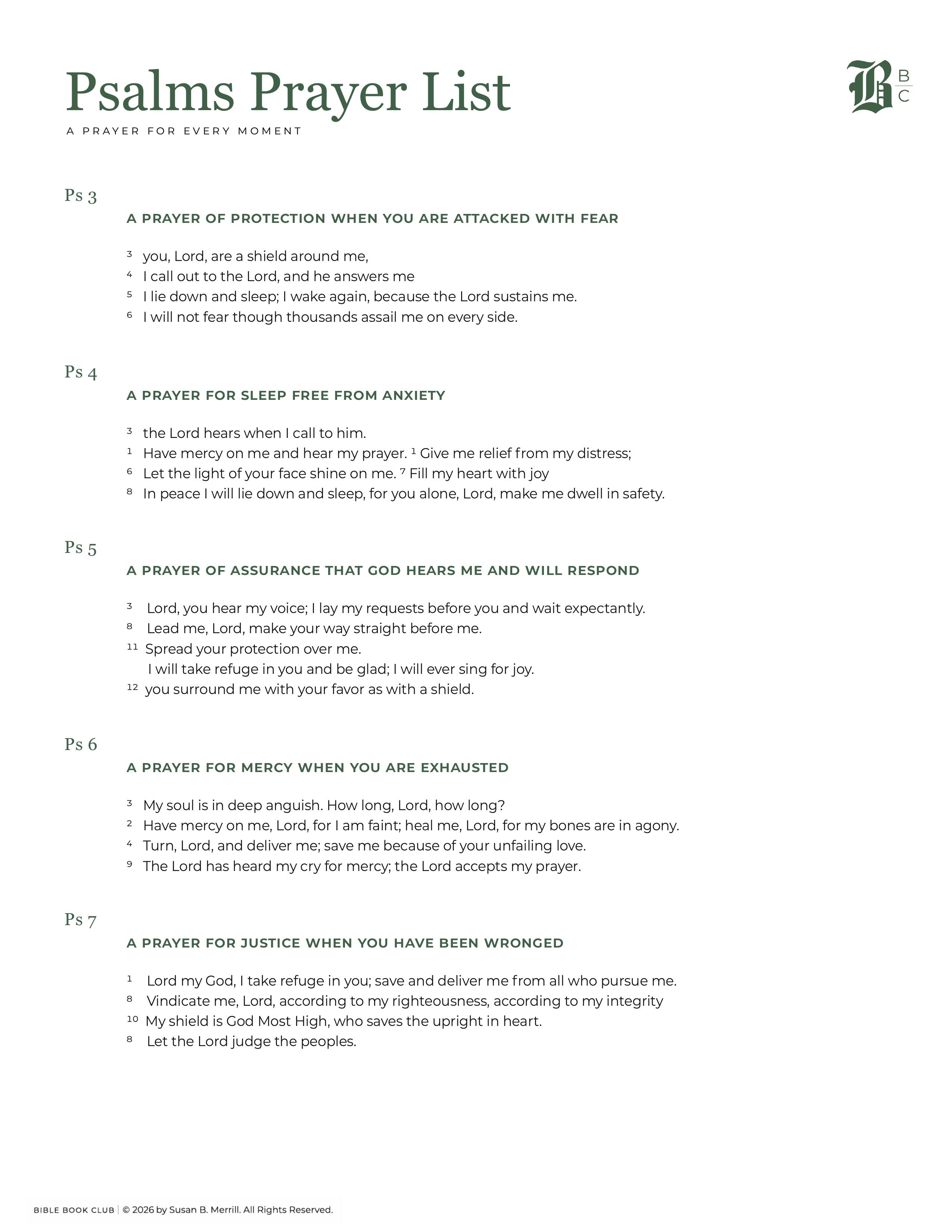
- Pray to God, which we are all doing together in this season of Bible Book Club at the end of each psalm. And you can continue to do so by downloading the Psalms Prayer List, which we add to every week. By the end of this season, there will be 150 prayers on the list taken from the 150 psalms.
- Worship God. The psalms are God’s playlist for your heart, and you can worship by listening to the Bible Book Club playlist that is also growing weekly on Apple or Spotify. By the end of the season, there will be over a dozen songs taken from the Psalms to worship to.
- Fellowship. We encourage you to find a church, find a small group, or start one. Then use this podcast to discuss.
Just by being a Bible Book Club listener, you are already doing much of this. But do not let this podcast replace church.
Acts 2:42 42 “They devoted themselves to the apostles’ teaching and to fellowship, to the breaking of bread and to prayer.”
Corporate worship, prayer, reading of the Word, receiving the sacraments, pastoral care…we are to do these as a body, together, gathered in His name. Go to church!
A prayer for forgiveness and the way to God’s path
1 In you, Lord my God, I put my trust.3 No one who hopes in you will ever be put to shame.
7 Do not remember the sins of my youth and my rebellious ways;
11Forgive my iniquity, though it is great.4 Show me your ways, Lord, teach me your paths.
5 Guide me in your truth and teach me, for you are God my Savior, and my hope is in you.
David goes from asking for forgiveness for his sin in Psalm 25 to lament in our next psalm.
Psalm 26: A Cry for Vindication When You Are Blameless
Psalm 26
Of David.
1 Vindicate me, Lord, for I have led a blameless life; I have trusted in the Lord and have not faltered. 2 Test me, Lord, and try me, examine my heart and my mind; 3 for I have always been mindful of your unfailing love and have lived in reliance on your faithfulness.
4 I do not sit with the deceitful, nor do I associate with hypocrites. 5 I abhor the assembly of evildoers and refuse to sit with the wicked. 6 I wash my hands in innocence, and go about your altar, Lord, 7 proclaiming aloud your praise and telling of all your wonderful deeds.
8 Lord, I love the house where you live, the place where your glory dwells. 9 Do not take away my soul along with sinners, my life with those who are bloodthirsty, 10 in whose hands are wicked schemes, whose right hands are full of bribes. 11 I lead a blameless life; deliver me and be merciful to me.
12 My feet stand on level ground; in the great congregation I will praise the Lord.
What is Psalm 26 about?
Psalm 26 is about vindication when you are accused and innocent. This one feels like the flip side of Psalm 25. Instead of confessing guilt, David asserts innocence. He’s been accused of something, and his response is to throw open the door to his heart and say:
Psalm 26:2 2 Test me, Lord, and try me, examine my heart and my mind
David is not being defensive. He just wants radical transparency. He has nothing to hide, and he knows it. The key phrase here is “examine me.” That’s not arrogance. Only a person who has learned that living under God’s gaze is actually the safest place to be will ask to be examined.
Psalms 25 and 26 almost seem contradictory. How can David have sinned on one hand and now be declaring he is blameless on the other?
Why do Psalms 25 and 26 seem to contradict each other?
David most likely wrote Psalm 26 in response to some enemies’ false accusation. Regardless, the lesson for us is that whether we’re guilty and need forgiveness or innocent and need vindication, God is the right place to take both.
A prayer for vindication when you are blameless
1 Vindicate me, Lord, for I have trusted in the Lord and have not faltered.
5 I refuse to sit with the wicked.6 I go about 7 proclaiming your praise and telling of all your wonderful deeds
11 I lead a blameless life; deliver me and be merciful to me.
Psalm 27: Overcoming Fear with Confidence that God Is My Salvation
Psalm 27
Of David.
1 The Lord is my light and my salvation— whom shall I fear? The Lord is the stronghold of my life— of whom shall I be afraid?
2 When the wicked advance against me to devour me, it is my enemies and my foes who will stumble and fall. 3 Though an army besiege me, my heart will not fear; though war break out against me, even then I will be confident.
4 One thing I ask from the Lord, this only do I seek: that I may dwell in the house of the Lord all the days of my life, to gaze on the beauty of the Lord and to seek him in his temple. 5 For in the day of trouble he will keep me safe in his dwelling; he will hide me in the shelter of his sacred tent and set me high upon a rock.
6 Then my head will be exalted above the enemies who surround me; at his sacred tent I will sacrifice with shouts of joy; I will sing and make music to the Lord.
7 Hear my voice when I call, Lord; be merciful to me and answer me. 8 My heart says of you, “Seek his face!” Your face, Lord, I will seek. 9 Do not hide your face from me, do not turn your servant away in anger; you have been my helper. Do not reject me or forsake me, God my Savior. 10 Though my father and mother forsake me, the Lord will receive me. 11 Teach me your way, Lord; lead me in a straight path because of my oppressors. 12 Do not turn me over to the desire of my foes, for false witnesses rise up against me, spouting malicious accusations.
13 I remain confident of this: I will see the goodness of the Lord in the land of the living. 14 Wait for the Lord; be strong and take heart and wait for the Lord.
What is Psalm 27 about?
Psalm 27 is about facing fear with the assurance of our salvation. In this psalm, David was most likely being hunted by Saul. He was surrounded by danger, outnumbered, facing a mighty army, with a band of outlaws. But rather than falling into a panic of fear, he defies it by asking for one thing.
What is the one thing David asks for when facing fear?
When facing fear, David asks, “One thing I ask from the Lord, this is what I seek: that I may dwell in the house of the Lord all the days of my life.” One thing. He stills the fearful pounding of his heart and holds it captive to one thing: God’s presence. Not rescue, not victory, not even safety. Presence.
A Lesson for Us
David’s one desire in the face of fear is a lesson for us. The one thing that overcomes fear isn’t better circumstances. Life will always have something to be afraid of. It’s a deeper desire for God. Because He is our light and salvation. Presence is the very thing that should be our response to what God has done. We should desire His presence. Relationship.
David Shifts His Attention
With his focus on the Lord declared, David turns his attention to his sheep, his men preparing for battle, most likely, and he closes with another great line of Scripture.
Psalm 27:14 14 “Wait for the Lord; be strong and take heart and wait for the Lord.”
What does it mean to wait on the Lord?
The Hebrew word qavah used in Psalm 27 means to wait, to hope with expectation, like a rope under tension. Waiting for the Lord is not passive; it’s an active trust. Trust that God knows the exact time to act. Instead of rushing ahead, David waits calmly. Faith and patience always seem to go together.
- It reminds me of Moses’ words to Joshua to be strong and courageous.
- It reminds me of that painting of George Washington crossing the Delaware by Emmanuel Leutze. He looks calm and courageous in the midst of the chaos at his feet.
What is the meaning of ‘the Lord is my light and my salvation’?
“The Lord is my light and my salvation” means that God will light the path ahead when you are swallowed in darkness. He will provide the eternal rescue you need, so much more than an earthly rescue.
A prayer for overcoming fear with confidence in your salvation
1 The Lord is my light and my salvation— whom shall I fear?
The Lord is the stronghold of my life— of whom shall I be afraid?4 One thing I ask from the Lord, this only do I seek:
that I may dwell in the house of the Lord all the days of my life,13 I remain confident of this: I will see the goodness of the Lord in the land of the living.
Psalm 28: A Cry for Deliverance from Evil People
Psalm 28
Of David.
1 To you, Lord, I call; you are my Rock, do not turn a deaf ear to me. For if you remain silent, I will be like those who go down to the pit. 2 Hear my cry for mercy as I call to you for help, as I lift up my hands toward your Most Holy Place.
3 Do not drag me away with the wicked, with those who do evil, who speak cordially with their neighbors but harbor malice in their hearts. 4 Repay them for their deeds and for their evil work; repay them for what their hands have done and bring back on them what they deserve.
5 Because they have no regard for the deeds of the Lord and what his hands have done, he will tear them down and never build them up again.
6 Praise be to the Lord, for he has heard my cry for mercy. 7 The Lord is my strength and my shield; my heart trusts in him, and he helps me. My heart leaps for joy, and with my song I praise him.
8 The Lord is the strength of his people, a fortress of salvation for his anointed one. 9 Save your people and bless your inheritance; be their shepherd and carry them forever.
What is Psalm 28 about?
Psalm 28 is about the fear that God does not hear you. David’s deepest fear in this psalm isn’t his enemies. It’s that God might not answer him.
Psalm 28:1 1 do not turn a deaf ear to me. For if you remain silent, I will be like those who go down to the pit.
How does the act of prayer change David’s perspective in Psalm 28?
Mid-psalm, the act of bringing his fear to God shifts something in David. He doesn’t receive new information. No angel appears. The prayer itself restores his confidence. By Psalm 28:6, he’s moved from pleading to praise almost involuntarily:
Psalm 28:6 6 “Praise be to the Lord, for he has heard my cry for mercy.”
That’s the lesson Psalm 28 teaches us. Sometimes we don’t feel better until we’ve said the hard thing out loud to God. The act of praying is itself the pivot.
A prayer for when you fear God does not hear you.
1 To you, Lord, I call; you are my Rock, do not turn a deaf ear to me.
2 Hear my cry for mercy as I call to you for help,
7 The Lord is my strength and my shield; my heart trusts in him, and he helps me.
8 The Lord is the strength of his people, a fortress of salvation.
Psalm 29: Praise for the Power of God that Provides Peace
Psalm 29
A psalm of David.
1 Ascribe to the Lord, you heavenly beings, ascribe to the Lord glory and strength. 2 Ascribe to the Lord the glory due his name; worship the Lord in the splendor of his holiness.
3 The voice of the Lord is over the waters; the God of glory thunders, the Lord thunders over the mighty waters. 4 The voice of the Lord is powerful; the voice of the Lord is majestic. 5 The voice of the Lord breaks the cedars; the Lord breaks in pieces the cedars of Lebanon. 6 He makes Lebanon leap like a calf, Sirion like a young wild ox. 7 The voice of the Lord strikes with flashes of lightning. 8 The voice of the Lord shakes the desert; the Lord shakes the Desert of Kadesh. 9 The voice of the Lord twists the oaks and strips the forests bare. And in his temple all cry, “Glory!”
10 The Lord sits enthroned over the flood; the Lord is enthroned as King forever. 11 The Lord gives strength to his people; the Lord blesses his people with peace.
What is Psalm 29 about?
Psalm 29 is about how God’s power provides peace. The storm in this psalm is just the backdrop. It sets the stage for the theology of Psalm 29, which repeatedly emphasizes the “Voice of the Lord” over nature.
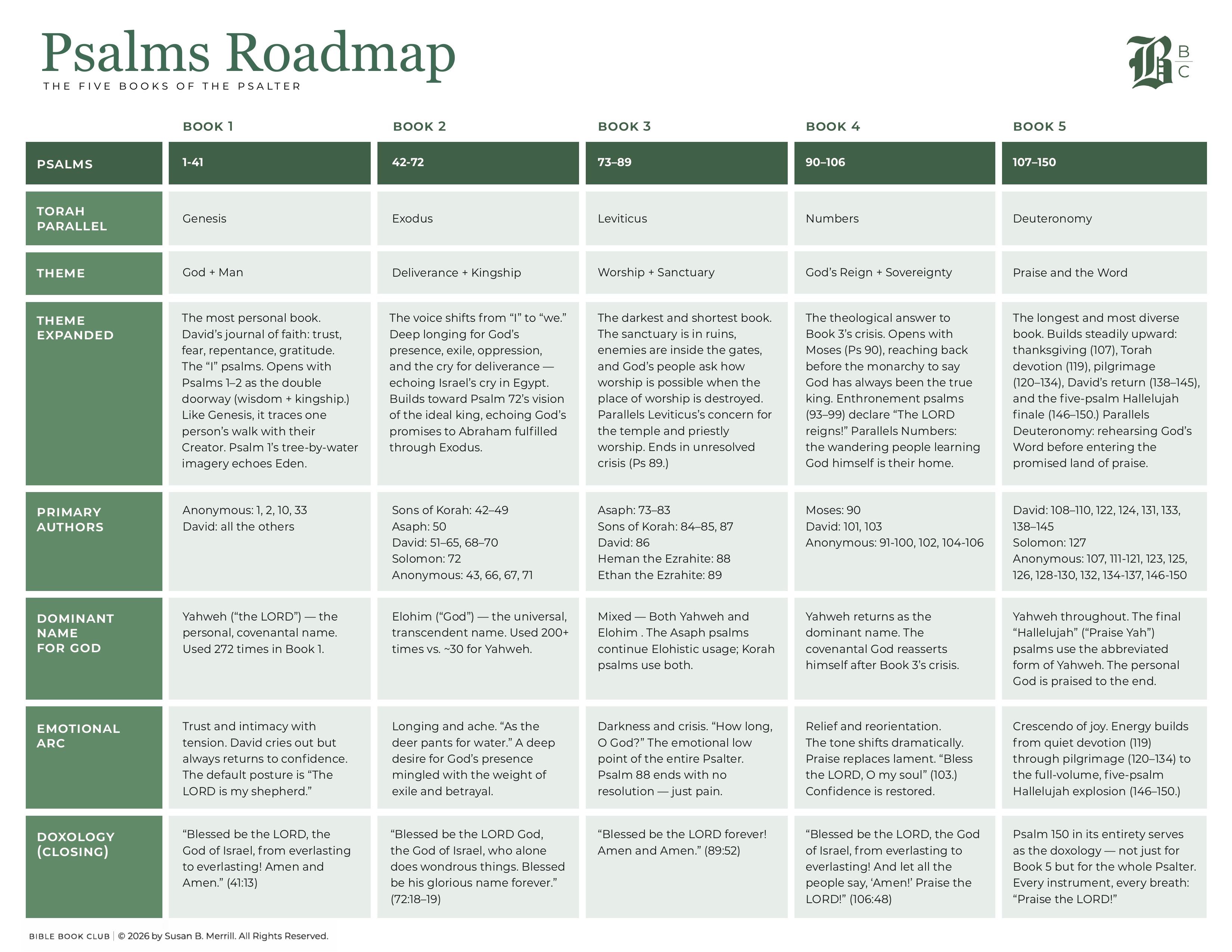
Psalms like this are why Book 1 of the Psalms is tied to Genesis. In Genesis, God spoke creation into existence. Seven times David repeats the phrase: the voice of the Lord.
Why is the phrase “voice of the Lord” repeated seven times in Psalm 29?
Seven is the number of completeness in Hebrew, and David is making a complete case. The voice of the Lord is over the waters, powerful, majestic. It breaks cedars, flashes lightning, shakes the desert, twists oaks. God’s voice governs everything. The storm isn’t chaos. It’s God speaking. Then, suddenly, in the final verse, the storm seems to be over.
Psalm 29:11 11 The Lord gives strength to his people; the Lord blesses his people with peace.
The strength of God’s voice is given to His people, and they are blessed with peace. It teaches us that God’s voice is powerful. And that voice is not against us. It is for us. True peace is not found in the absence of storms. It is found in Him.
A prayer to remind you that God’s power can provide peace
1 Ascribe to the Lord glory and strength.
4 The voice of the Lord is powerful; the voice of the Lord is majestic.
7 The voice of the Lord strikes with flashes of lightning. 3 the God of glory thunders,11 The Lord gives strength to his people; the Lord blesses his people with peace.
Psalm 29 is the storm, and Psalm 30 is the morning after
Psalm 30: Thanks for Joy After Suffering
Psalm 30
A psalm. A song. For the dedication of the temple. Of David.
1 I will exalt you, Lord, for you lifted me out of the depths and did not let my enemies gloat over me. 2 Lord my God, I called to you for help, and you healed me. 3 You, Lord, brought me up from the realm of the dead; you spared me from going down to the pit.
4 Sing the praises of the Lord, you his faithful people; praise his holy name. 5 For his anger lasts only a moment, but his favor lasts a lifetime; weeping may stay for the night, but rejoicing comes in the morning.
6 When I felt secure, I said, “I will never be shaken.” 7 Lord, when you favored me, you made my royal mountain stand firm; but when you hid your face, I was dismayed.
8 To you, Lord, I called; to the Lord I cried for mercy: 9 “What is gained if I am silenced, if I go down to the pit? Will the dust praise you? Will it proclaim your faithfulness? 10 Hear, Lord, and be merciful to me; LORD, be my help.”
11 You turned my wailing into dancing; you removed my sackcloth and clothed me with joy, 12 that my heart may sing your praises and not be silent. Lord my God, I will praise you forever.
What is Psalm 30 about?
Psalm 30 is about praising God for turning mourning into dancing. This psalm is one of thanks and praise for the morning after a dark night, brutal storm, or period of suffering. David praises:
Psalm 30:5 5 weeping may stay for the night, but rejoicing comes in the morning.
David’s suffering sounds physical. We do not know if it is an illness or a battle injury. But rising from the sickbed, David does not move on with life before expressing his praise to God:
Psalm 30:11 11 You turned my wailing into dancing; you removed my sackcloth and clothed me with joy,
The dark suffering David wrestled with gave way to a glorious morning bright with joy and restored hope. And this is where I see a difference in how people process. So many today are sad and lonely, their spirits weighed down and dark. I have to wonder, are we missing celebrating the mornings?
- The morning after rocking a feverish baby all night
- The morning after we get home from the hospital and wake in our own bed
- The morning after we release a loved one to the Lord and eternal freedom
These are the celebrations of life. The fragile life of a newborn, the eternal life of the believer, and the struggle to survive in between. Do we truly ponder God’s gifts of morning? Or do we move on, distracted? Consumed only by the million little trials that fill our daily life.
What does Psalm 30 teach about processing seasons of suffering?
In Psalm 30, David teaches us that “the morning” is an attitude of the heart. In this psalm, David is healed, but in many cases his outcomes are irrevocably dark. His son Absalom murders his other son Amnon. His first son with Bathsheba dies because of his sin. And yet David rises from his fasting and mourning:
2 Samuel 12:20 20 Then David got up from the ground. After he had washed, put on lotions and changed his clothes, he went into the house of the Lord and worshiped
David worships in all things. The apostle Paul says the same:
1 Thessalonians 5:16-18 16 Rejoice always, 17 pray continually, 18 give thanks in all circumstances; for this is God’s will for you in Christ Jesus.
In Psalm 30, David’s trial is over. Yours may not be. But let’s not forget David’s heart in all things. He is an example to us. To ponder, to pray, and to praise in all things.
A prayer of thanks to God for turning your mourning into joy
2 Lord my God, I called to you for help, and you healed me.
1 you lifted me out of the depths and did not let my enemies gloat over me.
5 Weeping may stay for the night, but rejoicing comes in the morning.
11 You turned my wailing into dancing; you clothed me with joy.
Join us for our Bible study on Psalms 31-36 here.
New Psalms Playlist Song
We have two songs this week for Psalms 25-30. Both are actually from Psalm 27, each with a different focus:
- “Whom Shall I Fear” (Psalm 27) by Chris Tomlin
- “One Thing” (Psalm 27) by Shane and Shane
Listen to our Psalms Playlist on Apple Music or Spotify.
Group Discussion Questions for Psalms 25-30
- In Psalm 25, we get four practices we can use to find God’s way: studying God’s word, praying to God, worshiping God, and seeking fellowship in church or a small group. Which of these four sounds the most intriguing, and which is the most difficult for you?
- Psalm 28 shows that the act of praying itself is the pivot that moves David from pleading to praise, even without new information. Has there been a time when the simple act of saying the hard thing out loud to God has shifted something in you?
- Psalm 30 invites us to celebrate “the mornings,” those moments after a long night of suffering. Are there any mornings in your own life, past or present, that you haven’t paused to acknowledge and praise God for?