Previously on Bible Book Club
In Esther 3, God moved Mordecai into a position in the court, and providentially Mordecai saved the king from an assassination attempt. However, at the very time the King should have been honoring Mordecai, he had a brain lapse and instead honored Haman. In his new elevated position, the king commanded that everyone bow down to Haman.
Mordecai refused, and Haman’s hatred was set on fire. He plotted to kill not only Mordecai but the entire Jewish population. Haman cast lots or pur for the date of the genocide and then strode off to manipulate the king into agreeing, which he did without question. Then they sat down for a drink as the dispatch of death was delivered throughout Persia.
Esther 4 Introduction
The author is building the irony in this story. Before we begin the iconic Esther Chapter 4, here are a few details to remember.
How long is the gap between Esther becoming queen and Haman’s plot?
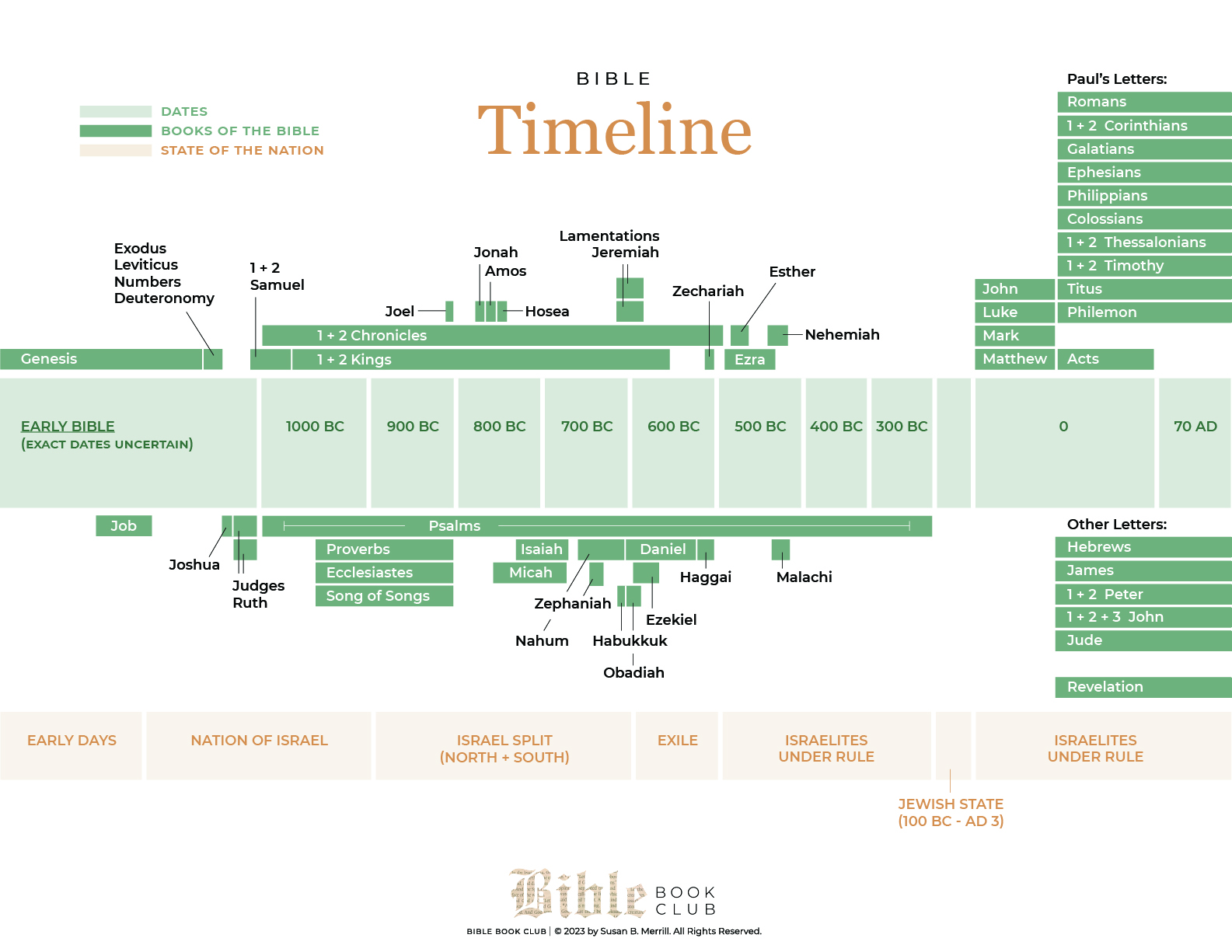
The gap between Esther becoming queen and Haman’s plot was about five years. Esther became queen in the 7th year of Xerxes’ reign, and Haman conspired against the Jews in the 12th year. Somewhere in that five-year period, Mordecai foiled the assassination plot, and Haman rose to power.
Mordecai went unrewarded for saving the King’s life, and the King rewarded Haman with the power to take many lives, including Mordecai’s. The irony grows. What man intends for evil, God can use for good.
Haman is oblivious. He cannot see that Esther and Mordecai have been providentially positioned by a king he cannot control. The King of kings: God. And while Haman has been attaining his powerful position through his own manipulation and money, Esther and Mordecai attained their positions through the wickedness of others.
- Esther by way of the king’s greedy lust
- Mordecai by way of the king’s assassins
Haman moved himself into position for evil, the killing of many lives. God moved Esther and Mordecai into position for good, the saving of many lives. This is divine providence at its best!
Scene 1: Mordecai Makes a Scene at the King’s Gate
Esther 4:1-3
1 When Mordecai learned of all that had been done, he tore his clothes, put on sackcloth and ashes, and went out into the city, wailing loudly and bitterly. 2 But he went only as far as the king’s gate, because no one clothed in sackcloth was allowed to enter it. 3 In every province to which the edict and order of the king came, there was great mourning among the Jews, with fasting, weeping and wailing. Many lay in sackcloth and ashes.
Why does Mordecai wear sackcloth and ashes in Esther chapter 4?
Mordecai wore sackcloth and ashes in Esther 4 to make a bold, brave public statement. To us, his actions might sound dramatic, but to the Persians and the Jews, it would have been a deeply moving form of communication. Perhaps he was taking inspiration from Solomon’s advice in Proverbs.
Proverbs 24:10-12 10 If you falter in a time of trouble, how small is your strength! 11 Rescue those being led away to death; hold back those staggering toward slaughter. 12 If you say, “But we knew nothing about this,” does not he who weighs the heart perceive it? Does not he who guards your life know it? Will he not repay everyone according to what they have done?
Mordecai does not falter in this time of trouble. He refuses to sit back and pretend nothing is going to happen, and he won’t let Esther sit by knowing nothing.
Mordecai Takes Action
- Mordecai tears his clothes. Clothing is a symbol of status, dignity, and identity in the ancient Near East. Clothes are hand-woven and expensive. Tearing them is a huge sacrifice. It communicated to people that the person’s heart is torn.
- Mordecai puts on sackcloth. Sackcloth is a coarse cloth made from goat or camel hair. It is scratchy and uncomfortable. It communicates to others that the person’s internal discomfort is so great that they can not be physically comfortable.
- Mordecai puts on ashes. This would have been much more than a little smudge on the forehead. A person would take handfuls of ashes from a hearth and pour the ashes over themselves, roll in ashes, or sleep or sit in ashes. It communicates to others that their joy or life has been burned to the ground. Their identity is now covered in death and ruin.
Mordecai does all of this with loud wailing, and Jews throughout Persia join him. There are perhaps over one million Jews scattered throughout the Persian Empire. Because of Haman’s hatred and the king’s foolishness, all are to die. A million people with nowhere to go, because the empire is huge. Such devastating news would have traveled far and fast.
Everyone in the capital of Susa hears and sees Mordecai. Even those in the palace, because he goes straight for the King’s Gate. But Mordecai can’t reach the king, because the king lives in a beautiful bubble that can’t be touched by mourning or any of life’s sad realities. Mordecai can reach the queen, but doesn’t she already know? Esther is secluded from the outside world in the harem. If she knew, surely she would have warned Mordecai, right? Mordecai isn’t willing to wait and wonder. Esther has influence, and it is time to use it.
Scene 2: Mordecai’s Demand, Esther’s Fear
Esther 4:4-11
4 When Esther’s eunuchs and female attendants came and told her about Mordecai, she was in great distress. She sent clothes for him to put on instead of his sackcloth, but he would not accept them.
5 Then Esther summoned Hathak, one of the king’s eunuchs assigned to attend her, and ordered him to find out what was troubling Mordecai and why.
6 So Hathak went out to Mordecai in the open square of the city in front of the king’s gate. 7 Mordecai told him everything that had happened to him, including the exact amount of money Haman had promised to pay into the royal treasury for the destruction of the Jews. 8 He also gave him a copy of the text of the edict for their annihilation, which had been published in Susa, to show to Esther and explain it to her, and he told him to instruct her to go into the king’s presence to beg for mercy and plead with him for her people.
9 Hathak went back and reported to Esther what Mordecai had said. 10 Then she instructed him to say to Mordecai, 11 “All the king’s officials and the people of the royal provinces know that for any man or woman who approaches the king in the inner court without being summoned the king has but one law: that they be put to death unless the king extends the gold scepter to them and spares their lives. But thirty days have passed since I was called to go to the king.”
What is Esther’s first response to Mordecai?
Esther’s first response is to restore Mordecai’s dignity by replacing his clothes. When he refuses, he gets her attention. She needs to know why Mordecai is so troubled that he refuses to be comforted. So this time, Esther doesn’t just send clothes via some random servants. She sends a specific person, Hathak.
Who was Hathak, and what role did he play in Esther 4?
Hathak is one of the king’s eunuchs assigned to attend Esther. She orders him to find out what is troubling Mordecai and why. It is as if she understands the silent message from Mordecai that random servants are not what he wants from her.
Hathak must have been what he wanted, because Mordecai spills all the details to him and backs it up with a copy of the edict. Then Mordecai tells Hathak that Esther must plead for her people.
Hathak Is an Instrument of Providence
Does Hathak know Esther is Jewish? It doesn’t say, but most writers assume he does. This is clearly a loyal servant of Esther’s, and Mordecai may have even known Hathak. Mordecai never would have been so explicit if he didn’t trust Hathak.
Hathak is a great example of how God uses obscure people to accomplish important tasks, and how he providentially plants them where He needs them. Nowhere does it say that Hathak believes in God, but God has control over all, whether they know it or not!
Esther comprehends the dire urgency of the situation. What she cannot fathom is the impossibility of her intervention. It is a suicide mission. She has not even seen the king in a month. If his passion for her is cooling, an uninvited appearance could be his excuse to get rid of her. Esther cannot see a way around the law that guards the king.
What was the Persian law for approaching the king without a summons?
Approaching the king uninvited was a capital offense in Persia. Herodotus, the Greek historian, recorded the case of a high-ranking Persian official who was executed for this. Access to the king was strictly guarded to prevent assassination. According to Herodotus, Persian kings forbade anyone from approaching them without a summons.
The correct protocol was to petition for an audience with the king through his layers of officials first, then wait for an invitation. There were seven men in the court, known as the king’s friends, allowed to visit the king without an official announcement unless the king was with a woman.
The Scepter Exception is unique to the Book of Esther, but it is supported by Persian royal practices. The historical evidence is that the king’s word was absolute law. He could grant a pardon to anyone for any reason.
Scene 3: From Fear to Faith, If I Perish, I Perish
Esther 4:12-17
12 When Esther’s words were reported to Mordecai, 13 he sent back this answer: “Do not think that because you are in the king’s house you alone of all the Jews will escape. 14 For if you remain silent at this time, relief and deliverance for the Jews will arise from another place, but you and your father’s family will perish. And who knows but that you have come to your royal position for such a time as this?”
15 Then Esther sent this reply to Mordecai: 16 “Go, gather together all the Jews who are in Susa, and fast for me. Do not eat or drink for three days, night or day. I and my attendants will fast as you do. When this is done, I will go to the king, even though it is against the law. And if I perish, I perish.”
17 So Mordecai went away and carried out all of Esther’s instructions.
What are Mordecai’s three main arguments to persuade Esther to act?
Esther could die either way.
If she approaches the king without an invitation, she could die. If she doesn’t and the edict stands, someone might find out she is Jewish, and she could die.
God’s providence will not be stopped.
Mordecai points out God’s providence without ever mentioning God. If Esther remains silent, God will use someone else to save his people. Mordecai has faith that the people of Israel will somehow be protected from annihilation.
Esther’s position is not an accident.
Mordecai points out that Esther’s position in the palace is not an accident. She must see that it is for this reason she is Queen. What was a mystery before is now evident. Esther was chosen by the king because she is chosen by God.
- Drunkenness.
- Foolish request to use Queen Vashti for entertainment.
- Inflated pride when Vashti refuses.
- Hasty decision to banish Vashti.
- Lust for women, which led to a competition for the queen.
God uses all this sin to put Esther in a position to save His people. Wicked people do evil things in this world, but God works through them to accomplish His own purposes, and man cannot move God’s purposes. It’s a truth that still stands today and a point to ponder. A. W. Tozer used the analogy of an ocean liner to describe the inevitability of God’s purposes, and it is helpful for us to think about that here.
How does the “ocean liner” analogy explain divine providence?
A. W. Tozer explains divine providence using this ocean liner analogy:
”An ocean liner leaves New York bound for Liverpool. Its destination has been determined. Nothing can change it. This is the sovereignty of God.
On board the ship are many passengers. They are free to move about as they will. This is the freedom of man.
But all the time they are being carried toward Liverpool. Their freedom is real, but it is within the bounds of the ship’s destiny. So it is with man and the purposes of God.”
As believers, our ship has set sail, and our eternal destination has been determined. The only question that remains is how much we will accomplish for the Lord on the journey. We will have choices. How will we respond to opportunities?
Mordecai responds, and so does Esther. The combination of human responsibility and divine sovereignty is perfection. God positioned Esther in this era, in this powerful empire, and even in the bedroom of the king, so that when the critical moment arrived, she would be prepared, and He could fulfill His purpose through her.
What is the significance of Esther’s dual identity as Hadassah?
Esther’s two names symbolize her divided identity: Hebrew Hadassah and Persian Esther. She is the only character in this story with two names. Up to this point, Esther has been passive and controlled by circumstances, but now she transforms into a person of courage and strategic political skill.
Haman’s evil forced Esther’s identity crisis to a head, and the five-year transformation is complete. Hadassah, the girl, is gone. Esther’s response is the response of a courageous queen. The decision she faces will irrevocably define her future and determine her people’s destiny.
Esther overcomes her fear and finds the courage to reveal her Jewish identity, regardless of the consequences. She makes a huge leap from passively doing as she is told to taking control and actively commanding the situation, instructing even Mordecai. And that is only the beginning. She brings the people to their knees in prayer, and in the end, it is Esther alone who conquers Satan’s agent, Haman.
From Mourning to Prayer
Note and ponder that this chapter began with the tearing of clothes, sackcloth, ashes, and wailing. It began with the people in mourning. The chapter ends with fasting and prayer. It ends with the people turning to God for salvation. A hope that hinges on one divinely placed woman.
Why does the author connect the Book of Esther to the prophet Joel?
The author connects the Book of Esther to the Prophet Joel because he wants the people to remember this is not the first time God has saved them. The author is making a point that this threat is an occasion for the Jewish people, who are in exile because of their sin, to turn to the Lord. Only He can save them.
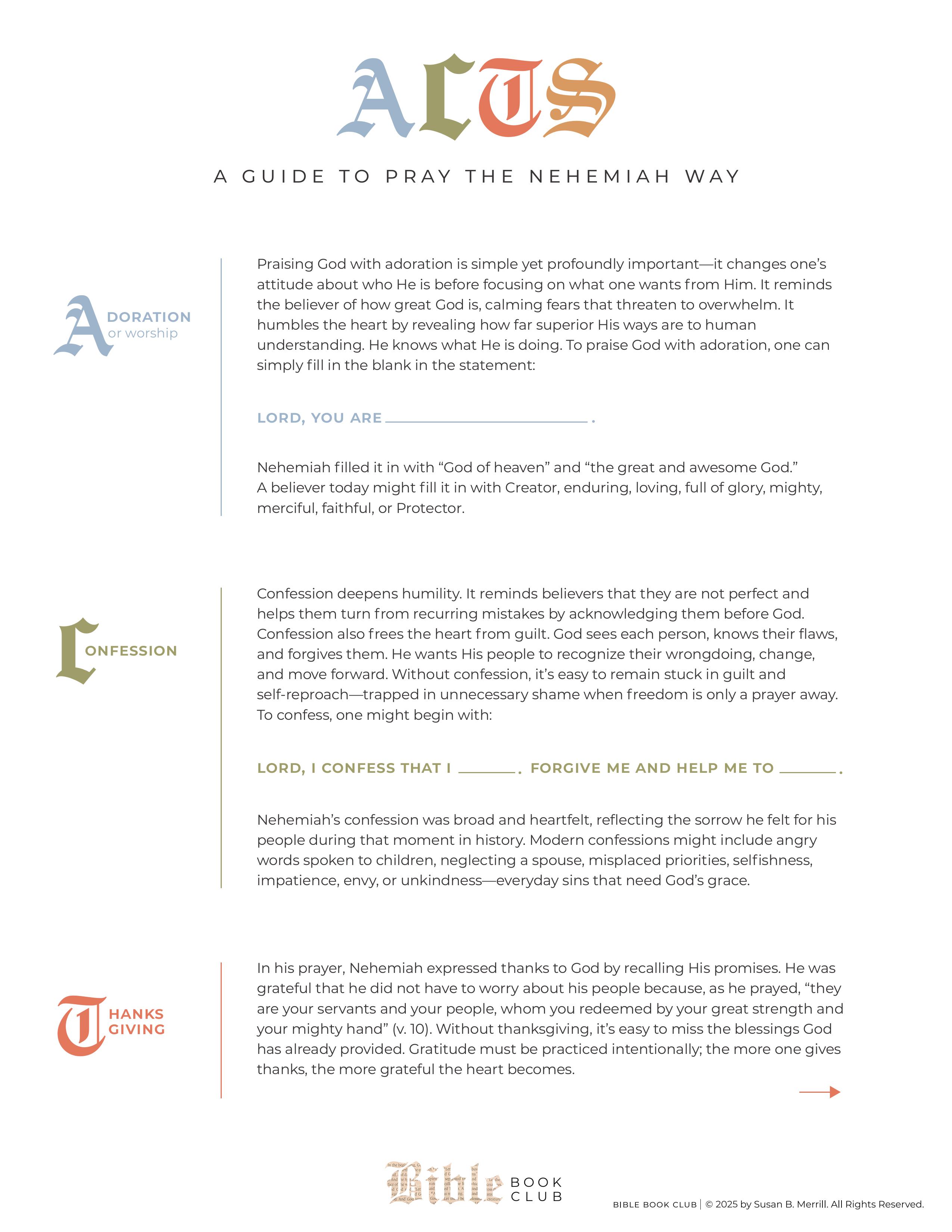
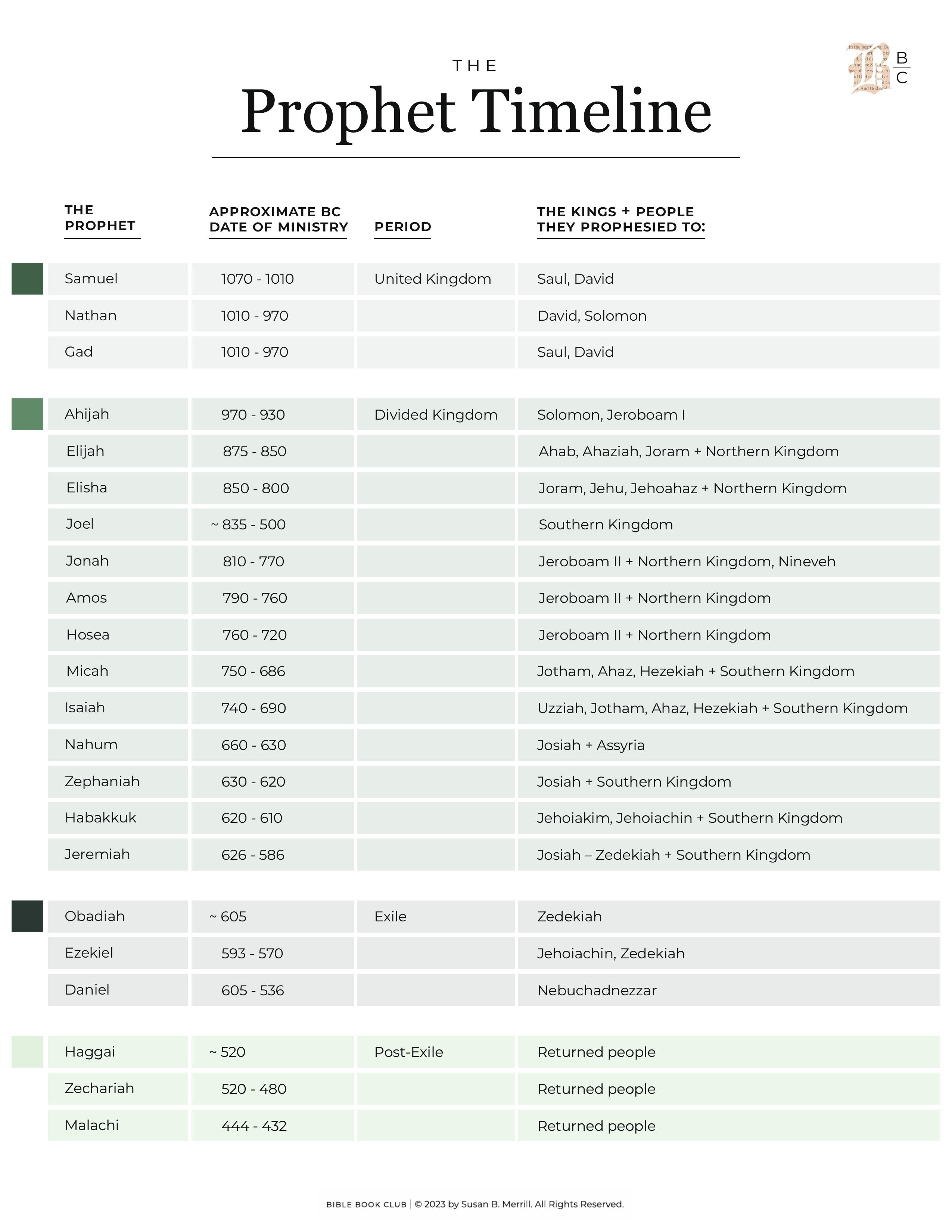
The words used here, such as tearing of clothes, sackcloth, ashes, fasting, and prayer, are a clue. A link to the past and a prophecy from hundreds of years before. Joel, a prophet who lived 300 or 400 years before Esther, begged the people to fast, weep, and mourn. To rend their hearts, not their garments, and return to Him.
Joel 2:12-15 “Even now,” declares the Lord, “return to me with all your heart, with fasting and weeping and mourning.” 13 Rend your heart and not your garments. Return to the Lord your God, for he is gracious and compassionate, slow to anger and abounding in love, and he relents from sending calamity. 14 Who knows? He may turn and relent and leave behind a blessing—grain offerings and drink offerings for the Lord your God. 15 Blow the trumpet in Zion, declare a holy fast, call a sacred assembly.
In the book of Esther, the author uses almost the exact words as Joel when he describes Mordecai and the people weeping and mourning. The phrasing provides a link between Joel and Esther. We don’t know if Esther is aware of Joel’s prophecy, but she does what he asks. She “blows the trumpet of Zion” and calls for a fast throughout the capital.
For the first time in this story, Esther identifies herself with God’s people. When forced to choose, she defers to God. He could save her with the others, or she could perish. God gave her this royal position, and God can take her out. The words used at the beginning and end of the story may be a link to Joel in the past, but the story is a link to Jesus in the future.
Why does Haman seek to destroy the entire Jewish population?
If Haman successfully kills the Jewish people, he will exterminate the line of David. In doing so, Haman will destroy the seed that will become the King of Kings, and Jesus will not be born to the Jews.
The enemy of our souls has the same goal yesterday, today, and tomorrow. When we turn the page to the New Testament, we meet another Haman with a different name, Herod. Haman’s goal in this story is the same goal as in Matthew: to wipe out the Jews.
Matthew 2:7-16 Then Herod called the Magi secretly and found out from them the exact time the star had appeared. 8 He sent them to Bethlehem and said, “Go and search carefully for the child. As soon as you find him, report to me, so that I too may go and worship him.”
9 After they had heard the king, they went on their way, and the star they had seen when it rose went ahead of them until it stopped over the place where the child was. 10 When they saw the star, they were overjoyed. 11 On coming to the house, they saw the child with his mother Mary, and they bowed down and worshiped him. Then they opened their treasures and presented him with gifts of gold, frankincense and myrrh. 12 And having been warned in a dream not to go back to Herod, they returned to their country by another route.
13 When they had gone, an angel of the Lord appeared to Joseph in a dream. “Get up,” he said, “take the child and his mother and escape to Egypt. Stay there until I tell you, for Herod is going to search for the child to kill him.”
14 So he got up, took the child and his mother during the night and left for Egypt, 15 where he stayed until the death of Herod. And so was fulfilled what the Lord had said through the prophet: “Out of Egypt I called my son.”
16 When Herod realized that he had been outwitted by the Magi, he was furious, and he gave orders to kill all the boys in Bethlehem and its vicinity who were two years old and under, in accordance with the time he had learned from the Magi.
How do Haman’s actions in Esther compare to King Herod’s in Matthew?
Haman and King Herod both issued royal decrees for mass murder and targeted many to eliminate one perceived threat. Haman’s hatred of Mordecai expands to all Jews. Herod’s fear of a newborn king means he must kill all boys.
Pride as Satan’s Weapon
But what is behind the hatred? Pride and Satan. Both Herod and Haman are driven by pride. Haman feels disrespected by Mordecai, and his pride can’t take it. Herod feels threatened by a baby king, and his pride won’t take it. Satan uses pride to fuel the hate and actions of both these men, because pride is Satan’s modus operandi. Isaiah tells us that Satan fell from heaven because of his pride:
Isaiah 14:12-14 12 How you have fallen from heaven, morning star, son of the dawn! You have been cast down to the earth, you who once laid low the nations! 13 You said in your heart, “I will ascend to the heavens; I will raise my throne above the stars of God; I will sit enthroned on the mount of assembly, on the utmost heights of Mount Zaphon. 14 I will ascend above the tops of the clouds; I will make myself like the Most High.”
Satan works the same yesterday, today, and tomorrow. His tricks are not new. Pride caused Satan to fall, and he uses the same sin to tempt both Haman and Herod.
What is Satan’s ultimate goal?
In both the book of Esther and the book of Matthew, the enemy has the same goal: to kill the Messiah. In Matthew, if Herod kills the baby king, the Messiah will never save the people from sin. These aren’t the only examples of Satan’s attacks against the future Messiah:
- Cain killed Abel in Genesis
- Pharaoh drowned all the Hebrew boys in Exodus
- Queen Athaliah killed her own grandsons in 2 Kings
Satan’s Broader Aim Against the Messianic Line
These aren’t random acts of cruelty. They are strategic strikes against the messianic line. At the core, this is Satan’s broader aim. He must constantly work to prevent God’s promise of redemption laid out in the beginning when God cursed the serpent.
Genesis 3:14-15 So the Lord God said to the serpent, “Because you have done this, “Cursed are you above all livestock and all wild animals! You will crawl on your belly and you will eat dust all the days of your life. 15 And I will put enmity between you and the woman, and between your offspring and hers; he will crush your head, and you will strike his heel.”
God promises that the offspring of the woman will crush the head of the serpent. The Serpent is one of several names for this agent of evil, also known as:
- Satan.
- The Evil One.
- The Tempter.
- The Dragon.
- The Adversary.
- The Devil.
With every chapter of God’s story, Satan sees the promises of God being fulfilled one by one, and his desperation intensifies. The ancient prophecy haunts him, and he can’t stop it. Every victory for God’s people brings the Messiah’s crushing blow closer.
That is the good news we are learning season after season in the Bible Book Club. God never fails, not once! He fulfills every prophecy. He keeps every promise, and every act of divine providence is proof that even though the enemy persists in evil, it is for naught. God works to bring about His perfect plan for good. And that perfect plan to save the Israelites and defeat the evil Haman will be fully revealed in our next chapters.
Group Discussion Questions for Esther 4
- Mordecai refuses to be comforted until Esther hears the truth about her true calling. Has God ever refused to give up until you were clear what your calling was? Or do you wish God would be more obvious about your calling?
- Your circumstances may feel accidental or even the result of your own hard work, but Esther 4 reminds us that God places His people strategically. Like Esther, your influence exists for more than comfort. Esther made the leap from passivity to courage. Is there an area in your life where God is asking you to stop playing it safe and step into your calling for such a time as this?
- Mordecai argues that if Esther stays silent, God will use someone else. How does the idea that God’s plan will move forward with or without you motivate or challenge you?