Previously on Bible Book Club
In the first chapter, we learned that the Book of Esther follows a different narrative concerning the Jewish exiles. This story focuses on Jews who remained in Persia rather than those who returned to Jerusalem, as in the previous two books of Ezra and Nehemiah.
The book of Esther takes place in Susa, the capital city of Persia. King Xerxes was having a 180-day party to gather support for the war he wanted to wage against Greece. During the party, while intoxicated, he demanded that Queen Vashti display her beauty for all his guests, whom we can assume were also drunk. Vashti refused, thereby providentially paving the way for the king to seek a new queen. Because somewhere between the alcohol and his pride, the king lost his ability to reason, and his advisors’ ill-advised plan to depose the queen was set in motion.
The entire first chapter was the setup for the rest of the book, because Vashti’s defiance set the stage for the deliverance of God’s people, which will come through another queen. The most intriguing fact about the Book of Esther is that God is not mentioned at all. The book of Esther is a story of how Divine Providence works behind the scenes through the courage and wisdom of faithful individuals to save His people.
What is the timeline between Queen Vashti and Queen Esther?
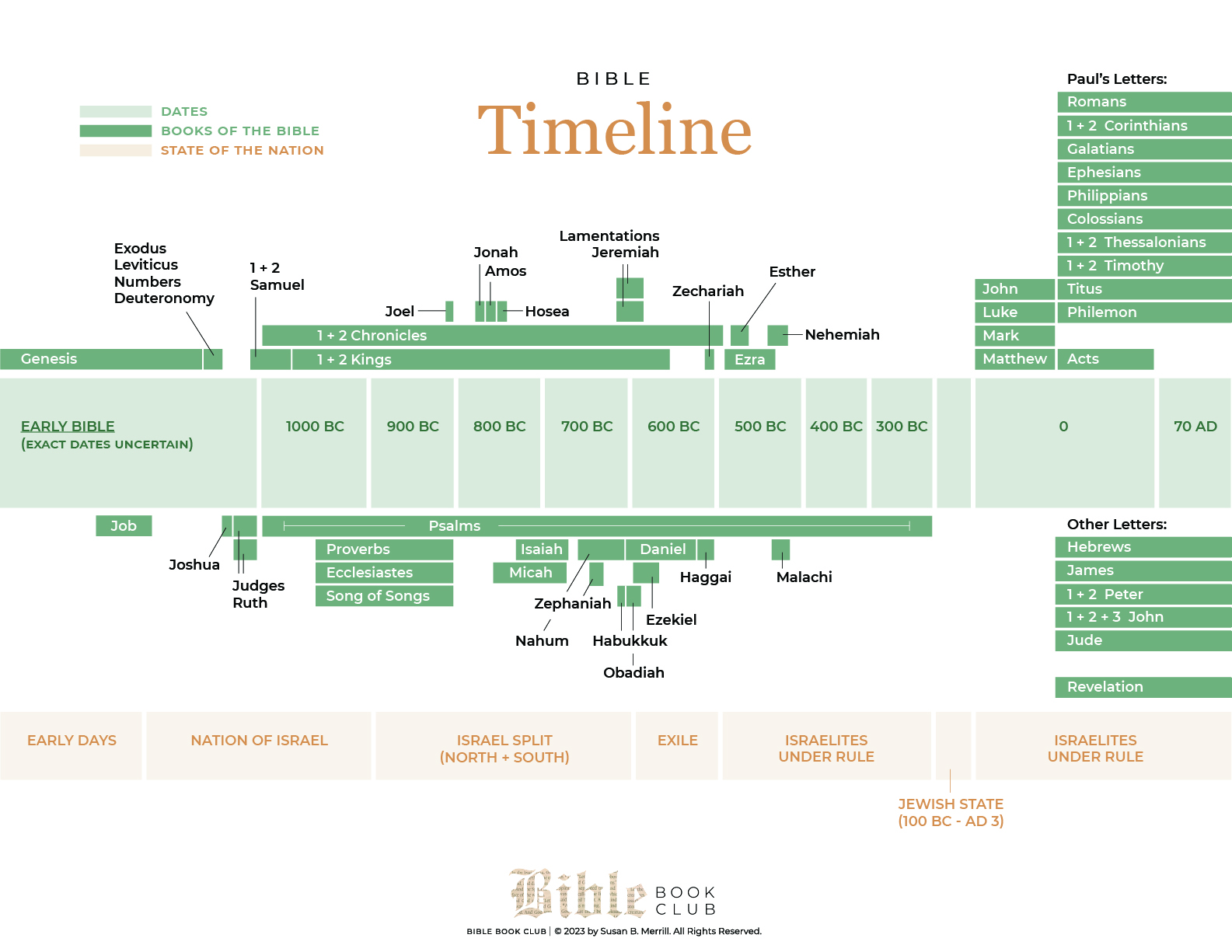
There are four years between Queen Vashti and Queen Esther. Vashti defied King Xerxes in 483 BC, the third year of his reign, and Esther was made queen in the seventh year. Between the two queens, Xerxes fought the war with Greece that he had been raising support for during the 180-day banquet.
When he returns to Persia, it is not pretty. He has lost the war, depleted Persia’s wealth, and he doesn’t even have a wife to welcome him home. The king has no queen. All he has are scheming advisors clamoring to make him happy in any way that benefits them.
Scene 1: A Lonely King Needs a Lovely Queen, Esther 2 Explained
The idea that a lonely king needs a lovely queen sounds romantic. It is not.
Esther 2:1-4
1 Later when King Xerxes’ fury had subsided, he remembered Vashti and what she had done and what he had decreed about her. 2 Then the king’s personal attendants proposed, “Let a search be made for beautiful young virgins for the king. 3 Let the king appoint commissioners in every province of his realm to bring all these beautiful young women into the harem at the citadel of Susa. Let them be placed under the care of Hegai, the king’s eunuch, who is in charge of the women; and let beauty treatments be given to them. 4 Then let the young woman who pleases the king be queen instead of Vashti.” This advice appealed to the king, and he followed it.
Why does King Xerxes need a new queen after the war?
The King needs a new queen after the war because he is lonely. He stands alone before the public in his military defeat, which is a reminder of his double humiliation: the defiance of Vashti and the defeat by Greece. He needs a lovely queen by his side to distract the public and assuage his pride.
This is not a story of romance as some films about Esther portray it. To the Persian king, the queen is an instrument for enhancing his royal image. It is an official position. He can have multiple wives for heirs, but only one queen. He can have a harem of hundreds for pleasure, but only one queen. And after the humiliation of Vashti’s defiance, the new queen has to be a controlled partner, not a co-ruler. She has to be beautiful, compliant, and manageable.
How does Vashti’s story set everything in motion?
The king misses Vashti, but if he brings her back to save face with her, Xerxes will blame her banishment on the advisors. Then Vashti will demand that the advisors be killed for their bad advice. Knowing the king’s lust for women, the advisors devised a much more entertaining plan to distract Xerxes from Vashti, thereby saving themselves.
The advisors’ plan is a national search for the perfect queen. King Xerxes can try out a different woman every night until he finds one he likes. This is not the way a queen in Persia is normally chosen. Most often, a queen is chosen from one of the noble families of Persia, which makes sense as the queen holds a political and public role. Instead, this competition is a creative way to appeal to the king’s lust. It works, and the gathering of virgins begins.
A lot has been written about the social injustice against the women of Persia in general and at this time specifically. It is worth pointing out that this is not a story of romance. There is more, so much more, to the cruelty of the king and the times. It is not only women who suffer. Hundreds of boys are gathered and castrated to serve as eunuchs in the growing harem and in the Persian Court. Everyone, male or female, is at risk of being forced into the king’s service.
The pleasure contest for the king is the advisor’s plan to conceal their mistake in advising the king to banish Vashti. But God has a plan to use it for good. For the saving of many lives.
How does the author explain God’s role in Esther’s story?
God is working behind the scenes to turn what man has planned for evil into good. He moves the queens around like pieces on a chessboard. Vashti needs to be removed from the easily influenced king, because she would have done nothing to help the Jews. So God moves her out so Esther can step in.
Scene 2: Esther 2 Meaning of the Girl with Two Names, Forced to Live Two Lives
Numerous clues to the plot are hidden in this one paragraph masked as a boring genealogical detail.
Esther 2:5-7
5 Now there was in the citadel of Susa a Jew of the tribe of Benjamin, named Mordecai son of Jair, the son of Shimei, the son of Kish, 6 who had been carried into exile from Jerusalem by Nebuchadnezzar king of Babylon, among those taken captive with Jehoiachin king of Judah. 7 Mordecai had a cousin named Hadassah, whom he had brought up because she had neither father nor mother. This young woman, who was also known as Esther, had a lovely figure and was beautiful. Mordecai had taken her as his own daughter when her father and mother died.
What is the ancestral connection between Mordecai and King Saul?
Mordecai is a Jew from the Tribe of Benjamin, the son of Shimei, the son of Kish, and Kish is the father of King Saul. However, King Saul lived about 500 years earlier. The author is laying the groundwork for a coming Bible Bender, irony, reversal, and fulfillment of prophecy all in one!
Whoever wrote this wants us to know that Mordecai is a descendant of Saul, and therefore he has a direct connection to Saul’s conflict with Amalek. In 1 Samuel 15, King Saul conquered King Agag of Amalek, but he disobeyed God’s command to destroy the Amalekites completely. He spared King Agag, and this failure cost Saul the kingdom. The kingship passed to David.
Why did God command the Israelites to destroy the Amalekites?
Because the Amalekites took advantage of the weak — those who were at the rear of the Exodus trail and most likely the elderly, sick, and orphaned — God commanded the Israelites to blot out the name of Amalek. In other words, completely destroy them. God was very insistent that they never forget.
The Story of the Amalekites Attacking the Weak in Exodus
In Exodus 15, the Israelites were crossing the Red Sea to safety, or so they thought, but just two chapters later, this weak, unorganized nation was attacked by a new enemy.
Exodus 17:8-14 The Amalekites came and attacked the Israelites at Rephidim. 9 Moses said to Joshua, “Choose some of our men and go out to fight the Amalekites. Tomorrow I will stand on top of the hill with the staff of God in my hands.”
10 So Joshua fought the Amalekites as Moses had ordered, and Moses, Aaron and Hur went to the top of the hill. 11 As long as Moses held up his hands, the Israelites were winning, but whenever he lowered his hands, the Amalekites were winning. 12 When Moses’ hands grew tired, they took a stone and put it under him and he sat on it. Aaron and Hur held his hands up—one on one side, one on the other—so that his hands remained steady till sunset. 13 So Joshua overcame the Amalekite army with the sword.
14 Then the Lord said to Moses, “Write this on a scroll as something to be remembered and make sure that Joshua hears it, because I will completely blot out the name of Amalek from under heaven.”
The Story of the Amalekites Attacking the Weak in Deuteronomy
In Deuteronomy, we learn more about this attack.
Deuteronomy 25:17-19 17 Remember what the Amalekites did to you along the way when you came out of Egypt. 18 When you were weary and worn out, they met you on your journey and attacked all who were lagging behind; they had no fear of God. 19 When the Lord your God gives you rest from all the enemies around you in the land he is giving you to possess as an inheritance, you shall blot out the name of Amalek from under heaven. Do not forget!
In 1 Samuel 15, as the first king of Israel, Saul was given the opportunity to wipe out this vile enemy of God.
1 Samuel 15:3 Now go, attack the Amalekites and totally destroy all that belongs to them. Do not spare them; put to death men and women, children and infants, cattle and sheep, camels and donkeys.
Saul did not obey. Instead, he spared them, and the Amalekites, in particular King Agag, lived on. Remember that name, King Agag.
1 Samuel 15:9 Saul and the army spared Agag and the best of the sheep and cattle, the fat calves and lambs—everything that was good.
The Connection Between Mordecai and Saul
So, back to our story and the connection between Mordecai and Saul. Mordecai is a member of Saul’s tribe, Benjamin. They are descended from the same ancestor, Kish. Will God accomplish what He promised, to wipe out the Amalekites for what they did to the Israelites? Will the fulfillment of this promise come from the tribe that failed before? The tribe of Benjamin and the family of Kish.
Stay tuned. Our author is setting the stage for us!
And the author gives us another obscure but important detail. Mordecai is recorded with only one name, a name derived from a Babylonian god. The author doesn’t give him a Hebrew name. Again, the author is seeding the narrative, preparing us for a hidden lesson, because the author introduces Esther by two names. You see, this story is about a young, orphaned woman who is forced to live between two worlds with two identities.
- The humble Jewish world in which she has been raised by her cousin Mordecai.
- And the lavish, sophisticated Persian world where she must hide her Jewish origins.
Why does the author introduce Esther by two names?
The author introduces Esther by two names because he wants us to see Hadassah and appreciate her transformation to Queen Esther. It is a painful transformation from Hadassah to Esther.
- Physically frightening
- Spiritually convicting
- Emotionally confusing
- Socially and politically threatening
In the cocoon of the harem, all alone and far from her family and her God, Hadassah transforms from an innocent young girl, most likely in her teens, into Esther. A wise, courageous woman capable of fulfilling God’s plan for her people: the saving of many lives.
Scene 3: Esther Finds Favor
Esther 2:8-11
8 When the king’s order and edict had been proclaimed, many young women were brought to the citadel of Susa and put under the care of Hegai. Esther also was taken to the king’s palace and entrusted to Hegai, who had charge of the harem. 9 She pleased him and won his favor. Immediately he provided her with her beauty treatments and special food. He assigned to her seven female attendants selected from the king’s palace and moved her and her attendants into the best place in the harem.
10 Esther had not revealed her nationality and family background, because Mordecai had forbidden her to do so. 11 Every day he walked back and forth near the courtyard of the harem to find out how Esther was and what was happening to her.
Was Esther forced to compete in the queen contest?
The majority opinion is that Esther was forced to compete in the queen competition. While much is written about this contest to be queen and whether Esther was forced to compete or if she volunteered, two factors contribute to the opinion that she was forced.
1. The language used. It says the women are “taken or gathered.” There is never any mention of consent.
Esther was taken to the king. The word choice is specific. If the author said Esther went to the king or was dragged to the king, we could assume she was willing or unwilling. The fact that she was “taken” to the king implies it was beyond her control.
2. This is a sentence of isolation. After the women spent the night with the king, they were confined as concubines for the rest of their lives.
They were never released from the harem. They could never marry or have children unless they pleased the king enough to be called back for enough nights to get pregnant. In this pleasure contest of virgins, it’s assumed participants received only one night.
Think about that. These young women were in a patriarchal society under the protection of their parents. Few parents would choose to have their daughter locked away, never to be seen again, and no woman would choose that. And Mordecai has yet another reason for not wanting this life for his little Hadassah. She is Jewish.
Why does Mordecai tell Esther to hide her Jewish identity?
Mordecai’s instructions that Esther conceal her Jewish identity imply he has good reason to fear anti-Semitism is lurking in the palace. It is most likely why he paces daily in front of the palace, hoping to find out what happened to her. Mordecai is worried. If they discover she is Jewish, she might be in danger.
Hadassah is taken, and Mordecai is worried. The child he raised is gone. He can’t see her, communicate with her, or protect the child he has cared for since the day her parents died. He can only wonder how she is coping and how she will survive this.
What is Esther doing?
Esther is finding favor. It’s a phrase I love to analyze. We ended the Book of Nehemiah with Nehemiah seeking favor with God. Joseph found favor with Potiphar, the prison warden, and Pharaoh. Esther, we will see, is a fair competitor for Joseph. First, she finds favor with Hegai, the head eunuch. But how does she just happen to be placed in the care of the head of the harem? Divine providence is the only answer.
How does Esther find favor with Hegai?
Esther immediately pleases Hegai, and he provides her with what appears to be more than the other women. We don’t know exactly how Esther finds favor. My guess is that the young Hadassah’s character probably reflects her name.
What is the meaning of the names Hadassah and Esther?
Hadassah means myrtle, and in the Jewish tradition the myrtle tree is associated with peace and prosperity. And because the tree has a sweet fragrance, it symbolizes good deeds and a pleasant character. The name Esther means star, and the myrtle tree’s blossoms are little white stars.
Will sweet Hadassah blossom into the star Esther? Is the transformation of the young woman to a queen hidden in the meaning of her two names?
Scene 4: Esther 2 Commentary on the 365 Days of Preparation for One Night of Opportunity
Esther 2:12-15
12 Before a young woman’s turn came to go in to King Xerxes, she had to complete twelve months of beauty treatments prescribed for the women, six months with oil of myrrh and six with perfumes and cosmetics. 13 And this is how she would go to the king: Anything she wanted was given her to take with her from the harem to the king’s palace. 14 In the evening she would go there and in the morning return to another part of the harem to the care of Shaashgaz, the king’s eunuch who was in charge of the concubines. She would not return to the king unless he was pleased with her and summoned her by name.
15 When the turn came for Esther (the young woman Mordecai had adopted, the daughter of his uncle Abihail) to go to the king, she asked for nothing other than what Hegai, the king’s eunuch who was in charge of the harem, suggested. And Esther won the favor of everyone who saw her.
It appears the king has only three requirements of the queen. She has to be:
- Beautiful: only beautiful women are taken.
- Obedient: that was made law when Vashti was defiant.
- Pleasing to him: but we don’t know exactly how. Was it physically, emotionally, sexually, or all three? It’s unclear.
How are the women prepared for their night with the king?
Preparation for the women’s one night with the king is very clear and extensive: 12 months of treatments. No expense is spared: oils, perfumes, cosmetics. Imagine what Persian cosmetics are like! At the end of the 12-month period, the women are given anything they wish to take with them, most certainly clothes and probably jewelry.
It’s implied that the women get to keep whatever they take. Do many of the girls lavishly load up? Humble, compliant Hadassah-Esther does not.
How does Esther find favor with the king?
When it comes time for her night with the king, Esther turns to Hegai, the head of the harem, and defers to his wisdom. She is not tempted by the largest jewels but trusts Hegai to make her selection. The result: Esther finds favor with the king and all who see her. Quite simply, she looks stunning.
God uses Hegai, a gentile, the head of the harem, the one man who more than anyone would know how to please the king and make a woman look her best. And because Esther had already found favor with Hegai, he assisted her, and she found favor with everyone who saw her.
Compliance and Favor, Esther 2 Explained
Esther complied with Hegai’s advice and found favor with the king. By definition, compliance is the act of adhering to a request or rule performed as a favor to maintain goodwill or secure a beneficial outcome from an authority figure.
Just as we cannot judge Vashti’s defiance, we cannot judge Esther’s deference. Was it wrong of her, a Jew, to comply with or defer to whatever the gentiles asked of her? The point in this story is not judgment. The point is that the hand of God is using a young girl known for her sweet, compliant nature to further his redemption. Because if the Jews are exterminated, the Messiah will be with them, for God has promised the Saving Seed will come from the line of David.
For Esther, this story continues, but it’s a different story for the women who are not chosen.
What happens to the women who are not chosen as queen?
After their one night with the king, the women who are not chosen as queen are taken to the other harem, the one for concubines (surely not willingly). They cannot marry or return to their families. They cannot even see the king again unless he remembers them by name. With 365 women a year, names would be tough. The fact that Esther stands out is a miracle.
Any child conceived in one night is raised to serve their father in a high position. But they are not legitimate heirs to the throne. You have to be a wife for that. For these women, their one night with the king is followed by thousands of nights alone.
Scene 5: From Humble Hadassey to Exalted Esther
Esther 2:16-18
16 She was taken to King Xerxes in the royal residence in the tenth month, the month of Tebeth, in the seventh year of his reign.
17 Now the king was attracted to Esther more than to any of the other women, and she won his favor and approval more than any of the other virgins. So he set a royal crown on her head and made her queen instead of Vashti. 18 And the king gave a great banquet, Esther’s banquet, for all his nobles and officials. He proclaimed a holiday throughout the provinces and distributed gifts with royal liberality.
How does Esther feel?
The author provides no hint of how Esther feels about that night, but it cannot have been positive. So much of who she is or wanted to be fades with each step she takes down the corridor to the king’s room.
- Gone are the dreams of her marrying a nice Jewish boy and raising children to be spoiled by their grandfather Mordecai.
- Gone are the virtues she aspired to as a good Jewish girl in the eyes of God.
- Gone are any hopes of seeing her family and friends ever again.
It has to be frightening. She is a virgin in her teens. The king is over twice her age, at 39 years old. He has a notorious reputation for insatiable lust, proven by this very competition. She knows that he will have no regard for her. She will be used and discarded like the hundreds of women before her.
Despite all her feelings of fear, regret, helplessness, frustration, and maybe even anger, she has to perform. Her life, her future, depends on it. The sad reality is that, as a Jew, she despairs that she cannot win either way. If she becomes queen, she will be in violation of Jewish law for marrying a pagan king. And if she does not become queen, she will suffocate, trapped in a harem of hundreds.
How does Esther do it?
We don’t know how Esther overcomes her fear and despair, or how this innocent young woman pleases the experienced, insatiable, and depraved king. The Bible says only that: “she won his favor.” I don’t think it has anything to do with whatever Esther did that night. It isn’t her. It’s God. She finds favor because God moves the King of Persia.
The irony here is that the advisors are moving the king where they think they want him to go. They persuaded the King to banish Vashti. Then they persuaded the king to hold the virgin competition. But each time the advisors plan to move the king where they want him, in reality they are moving the king where God wants him, with Esther.
There is no mystery here. With the odds stacked against her, Esther finds favor. It is not a coincidence. It is divine providence. Esther wins the crown, the king, and a whole new public identity. The competition is over, but the ironies in this story and the reversals continue. And ironically, there is another great banquet. The fourth.
What ironies exist between the banquets of Vashti and Esther?
It’s ironic that Vashti’s crown was taken for not attending a banquet, and Esther is given the crown and a banquet. The queen of defiance is replaced by a queen of compliance.
Ironically, Persia is celebrating the marriage of Jewish Esther to Gentile Xerxes about the same time Jerusalem mourns the marriages of Jewish exiles to Gentiles. In fact, it is during this same time period that Ezra and Nehemiah are pulling their hair out because of intermarriage. In Ezra chapter 9 and Nehemiah chapter 13.
And a further irony: Esther does not rise to her high position by consistent obedience like Joseph in Exodus and David in 1 Samuel. Instead, she is given the opportunity to save despite her imperfect faithfulness.
What is God doing here?
God is encouraging us! No matter how difficult, crazy, or just plain wrong our circumstances are, God can turn them around and make them right. No matter what our past mistakes, God gives us new opportunities to do the right thing.
It is also a great lesson for all of us to refrain from judging. We do not know the heart of a man or, in this case, a woman. Nor do we know the plan, path, or purpose of God for each man or woman. Because we don’t know, we cannot judge. God will use the imperfect faith of people to complete His perfect plan. It will all come together for good.
It appears all of this takes place so King Xerxes will have everything he wants: a beautiful, compliant queen who satisfies his desires. But she just happens to be hiding a secret. A divinely provident secret. As our heroine rises, so does the villain in our next chapter.
Group Discussion Questions for Esther 2
- God often works through family lines to complete unfinished business. Are there any patterns or themes in your own family history that you see God redeeming or completing?
- The transformation from Hadassah to Esther was “physically frightening, spiritually convicting, emotionally confusing, socially and politically threatening.” When have you experienced a difficult transformation that God used for His purposes?
- Have you ever felt the tension of living between two worlds or two identities in your own life?