1 Chronicles 6 Introduction
This author loves the tribe of Levi. It is another reason we suspect our Chronicler is the priest Ezra, which would make him a member of this tribe because all the priests are from the tribe of Levi. On top of that, our author loves a redemption story. His sole purpose in writing Chronicles is to encourage the Israelites to redeem themselves in God's eyes by loving and serving him. The tribe of Levi is a redemption story.
Why is the Tribe of Levi considered a redemption story in the Bible?
Levi was cursed in Genesis 34 along with Simeon for vengefully killing the men of Shechem. The curse pronounced on them by Jacob stated that God would divide and scatter them in Israel. That curse became a blessing in Exodus 32. The Levites redeemed themselves at Mount Sinai when they alone stood with Moses against idolatry during the golden calf incident.
Exodus 32:29 29 Then Moses said, “You have been set apart to the Lord today, for you were against your own sons and brothers, and he has blessed you this day.”
Why were the Levites set apart?
The Levites were "set apart" and scattered as the curse had dictated, but scattered to be a blessing to the people. The Levites were elevated to sacred service throughout the Promised Land and became the caretakers of the Temple and the priests of the people.
The tribe of Levi has been symbolically placed in the middle of the tribes in Chronicles' genealogy. One reason may be that the tribe is central to Israel finding favor with God. The people must worship God only and learn and obey His commands, and the tribe of Levi must lead that effort. They were charged to watch over the Word of God and guard the Covenant. Another reason may be that Levi is the only tribe with ties to every tribe, since Levites were assigned to every region of Israel.
A last suggestion for why this tribe is placed in the middle is a subliminal allusion to Moses's pattern of arranging the tribes as they traveled through the wilderness. In camp, the Levites were stationed directly around the Tabernacle, forming a protective barrier between it and the rest of the tribes. Each Levite clan (Gershonites, Kohathites, and Merarites) was assigned specific sides and duties related to the Tabernacle.
Which Levite clan was responsible for the Ark of the Covenant?
The Kohathites, in particular, carried the most sacred items like the Ark of the Covenant. While marching, the Levites carried the Tabernacle and its furnishings, traveling in the middle of the procession.
The exile to Babylon brought an end to the monarchy. Without a king, the Chronicler knows it will fall to the tribe of Levi to lead the people in the restoration of Israel. This is why he wrote the book.
Scene 1: Levi, a Tribe Set Apart
The Chronicler starts with the most important line in this family. The line that leads to the first high priest, Aaron.
1 Chronicles 6:1-30
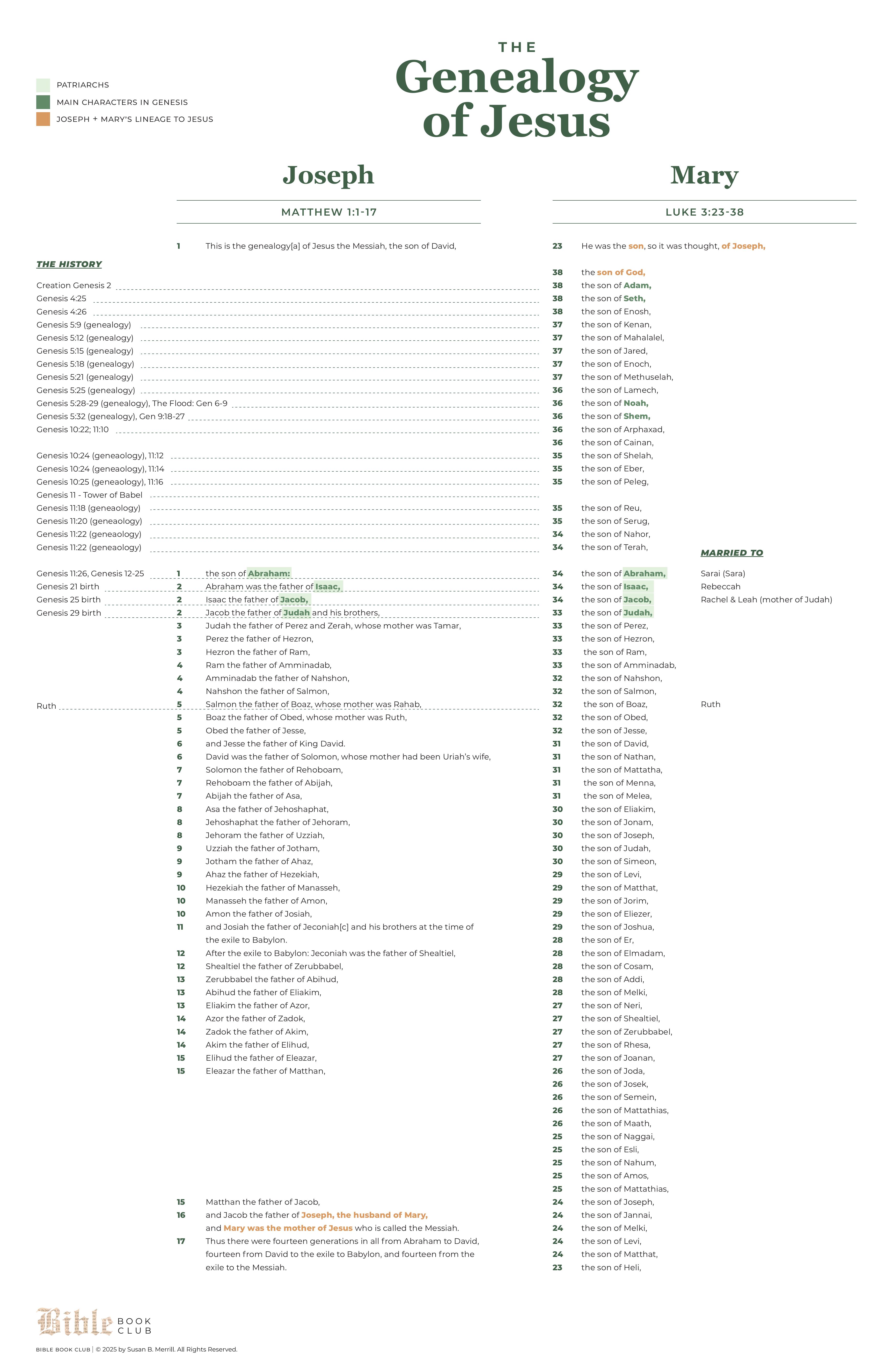
1 The sons of Levi: Gershon, Kohath and Merari. 2 The sons of Kohath: Amram, Izhar, Hebron and Uzziel. 3 The children of Amram: Aaron, Moses and Miriam.
The sons of Aaron: Nadab, Abihu, Eleazar and Ithamar. 4 Eleazar was the father of Phinehas, Phinehas the father of Abishua, 5 Abishua the father of Bukki, Bukki the father of Uzzi, 6 Uzzi the father of Zerahiah, Zerahiah the father of Meraioth, 7 Meraioth the father of Amariah, Amariah the father of Ahitub, 8 Ahitub the father of Zadok, Zadok the father of Ahimaaz, 9 Ahimaaz the father of Azariah, Azariah the father of Johanan, 10 Johanan the father of Azariah (it was he who served as priest in the temple Solomon built in Jerusalem), 11 Azariah the father of Amariah, Amariah the father of Ahitub, 12 Ahitub the father of Zadok, Zadok the father of Shallum, 13 Shallum the father of Hilkiah, Hilkiah the father of Azariah, 14 Azariah the father of Seraiah, and Seraiah the father of Jozadak. 15 Jozadak was deported when the Lord sent Judah and Jerusalem into exile by the hand of Nebuchadnezzar.
16 The sons of Levi: Gershon, Kohath and Merari. 17 These are the names of the sons of Gershon: Libni and Shimei. 18 The sons of Kohath: Amram, Izhar, Hebron and Uzziel. 19 The sons of Merari: Mahli and Mushi. These are the clans of the Levites listed according to their fathers: 20 Of Gershon: Libni his son, Jahath his son, Zimmah his son, 21 Joah his son, Iddo his son, Zerah his son and Jeatherai his son. 22 The descendants of Kohath: Amminadab his son, Korah his son, Assir his son, 23 Elkanah his son, Ebiasaph his son, Assir his son, 24 Tahath his son, Uriel his son, Uzziah his son and Shaul his son. 25 The descendants of Elkanah: Amasai, Ahimoth, 26 Elkanah his son, Zophai his son, Nahath his son, 27 Eliab his son, Jeroham his son, Elkanah his son and Samuel his son. 28 The sons of Samuel: Joel the firstborn and Abijah the second son. 29 The descendants of Merari: Mahli, Libni his son, Shimei his son, Uzzah his son, 30 Shimea his son, Haggiah his son and Asaiah his son.
A Godly Tribe
Not only Aaron but also Moses were Levites. Note that Aaron is also from the clan of Kohath. The Levites, hearing these names in the list of their genealogy, had to be encouraged and proud. This tribe is loaded with leaders and has done so much for Israel. Maybe even more than Judah, when you think of Moses, Aaron, Miriam, Eleazar, Phinehas, Samuel, and more. This is a godly tribe.
Who are the three sons of Levi and their respective clans?
Levi's three sons, Gershon, Kohath, and Merari, formed the three clans of the Levitical Corps that served the Temple and community. But in this first part of the genealogy, the author focuses on the line of Kohath, which led to Aaron and the priesthood.
Aaron was made the first High Priest in Numbers 28. The author covers the 21 generations of high priests rather quickly. He only calls out two of the 21:
- Johanan, the priest who presided first over the Temple that Solomon built.
- Jozadak, the son of the last priest who presided over the Temple when Nebuchadnezzar destroyed it.
He does not mention the priests who were epic failures, two of whom were Aaron's own sons Nadab and Abihu, who apparently had been drinking and messed up their priestly duties in our Leviticus 10 commentary. Like Aaron's sons, Eli's sons Phinehas and Hophni had a fatal fail in priestly duties in 1 Samuel. All four of these priests lost their lives in the line of duty, but not for honorable reasons.
Many of the other priestly names should be familiar. The Phinehas in this genealogy is Aaron's grandson. He was a good guy and a killer priest, literally wielding a sword for the Lord in our Numbers 24-25 commentary. Zadok was the priest who stayed loyal to David during Absalom's rebellion and anointed Solomon in our 2 Samuel 15 commentary. Hilkiah was the priest under Josiah who found the Book of the Law and read it to Josiah, which created a covenant revival in our 2 Kings 22 commentary.
Back to the Three Sons
Once the main line of Aaron is out of the way, we go backward a bit to the three sons of Levi. These were the other descendants of Levi, not of Aaron. Moses laid out the plan for the Levites in Numbers 3.
Numbers 3:5-10 5 The Lord said to Moses, 6 “Bring the tribe of Levi and present them to Aaron the priest to assist him. 7 They are to perform duties for him and for the whole community at the tent of meeting by doing the work of the tabernacle. 8 They are to take care of all the furnishings of the tent of meeting, fulfilling the obligations of the Israelites by doing the work of the tabernacle. 9 Give the Levites to Aaron and his sons; they are the Israelites who are to be given wholly to him. 10 Appoint Aaron and his sons to serve as priests; anyone else who approaches the sanctuary is to be put to death.”
What was the difference between a Levite and a priest?
Every priest was a Levite, but not every Levite was a priest. Some Levites had other jobs. Working for the Lord was a high calling and required discipline and attention to detail. It was not easy, and they put themselves at risk daily.
What were the specific duties of the Gershonite, Kohathite, and Merarite clans?
Moses was very specific about the role for each of the clans. The Gershonite clan is covered first.
Duties of the Gershonites
The Gershonites were responsible for caring for the outer courtyard of the Tabernacle. See our diagram of the Tabernacle. This is what Moses said about the clan of Gershon:
Numbers 3:21-26 21 To Gershon belonged the clans of the Libnites and Shimeites; these were the Gershonite clans. 22 The number of all the males a month old or more who were counted was 7,500. 23 The Gershonite clans were to camp on the west, behind the tabernacle. 24 The leader of the families of the Gershonites was Eliasaph son of Lael. 25 At the tent of meeting the Gershonites were responsible for the care of the tabernacle and tent, its coverings, the curtain at the entrance to the tent of meeting, 26 the curtains of the courtyard, the curtain at the entrance to the courtyard surrounding the tabernacle and altar, and the ropes—and everything related to their use.
Duties of the Kohathites
The clan of Kohath is next. These were the Kohath members who were not in the priesthood. The priests were also from the line of Levi's son Kohath, but the priests were a special subset of this clan from the line of Aaron. That is why the Kohathite clan and the priests were so aligned in responsibilities. The Kohathite clan had the most responsibility of the three clans. They had the priesthood and what Moses assigned to them.
Numbers 3:27-32 27 To Kohath belonged the clans of the Amramites, Izharites, Hebronites and Uzzielites; these were the Kohathite clans. 28 The number of all the males a month old or more was 8,600. The Kohathites were responsible for the care of the sanctuary. 29 The Kohathite clans were to camp on the south side of the tabernacle. 30 The leader of the families of the Kohathite clans was Elizaphan son of Uzziel. 31 They were responsible for the care of the ark, the table, the lampstand, the altars, the articles of the sanctuary used in ministering, the curtain, and everything related to their use. 32 The chief leader of the Levites was Eleazar son of Aaron, the priest. He was appointed over those who were responsible for the care of the sanctuary.
So while the Gershonites were responsible for the outer courtyard of the Tabernacle, the Kohathites were responsible for the inner sanctuary. This was touchy stuff. In our 2 Samuel 6 commentary, the Ark was in transport and the oxen stumbled. A man named Uzzah reached out to steady the Ark and died for touching it.
These Kohathites reported directly to the successor high priest for their duties. In this case, it was Aaron’s son Eleazar who was a priest in line for the high priest and a Kohathite. All priests are Kohathites, but not all Kohathites are priests.
Duties of the Merarites
The last clan of the three is the Merarites. They got the least important job but, in my opinion, the heavy stuff. Here is what Moses assigned to the Merarites.
Numbers 3:33-37 33 To Merari belonged the clans of the Mahlites and the Mushites; these were the Merarite clans. 34 The number of all the males a month old or more who were counted was 6,200. 35 The leader of the families of the Merarite clans was Zuriel son of Abihail; they were to camp on the north side of the tabernacle. 36 The Merarites were appointed to take care of the frames of the tabernacle, its crossbars, posts, bases, all its equipment, and everything related to their use, 37 as well as the posts of the surrounding courtyard with their bases, tent pegs and ropes.
The Merarites were responsible for setting up a giant fence around the Tabernacle, taking it down, and carrying it all over the wilderness and in Canaan. The curtain fence enclosed a space of 11,250 square feet. It was 150 feet by 75 feet, and the curtain was seven feet tall. So they must have had to carry a lot of ladders. I try to picture the Israelites doing all this in sandals, no gloves, no megaphone or PA system to blast communication, no trucks. Just men, carts, and donkeys. It sounds grueling. However, there were a lot of them, and they were extremely organized.
God’s Organization
The organization is noteworthy. God loves order. He ordered the world in Genesis 1, and He ordered the lives of the Israelites:
- In tribes, clans, and families in Genesis.
- With laws, in our Leviticus Bible study.
- In worship, in our Exodus and Leviticus Bible studies.
- Leadership, in our Judges, 1 Samuel, 2 Samuel, 1 Kings, and 2 Kings Bible studies.
God loves order, and Paul confirms its importance for us:
1 Corinthians 14:33 33 For God is not a God of disorder but of peace…
1 Corinthians 14:40 40 But everything should be done in a fitting and orderly way.
It is not easy to be organized and maintain an orderly existence, whether at home or at work, but this thought challenged me because with order comes peace. While there is much we cannot control in life, there are things we can do to be more organized. To create more space in our calendars for unforeseen time drains. And downtime to rest our taxed brains and bodies so we can create solutions for order. I am going to think about it because I am convinced that more peace in my life would earn God's favor.
Moving on. After the Israelites settled in the Promised Land and David took control, he wanted to build a Temple for the Lord, but God said Solomon would do it. David, being a man in constant need of action, set about to do what he could to prepare for the Temple. One of those actions was the shift of responsibilities from the Tabernacle to the Temple.
Scene 2: The Shift of Responsibilities from the Tabernacle to the Temple
There would be no more moving the tent, setting up the courtyards, building the fence, etc. It was time for the Levites to have new jobs.
How did David change the responsibilities of the Levites for the Temple?
In David’s plan, all three clans had a voice in the Temple music. Music was at the top of David's mind because it was his gift. Which is kind of cool and orderly of God. David had a heart for the Lord, so it makes sense that he wrote music that would touch the hearts of the people. He wrote 73 of the 150 Psalms.
Solomon had wisdom from the Lord, so it makes sense that he wrote most of the wisdom literature to teach the people. Specifically, Solomon wrote Proverbs, Ecclesiastes, and Song of Songs.
This upcoming genealogy goes backward. It starts at the time of David and goes back to Levi.
1 Chronicles 6:31-53
31 These are the men David put in charge of the music in the house of the Lord after the ark came to rest there. 32 They ministered with music before the tabernacle, the tent of meeting, until Solomon built the temple of the Lord in Jerusalem. They performed their duties according to the regulations laid down for them.
33 Here are the men who served, together with their sons: From the Kohathites: Heman, the musician, the son of Joel, the son of Samuel, 34 the son of Elkanah, the son of Jeroham, the son of Eliel, the son of Toah, 35 the son of Zuph, the son of Elkanah, the son of Mahath, the son of Amasai, 36 the son of Elkanah, the son of Joel, the son of Azariah, the son of Zephaniah, 37 the son of Tahath, the son of Assir, the son of Ebiasaph, the son of Korah, 38 the son of Izhar, the son of Kohath, the son of Levi, the son of Israel;
39 and Heman’s associate Asaph, who served at his right hand: Asaph son of Berekiah, the son of Shimea, 40 the son of Michael, the son of Baaseiah, the son of Malkijah, 41 the son of Ethni, the son of Zerah, the son of Adaiah, 42 the son of Ethan, the son of Zimmah, the son of Shimei, 43 the son of Jahath, the son of Gershon, the son of Levi; 44 and from their associates, the Merarites, at his left hand: Ethan son of Kishi, the son of Abdi, the son of Malluk, 45 the son of Hashabiah, the son of Amaziah, the son of Hilkiah, 46 the son of Amzi, the son of Bani, the son of Shemer, 47 the son of Mahli, the son of Mushi, the son of Merari, the son of Levi.
48 Their fellow Levites were assigned to all the other duties of the tabernacle, the house of God. 49 But Aaron and his descendants were the ones who presented offerings on the altar of burnt offering and on the altar of incense in connection with all that was done in the Most Holy Place, making atonement for Israel, in accordance with all that Moses the servant of God had commanded.
50 These were the descendants of Aaron: Eleazar his son, Phinehas his son, Abishua his son, 51 Bukki his son, Uzzi his son, Zerahiah his son, 52 Meraioth his son, Amariah his son, Ahitub his son, 53 Zadok his son and Ahimaaz his son.
Who were the primary musical leaders appointed by King David?
Heman, Asaph, and Ethan were the primary musical leaders appointed by King David.
- Heman became the Temple music director, which was a redeeming moment for Samuel because Heman was his grandson.
This honor was a redeeming detail drop because Samuel was so faithful, but his sons Joel and Abijah were tragically unfaithful in 1 Samuel 8. Samuel’s sons accepted bribes and perverted justice, which led to the Israelites' desire for a king and to Saul. Full circle, the author is pointing out that the Israelites are back to having no king.
- Asaph is next in command after Heman. His name will pop up quite a bit. He was the author of 12 psalms, specifically Psalm 50 and Psalms 73-83.
- Ethan was the musical leader of the Merarites. He wrote Psalm 89.
Non-Musician Levite Responsibilities
Any Levite who was not a musician was assigned other duties in the Temple but not priestly duties. This would have included tasks like:
- Overseeing the courtyard and storage rooms.
- Filling the Bronze Basin with water (estimated at 10,000 to 18,000 gallons).
- Getting wood for all those altar sacrifices.
Aaronite High Priest Responsibilities
The responsibilities of the Aaronite High Priests did not change too much from the Tabernacle to the Temple. Their highest responsibility was still to atone for the sins of the people.
Scene 3: The Land Allocated to the Levites
1 Chronicles 6:54-81
54 These were the locations of their settlements allotted as their territory (they were assigned to the descendants of Aaron who were from the Kohathite clan, because the first lot was for them): 55 They were given Hebron in Judah with its surrounding pasturelands. 56 But the fields and villages around the city were given to Caleb son of Jephunneh.
57 So the descendants of Aaron were given Hebron (a city of refuge), and Libnah, Jattir, Eshtemoa, 58 Hilen, Debir, 59 Ashan, Juttah and Beth Shemesh, together with their pasturelands. 60 And from the tribe of Benjamin they were given Gibeon, Geba, Alemeth and Anathoth, together with their pasturelands. The total number of towns distributed among the Kohathite clans came to thirteen.
61 The rest of Kohath’s descendants were allotted ten towns from the clans of half the tribe of Manasseh. 62 The descendants of Gershon, clan by clan, were allotted thirteen towns from the tribes of Issachar, Asher and Naphtali, and from the part of the tribe of Manasseh that is in Bashan. 63 The descendants of Merari, clan by clan, were allotted twelve towns from the tribes of Reuben, Gad and Zebulun.
64 So the Israelites gave the Levites these towns and their pasturelands. 65 From the tribes of Judah, Simeon and Benjamin they allotted the previously named towns. 66 Some of the Kohathite clans were given as their territory towns from the tribe of Ephraim. 67 In the hill country of Ephraim they were given Shechem (a city of refuge), and Gezer, 68 Jokmeam, Beth Horon, 69 Aijalon and Gath Rimmon, together with their pasturelands. 70 And from half the tribe of Manasseh the Israelites gave Aner and Bileam, together with their pasturelands, to the rest of the Kohathite clans.
71 The Gershonites received the following: From the clan of the half-tribe of Manasseh they received Golan in Bashan and also Ashtaroth, together with their pasturelands; 72 from the tribe of Issachar they received Kedesh, Daberath, 73 Ramoth and Anem, together with their pasturelands; 74 from the tribe of Asher they received Mashal, Abdon, 75 Hukok and Rehob, together with their pasturelands; 76 and from the tribe of Naphtali they received Kedesh in Galilee, Hammon and Kiriathaim, together with their pasturelands.
77 The Merarites (the rest of the Levites) received the following: From the tribe of Zebulun they received Jokneam, Kartah, Rimmono and Tabor, together with their pasturelands; 78 from the tribe of Reuben across the Jordan east of Jericho they received Bezer in the wilderness, Jahzah, 79 Kedemoth and Mephaath, together with their pasturelands; 80 and from the tribe of Gad they received Ramoth in Gilead, Mahanaim, 81 Heshbon and Jazer, together with their pasturelands.
How was land allocated to the Levites since they had no territory?
Since the Levites did not inherit a specific territory like the other tribes, they were given 48 cities spread across the land along with surrounding pasturelands. Six were designated as cities of refuge where people who accidentally killed someone could flee for protection until their case was judged.
The 48-city distribution allowed the Levites to serve as spiritual leaders and teachers to all the tribes. Altogether the Kohathites got 23 towns. The Gershonites got 13. And the Merarites got 12.
Allocation to the Kohathite
The land given to the Kohathites was located amongst the tribes of:
- Judah.
- Simeon.
- Benjamin.
- Ephraim.
- The half tribe of Manasseh located on the west side of the Jordan in Canaan.
Allocation to the Gershonite
The land given to the Gershonites was located amongst the tribes of:
- The half-tribe of Manasseh on the wrong side of the Jordan.
- Issachar.
- Asher.
- Naphtali.
Allocation to the Merarites
The land given to the Merarites was located amongst the tribes of:
- Zebulun.
- Reuben.
- Gad.
The Missing Tribe of Dan
One tribe is missing: the tribe of Dan. We covered the cause of Dan's demise in our Judges 17-19 commentary. It is a sad reality for the Chronicler that this tribe has declined to nothing during his time. However, the tribe resurfaces and gets a mention in Ezekiel 48.
Then it is excluded again in Revelation 7. In John's vision of the number of those who are sealed, it is a list of 12 tribes. But Levi is included, and Dan is omitted, making the list an even 12.
I cannot wait until we get to the Book of Revelation. You are going to experience an explosion of Bible connections. You will revel in the depth of understanding because of the history you have learned throughout the Old Testament. It all connects and plays into the future!
- Tribal symbolism
- Davidic lineage
- Temple imagery
- Plague parallels
- Prophetic fulfillment
- Divine kingship
- A new Jerusalem
It all resurfaces and explodes in Revelation. The bottom line is that the discussion in Revelation will be so rich because of what we are learning right now.
Join us for our 1 Chronicles 7-8 commentary!
Group Discussion Questions for 1 Chronicles 6
- In Genesis, the tribe of Levi was cursed to be scattered. God transformed that scattering into an opportunity for sacred service. Where might God be using your past mistakes to clear a path to sacred service for you?
- The Merarites had the least glamorous assignment: hauling the Tabernacle's heavy posts, pegs, and crossbars across the wilderness. But God is a God of order, and careful organization made even that heavy task possible. Where are you carrying "tent pegs" in this season of life? What's one practical way you could bring more order to that task, and how might it invite more of God's peace into your week?
- When the Tabernacle gave way to the Temple, the Levites' old jobs disappeared, and they were assigned new tasks. Have you ever been through a season when the role that defined you ended, such as an empty nest, a career change, or a ministry closing? How did you discover what God was calling you to next?