1 Chronicles 13-15 Introduction
The Chronicler is moving fast through David’s reign, and his leadership is impressive. He has secured the unity of the people. He has created a capital for the United Kingdom of Israel, and true to his heart for the Lord, David’s next move is to make Jerusalem Israel’s center for worship. And that means David needs to move the Ark to the capital. This is the story of David’s first attempt to bring the Ark to Jerusalem.
Scene 1: David's First Attempt to Bring the Ark to Jerusalem
1 Chronicles 13:1-14
1 David conferred with each of his officers, the commanders of thousands and commanders of hundreds. 2 He then said to the whole assembly of Israel, “If it seems good to you and if it is the will of the Lord our God, let us send word far and wide to the rest of our people throughout the territories of Israel, and also to the priests and Levites who are with them in their towns and pasturelands, to come and join us. 3 Let us bring the ark of our God back to us, for we did not inquire of it during the reign of Saul.” 4 The whole assembly agreed to do this, because it seemed right to all the people.
5 So David assembled all Israel, from the Shihor River in Egypt to Lebo Hamath, to bring the ark of God from Kiriath Jearim. 6 David and all Israel went to Baalah of Judah (Kiriath Jearim) to bring up from there the ark of God the Lord, who is enthroned between the cherubim—the ark that is called by the Name.
7 They moved the ark of God from Abinadab’s house on a new cart, with Uzzah and Ahio guiding it. 8 David and all the Israelites were celebrating with all their might before God, with songs and with harps, lyres, timbrels, cymbals and trumpets.
9 When they came to the threshing floor of Kidon, Uzzah reached out his hand to steady the ark, because the oxen stumbled. 10 The Lord’s anger burned against Uzzah, and he struck him down because he had put his hand on the ark. So he died there before God.
11 Then David was angry because the Lord’s wrath had broken out against Uzzah, and to this day that place is called Perez Uzzah.
12 David was afraid of God that day and asked, “How can I ever bring the ark of God to me?” 13 He did not take the ark to be with him in the City of David. Instead, he took it to the house of Obed-Edom the Gittite. 14 The ark of God remained with the family of Obed-Edom in his house for three months, and the Lord blessed his household and everything he had.
David consults with his military leaders and proposes bringing the Ark of God to Jerusalem. He suggests gathering all the people of Israel for this important religious event, and everyone agrees it is the right thing to do. The Ark is the most important object in the Tabernacle.
What are the exact dimensions and contents of the Ark of the Covenant?
The Ark of the Covenant is only 3.75 feet long x 2.5 feet wide x 2.5 feet high. It is not a super large item but a box. The box has rings for poles, and the poles are used to pick up and carry the Ark without touching it, which is very important. There is to be no touching of the Ark.
The Ark is the only object kept in the Most Holy Place in the Tabernacle. It contains the stone tablets created when God made a covenant with the people at Mount Sinai, which is why the Ark is sometimes called the Ark of the Covenant. It also contains a jar of manna from the days of wilderness wandering, and it contains Aaron’s rod.
On top of the Ark is the gold lid called the "atonement cover" or "mercy seat." This is where the High Priest atones for the sins of all the people once a year. On either side of the atonement cover are cherubim facing each other with wings outstretched. Between these cherubim is where God meets with Israel.
Why did David want to bring the Ark of the Covenant to Jerusalem?
The Ark represents God's presence amongst them, and it is their means of atonement. It is the most important religious artifact in the whole Tabernacle. Therefore, it needs to be in Jerusalem, the new capital. David and all Israel go to Kiriath Jearim to retrieve the Ark from Abinadab's house.
Why is the Ark in someone's house? That was Saul's fault. In 1 Samuel 4, the Philistines destroyed the Tabernacle and carried off the Ark. When the Philistines captured the Ark, God imposed plagues on the Philistines, forcing them to return the Ark to Israel. However, when the Ark arrived in Israel on a cart, the Israelites disrespectfully mishandled it, and 70 of them died. In 1 Samuel 7, the people summon the men of Kiriath Jearim to take the Ark away.
1 Samuel 7:1-2 1 So the men of Kiriath Jearim came and took up the ark of the Lord. They brought it to Abinadab’s house on the hill and consecrated Eleazar his son to guard the ark of the Lord. 2 The ark remained at Kiriath Jearim a long time—twenty years in all.
For 20 years, during the rest of Saul's reign, the Ark was stuck at Abinadab's house in Kiriath Jearim. The fact that the Ark is in a home, not the Tabernacle or a Temple, is deplorable. Of course David wants to change that. The Ark must have a home of its own.
So David assigned Uzzah and Ahio, sons of Abinadab, to place the Ark on a new cart. The procession becomes a joyous celebration with music and dancing. This is a big deal because most people have never seen the Ark, and once it goes into the Temple, they will never see it again. Only the High Priest is allowed in the Most Holy Place.
Why did Uzzah die while moving the Ark in 1 Chronicles 13?
Poor Uzzah instinctively tried to protect the Ark, but in doing so failed to obey the Law. We learn in verse 3 that he is Abinadab's son, and he is a leader of this operation, so he should have looked into the laws about how to transport the Ark.
The Ark of the Covenant is not supposed to be transported on a cart. According to God's instructions in Exodus 25, the Ark is to be carried by the Levites, specifically the Kohathites, on foot using poles inserted through rings on its sides.
Ultimately, David should have known the Law too. If he had, the Ark wouldn't have tipped, and Uzzah wouldn't have died. David should also have remembered why the Ark was in Abinadab's home in the first place and that 70 men died moving the Ark incorrectly. David's first reaction is anger. This is not Uzzah's fault. It is really his.
This little dark detail is only one of two failings of David's that the otherwise positive author of the book of 1 Chronicles allows. So the author clearly does not want anyone to die in the future for improper handling of the Ark. Perhaps the real point he is making is about obedience. Because at the point of the Chronicler's writing, after the exile and return, the Ark is gone.
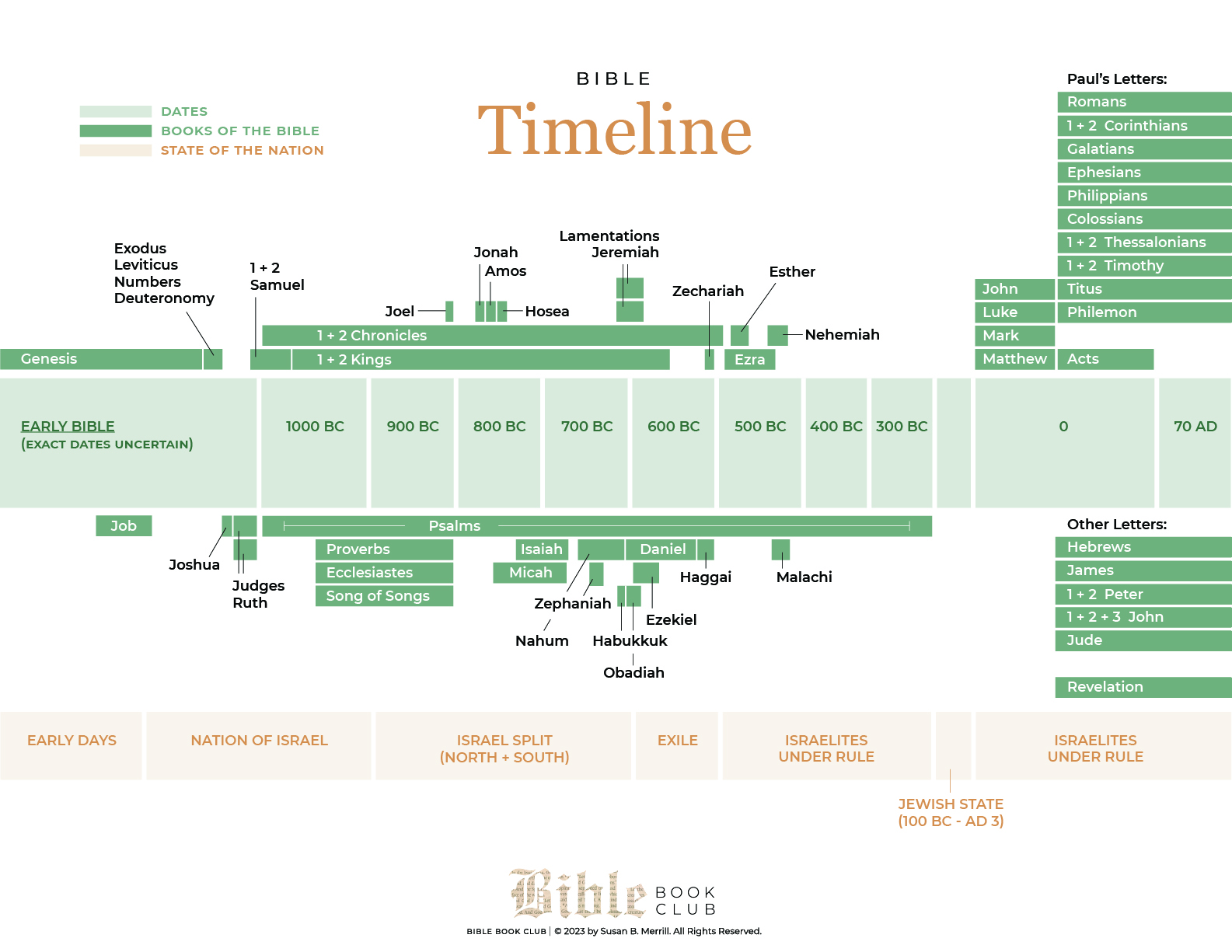
After the Babylonian conquest in 586 BCE, when the Temple was destroyed, the Ark disappeared from historical records, leaving its fate a mystery. There are lots of theories on what became of the Ark. It seems likely that the Ark was either destroyed or perhaps hidden before the Babylonian invasion, as it is not listed among the items taken by the Babylonians in 2 Kings 25 by the soldiers.
How long did the Ark stay at the house of Obed-Edom?
David's next reaction is fear. The Ark is too dangerous to move, so David places the Ark in the house of Obed-Edom the Gittite, where it remains for three months. During this time, we can assume David takes time to catch up on the rules for Ark removal. Obed-Edom's household must have been quite respectful of the Ark, for they are blessed for keeping it safe.
Scene 2: David Builds a Palace and His Family
1 Chronicles 14:1-7
1 Now Hiram king of Tyre sent messengers to David, along with cedar logs, stonemasons and carpenters to build a palace for him. 2 And David knew that the Lord had established him as king over Israel and that his kingdom had been highly exalted for the sake of his people Israel.
3 In Jerusalem David took more wives and became the father of more sons and daughters. 4 These are the names of the children born to him there: Shammua, Shobab, Nathan, Solomon, 5 Ibhar, Elishua, Elpelet, 6 Nogah, Nepheg, Japhia, 7 Elishama, Beeliada and Eliphelet.
David’s Power
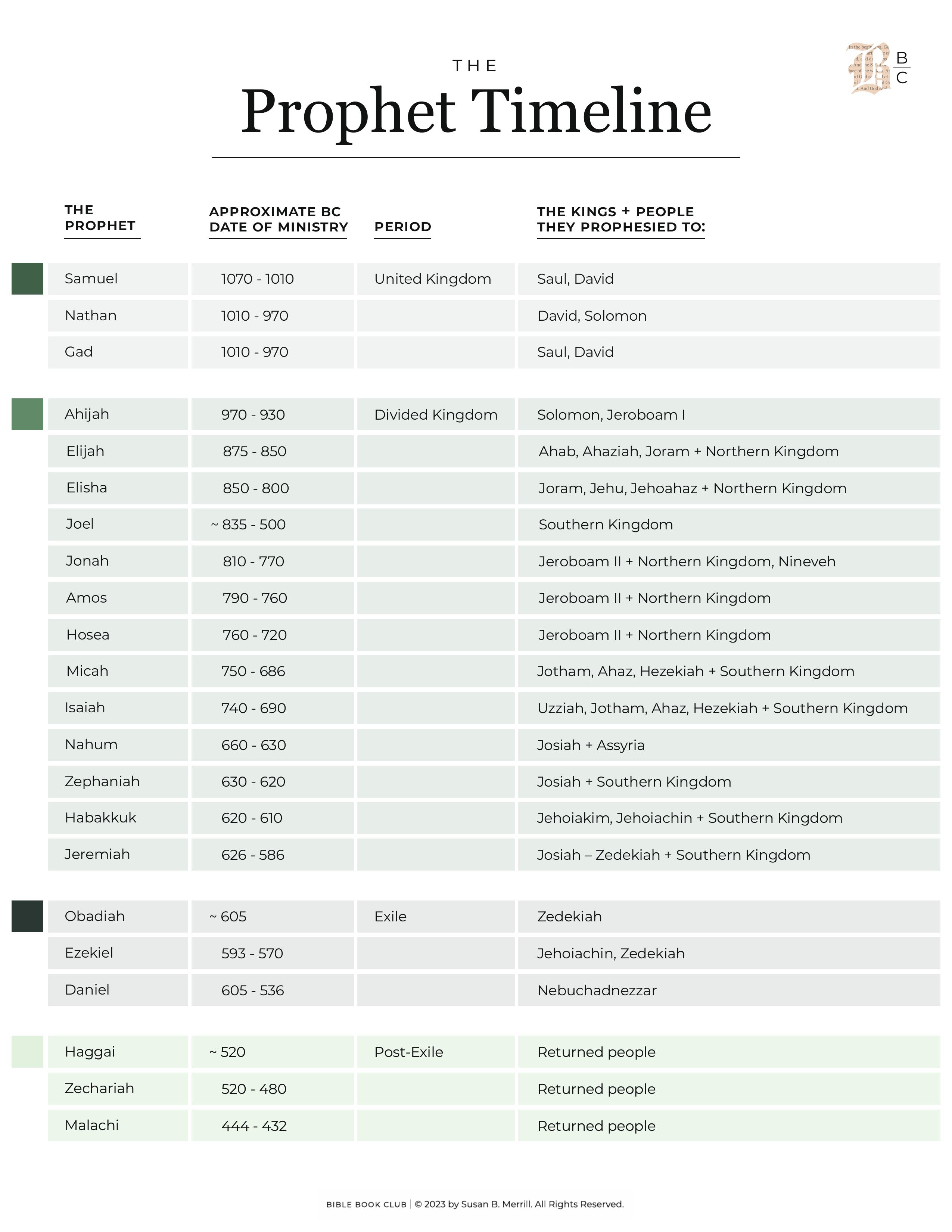
David becomes more powerful for one reason: the Lord is with him. David had been anointed by God to be king about 15 years before he was made king by the people at Hebron. During those 15 years, he was chased in the wilderness by Saul and was often discouraged. He even doubted if what God had promised would ever happen. He wrote about his struggles in the Psalms. But finally, David has arrived. He is recognized by the Israelites, and his reputation is so great that other nations hear about it.
Which king provided materials for David to build his palace in Jerusalem?
Hiram, the King of Tyre, a rich ally, sends the resources for David to build a palace. In the future, this king will also help Solomon in the Temple construction. To the world, Israel has arrived. The country has a powerful king, a real capital, and a palace.
With power comes fame and followers…and another hint of future trouble. At this point, David already has seven wives and six sons. Now, living in the capital in a palace, the new king takes more wives. David's accumulation of women is a direct violation of Deuteronomy.
Deuteronomy 17:17 17 A king must not take many wives, or his heart will be led astray.
With David's rise to power, many countries and tribes would seek political alliances with him. That means gifts and strategic marriages. The gifts could be beautiful women or concubines, and the marriages would have been with daughters of other kings.
David could refuse such gifts, but clearly he does not. And that leaves the door open for David, the man after God's heart, to allow his own heart to be led astray. Of course the Chronicler mentions none of that. He totally skips Bathsheba. He only wants to encourage the returned exiles with the image of a perfect king David.
But we have read 2 Samuel and 1 Kings. We know that David is far from perfect. He loves the Lord with all his heart, but David is human, and his sin prevails at times. Only Christ is perfect. He is the Messiah the Chronicler can only dream of.
Scene 3: The Philistines, David's Enemy for Life
1 Chronicles 14:8-17
8 When the Philistines heard that David had been anointed king over all Israel, they went up in full force to search for him, but David heard about it and went out to meet them. 9 Now the Philistines had come and raided the Valley of Rephaim; 10 so David inquired of God: “Shall I go and attack the Philistines? Will you deliver them into my hands?”
The Lord answered him, “Go, I will deliver them into your hands.”
11 So David and his men went up to Baal Perazim, and there he defeated them. He said, “As waters break out, God has broken out against my enemies by my hand.” So that place was called Baal Perazim. 12 The Philistines had abandoned their gods there, and David gave orders to burn them in the fire.
13 Once more the Philistines raided the valley; 14 so David inquired of God again, and God answered him, “Do not go directly after them, but circle around them and attack them in front of the poplar trees. 15 As soon as you hear the sound of marching in the tops of the poplar trees, move out to battle, because that will mean God has gone out in front of you to strike the Philistine army.” 16 So David did as God commanded him, and they struck down the Philistine army, all the way from Gibeon to Gezer.
17 So David’s fame spread throughout every land, and the Lord made all the nations fear him.
David’s History with the Philistines
David's history with the Philistines began when he killed Goliath as a teenager. In the years that followed, he killed hundreds of Philistines in battle. He used them strategically for his own purposes while living among them and supposedly working for them, but undermining them.
The bottom line is, David has become the Philistines' military nightmare, and now he is king of the Philistines' greatest enemy, Israel, with a united force behind him. The Philistines cannot sit back and allow it.
The scene describes two battles, both taking place in the Valley of Rephaim. The valley is named after a giant Philistine named Rapha. The Rephaim are his descendants. Ironically, David is once again going up against a Philistine giant.
Why does David attack the Philistines at the Valley of Rephaim?
The Valley of Rephaim is geographically pivotal because it is located on the border between Benjamin and Judah. If the Philistines win the valley, it will cut David off from all the Israelites in the north.
David does not fail as Saul had, because David inquires of the Lord, unlike Saul, who did not. So God does not fail to give David success. In the first battle, the Lord promises to deliver the Philistines into David's hands. David defeats them and burns all of the Philistines' idols.
The burning of the Philistines' idols is contrary to the practice of the day. Most victors keep the idols as spoils of war. The Philistines had done that to Israel when they took the Ark. In the ancient world, war isn’t just a military conflict. It is a spiritual showdown. When nations go to war, they believe their gods are fighting too. So when one side wins, they think it means: “Our god is stronger than your god.” Taking the enemy's idols is proof of their god's divine superiority. But idols are a temptation to worship, and David wisely gets rid of them.
What is the significance of the "marching sound" in the poplar trees?
The marching sound in the poplar trees is the sound of the army of the Lord advancing before them. So in the second battle, the Lord tells David to wait to attack until "the sound of marching in the tops of the poplar trees."
Scene 4: David's Final Attempt to Bring the Ark to Jerusalem
Why were the Tabernacle and the Ark so important? In Exodus 25, God explained:
Exodus 25:1-9 The Lord said to Moses, 2 “Tell the Israelites to bring me an offering. You are to receive the offering for me from everyone whose heart prompts them to give. 3 These are the offerings you are to receive from them: gold, silver and bronze; 4 blue, purple and scarlet yarn and fine linen; goat hair; 5 ram skins dyed red and another type of durable leather; acacia wood; 6 olive oil for the light; spices for the anointing oil and for the fragrant incense; 7 and onyx stones and other gems to be mounted on the ephod and breastpiece.
8 “Then have them make a sanctuary for me, and I will dwell among them. 9 Make this tabernacle and all its furnishings exactly like the pattern I will show you.
The purpose of the Tabernacle is clear: It is a sacred place created so God can dwell among them. God says He will dwell among them. This is a first since the Fall. God won't be with them like He was in the Garden. It will be different, but it is a step toward a closer relationship with God.
The Tabernacle, this new meeting place with God, is designed to point back to the Garden. It is important as a reminder that in the beginning God had been present with man, and it is God's plan to get back to that kind of relationship. That is why the entire design of the Tabernacle mirrors the design of Eden.
How does the design of the Tabernacle mirror the Garden of Eden?
In Genesis, God's design was: Eden, Garden, and Tree of Life. In the Tabernacle, God's design was: Courtyard, Holy Place, and Most Holy Place.
- Genesis 2:15 : God told Adam and Eve to work and take care of the garden.
- Numbers 3 : God told the priests to work and take care of the Tabernacle.
Adam and Eve disobeyed, and they were exiled from the Garden. God placed Cherubim to guard the way back into the Garden and the Tree of Life. In Exodus, God told Moses to place Cherubim on the top of the Ark, guarding the seat of God in between them.
David's desire is to bring the Ark and the Presence of God to a place of honor in Israel. He just has to figure out the right way to do it. This time is going to be different. David has done his homework.
1 Chronicles 15:1-29
1 After David had constructed buildings for himself in the City of David, he prepared a place for the ark of God and pitched a tent for it. 2 Then David said, “No one but the Levites may carry the ark of God, because the Lord chose them to carry the ark of the Lord and to minister before him forever.”
3 David assembled all Israel in Jerusalem to bring up the ark of the Lord to the place he had prepared for it. 4 He called together the descendants of Aaron and the Levites: 5 From the descendants of Kohath, Uriel the leader and 120 relatives; 6 from the descendants of Merari, Asaiah the leader and 220 relatives; 7 from the descendants of Gershon, Joel the leader and 130 relatives; 8 from the descendants of Elizaphan, Shemaiah the leader and 200 relatives; 9 from the descendants of Hebron, Eliel the leader and 80 relatives; 10 from the descendants of Uzziel, Amminadab the leader and 112 relatives.
11 Then David summoned Zadok and Abiathar the priests, and Uriel, Asaiah, Joel, Shemaiah, Eliel and Amminadab the Levites. 12 He said to them, “You are the heads of the Levitical families; you and your fellow Levites are to consecrate yourselves and bring up the ark of the Lord, the God of Israel, to the place I have prepared for it. 13 It was because you, the Levites, did not bring it up the first time that the Lord our God broke out in anger against us. We did not inquire of him about how to do it in the prescribed way.” 14 So the priests and Levites consecrated themselves in order to bring up the ark of the Lord, the God of Israel. 15 And the Levites carried the ark of God with the poles on their shoulders, as Moses had commanded in accordance with the word of the Lord.
16 David told the leaders of the Levites to appoint their fellow Levites as musicians to make a joyful sound with musical instruments: lyres, harps and cymbals.
17 So the Levites appointed Heman son of Joel; from his relatives, Asaph son of Berekiah; and from their relatives the Merarites, Ethan son of Kushaiah; 18 and with them their relatives next in rank: Zechariah, Jaaziel, Shemiramoth, Jehiel, Unni, Eliab, Benaiah, Maaseiah, Mattithiah, Eliphelehu, Mikneiah, Obed-Edom and Jeiel, the gatekeepers.
19 The musicians Heman, Asaph and Ethan were to sound the bronze cymbals; 20 Zechariah, Jaaziel, Shemiramoth, Jehiel, Unni, Eliab, Maaseiah and Benaiah were to play the lyres according to alamoth, 21 and Mattithiah, Eliphelehu, Mikneiah, Obed-Edom, Jeiel and Azaziah were to play the harps, directing according to sheminith. 22 Kenaniah the head Levite was in charge of the singing; that was his responsibility because he was skillful at it.
23 Berekiah and Elkanah were to be doorkeepers for the ark. 24 Shebaniah, Joshaphat, Nethanel, Amasai, Zechariah, Benaiah and Eliezer the priests were to blow trumpets before the ark of God. Obed-Edom and Jehiah were also to be doorkeepers for the ark.
25 So David and the elders of Israel and the commanders of units of a thousand went to bring up the ark of the covenant of the Lord from the house of Obed-Edom, with rejoicing. 26 Because God had helped the Levites who were carrying the ark of the covenant of the Lord, seven bulls and seven rams were sacrificed. 27 Now David was clothed in a robe of fine linen, as were all the Levites who were carrying the ark, and as were the musicians, and Kenaniah, who was in charge of the singing of the choirs. David also wore a linen ephod. 28 So all Israel brought up the ark of the covenant of the Lord with shouts, with the sounding of rams’ horns and trumpets, and of cymbals, and the playing of lyres and harps.
29 As the ark of the covenant of the Lord was entering the City of David, Michal daughter of Saul watched from a window. And when she saw King David dancing and celebrating, she despised him in her heart.
How does David prepare for the second attempt to move the Ark?
David prepares for the Ark’s transfer by:
- Building a place for the Ark to reside: a tent.
- Stipulating who can carry it: Levites only.
- Assembling all Israel again.
- Putting the right people in charge: the priests, specifically the descendants of Aaron.
- Instructing the priests and the Levites to consecrate themselves.
- Acknowledging that he did not inquire of the Lord the proper way to move the Ark in the last attempt.
But gone is his fear. With knowledge of God's Word, he is confident that the Lord will be with them. Finally, David prepares for the Ark to be guided into place with a serenade of music that fosters a joyful atmosphere throughout the capital. God is pleased with David's efforts, and He helps the Levites carrying the Ark, which we can assume means He made sure no one stumbled. Michal, however, is not pleased.
Why is Michal, daughter of Saul, angry with David during the celebration?
Michal thinks it is unbefitting for a king to dance in celebration. God does not miss anything and knows the heart well. In 2 Samuel 6, we get a lot more detail about what happens to Michal.
2 Samuel 6:20-23 20 When David returned home to bless his household, Michal daughter of Saul came out to meet him and said, “How the king of Israel has distinguished himself today, going around half-naked in full view of the slave girls of his servants as any vulgar fellow would!”
21 David said to Michal, “It was before the Lord, who chose me rather than your father or anyone from his house when he appointed me ruler over the Lord’s people Israel—I will celebrate before the Lord. 22 I will become even more undignified than this, and I will be humiliated in my own eyes. But by these slave girls you spoke of, I will be held in honor.”
23 And Michal daughter of Saul had no children to the day of her death.
In David's defense, he is not naked. He has removed his royal clothing and is truly praising God with joy. He is doing nothing wrong. He chooses to worship as a commoner, as one of the people, as himself, and not as a king. It is an act of humility. Michal may have loved David, but like her father, she has little regard for the Ark and the presence of God. Therefore, she can not enter into the joy of the occasion, and for this reason she remains childless.
Join us for our 1 Chronicles 16-17 commentary!
Group Discussion Questions for 1 Chronicles 13-15
- Even as David’s kingdom was expanding and God was blessing him, he took more wives, a quiet violation of Deuteronomy that set up future trouble for his heart. What are some "small" or socially acceptable compromises in your life today that could subtly lead your heart away from God?
- Before fighting the Philistines in the Valley of Rephaim, David explicitly stopped and asked God for direction, even when facing familiar enemies. Do you find it easy or difficult to pause and "inquire of the Lord" before making decisions in your daily life, especially in areas where you feel experienced or comfortable?
- David danced before the Lord as a commoner rather than as a king, while Michal judged him from her window for it. Are there ways that pride or the expectations of others have kept you from expressing gratitude, worship, or faith because you were worried about how others might view you? How can you cultivate a heart that values God’s approval over human respect?