Why did the Chronicler emphasize King David to the returned exiles?
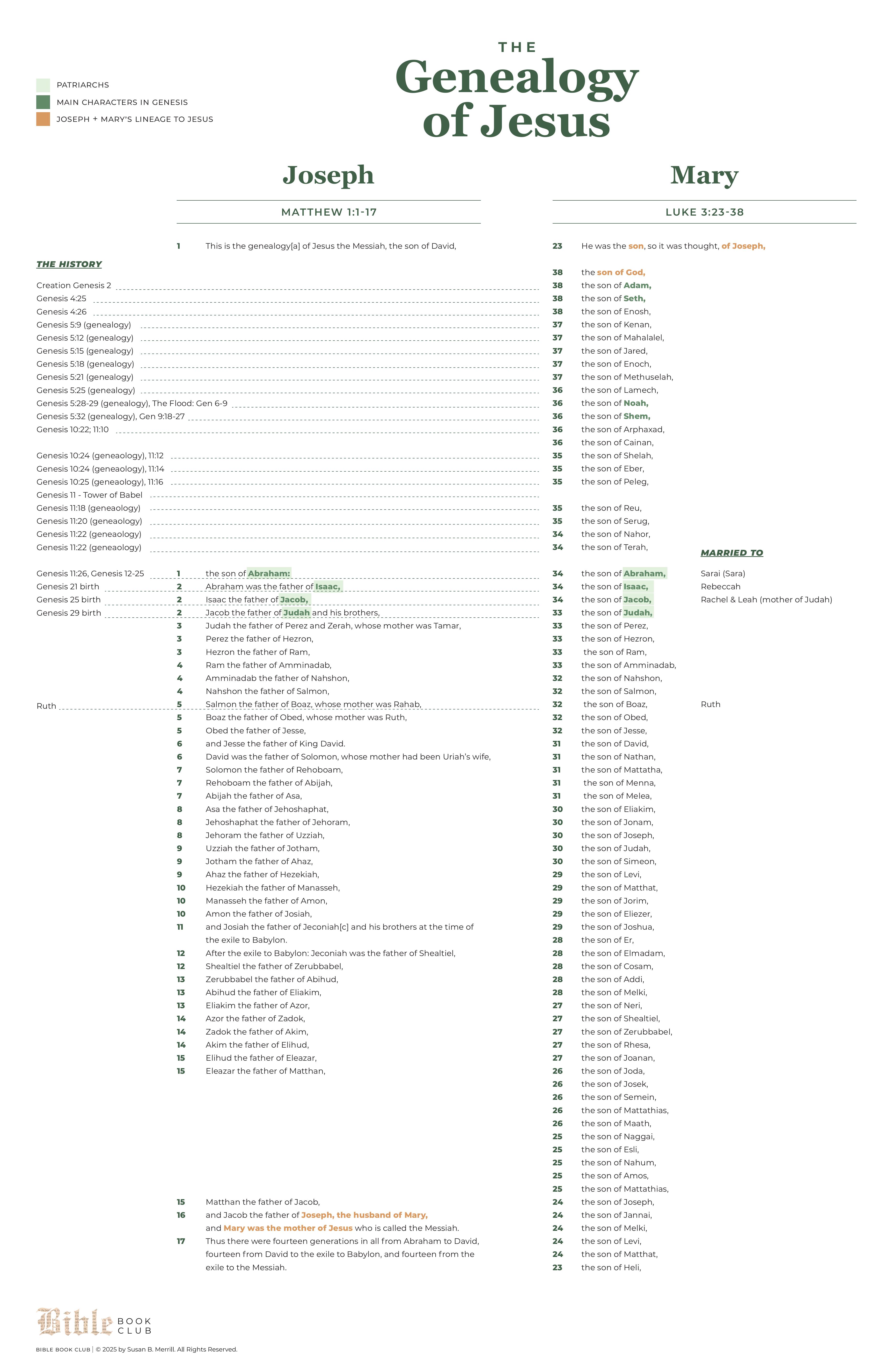
God would bring a savior out of the line of David, and a savior is what we all need. In the book of Revelation, the apostle John had a vision, and in the vision Christ said this to the Church in Philadelphia:
Revelation 3:7-8 7 …These are the words of him who is holy and true, who holds the key of David. What he opens no one can shut, and what he shuts no one can open. 8 I know your deeds. See, I have placed before you an open door that no one can shut. I know that you have little strength, yet you have kept my word and have not denied my name.
John was seeing a vision from the future, but these same words come from the mouth of our Chronicler. The small list of exiles have been faithful to return. God opened the door for their return, and though they are weak, they have kept God's word. The key is David. A king from his line alone could open the door. The Israelites look forward to this King as a future Messiah. We look back to His first coming and forward to His second coming.
Starting in 1 Chronicles 11, the author transitions from Israel's genealogy to the historical narrative of what happened to Israel. King David is the heart of this story. From chapters 11 to 29, the author tells of David's rise to power, his unification of the tribes, and his establishment of Jerusalem as the nation's capital.
The Chronicler presents an idealized David, focusing on his relationship with God, his preparations for the Temple, and his role in fulfilling God's covenant promises. He purposely omits David's flaws recorded in the books of Samuel. The Chronicler positions David's reign as the go-to example of faithful leadership and an important reminder of God's Messianic Promise of a future king.
The Messianic Promise refers to God's promise to send a king and savior who will redeem God's people and establish an eternal kingdom. The word Messiah comes from the Hebrew Mashiach, which means "Anointed One." The Greek equivalent is Christos, from which the name "Christ" is derived.
What are the four basic elements of the Messianic Promise?
There are four basic elements of the Messianic Promise. The Messiah would be a:
- King from David's line.
- Ruler who reigns with justice and peace.
- Ruler over the eternal kingdom.
- Blessing to all nations.
This Messianic Promise is developed all throughout the Bible from Genesis to Revelation. The first promise mentioned is in Genesis 3:15:
Genesis 3:15 15 And I will put enmity between you and the woman, and between your offspring and hers; he will crush your head, and you will strike his heel.”
God was speaking to the serpent and promised one who would come and defeat evil. There are many more prophecies about the Messiah, and some commentaries have linked dozens of verses to the Messianic Promise. Here is a list of the most common verses.
The Messianic Promise was and is important because it reveals God's redemptive plan for humanity. A plan that was:
- There in the beginning.
- Developed throughout the Old Testament.
- Fulfilled in the New Testament.
- Active in every person redeemed through faith in Christ.
And it will be our eternal home and kingdom.
Revelation 11:15 15 The seventh angel sounded his trumpet, and there were loud voices in heaven, which said: “The kingdom of the world has become the kingdom of our Lord and of his Messiah, and he will reign for ever and ever.”
Let's return to 1 Chronicles, where our Chronicler makes his case for King David as Israel’s hope for the future.
Scene 1: All Israel Anoints David as King
This is the story of how David became king over all Israel.
1 Chronicles 11:1-3
1 All Israel came together to David at Hebron and said, “We are your own flesh and blood. 2 In the past, even while Saul was king, you were the one who led Israel on their military campaigns. And the Lord your God said to you, ‘You will shepherd my people Israel, and you will become their ruler.’”
3 When all the elders of Israel had come to King David at Hebron, he made a covenant with them at Hebron before the Lord, and they anointed David king over Israel, as the Lord had promised through Samuel.
Choosing Hebron
Hebron was not a random choice but a purposeful choice for David's anointing. Hebron was the home and burial ground for the patriarchs of Israel. Abraham, Sarah, Isaac and Rebekah, and Jacob and Leah were all buried in Hebron.
Why was Hebron chosen as the site for David's anointing?
The association of David with Hebron presented a unifying visual of the Abrahamic and Davidic covenants to the tribes gathering there. Unification was important to God's plan, and the Chronicler is blatantly emphasizing unification in his message to the returned exiles. All Israel agreed with this plan. They were unified, one nation under God. His message to them is: let's get back to the plan. The tribes of Israel must be unified.
Note to Us
Wouldn’t that be a good plan for God’s church today? All Bible-believing denominations unified in their desire to reach the world. It is something to think about.
This is just one story in the Bible regarding unification. God's plan for unification grows throughout the Bible. In the New Testament, there was a unification of Jews and nations at Pentecost:
Acts 2:1-11 1 When the day of Pentecost came, they were all together in one place. 2 Suddenly a sound like the blowing of a violent wind came from heaven and filled the whole house where they were sitting. 3 They saw what seemed to be tongues of fire that separated and came to rest on each of them. 4 All of them were filled with the Holy Spirit and began to speak in other tongues as the Spirit enabled them.
5 Now there were staying in Jerusalem God-fearing Jews from every nation under heaven. 6 When they heard this sound, a crowd came together in bewilderment, because each one heard their own language being spoken. 7 Utterly amazed, they asked: “Aren’t all these who are speaking Galileans? 8 Then how is it that each of us hears them in our native language? 9 Parthians, Medes and Elamites; residents of Mesopotamia, Judea and Cappadocia, Pontus and Asia, 10 Phrygia and Pamphylia, Egypt and the parts of Libya near Cyrene; visitors from Rome 11 (both Jews and converts to Judaism); Cretans and Arabs—we hear them declaring the wonders of God in our own tongues!”
And of course there is a final unification. That gathering of a great multitude in Revelation:
Revelation 7:9 9 After this I looked, and there before me was a great multitude that no one could count, from every nation, tribe, people and language, standing before the throne and before the Lamb…
Unification was not just a message for Israel. It's part of the end plan for us. The question for us is: how are we individually working toward unification in our families, communities, nations, and throughout the world?
Scene 2: David Plus All the Israelites Conquer Jerusalem
This is the story of how David made Jerusalem the capital of Israel.
1 Chronicles 11:4-9
4 David and all the Israelites marched to Jerusalem (that is, Jebus). The Jebusites who lived there 5 said to David, “You will not get in here.” Nevertheless, David captured the fortress of Zion—which is the City of David.
6 David had said, “Whoever leads the attack on the Jebusites will become commander in chief.” Joab son of Zeruiah went up first, and so he received the command.
7 David then took up residence in the fortress, and so it was called the City of David. 8 He built up the city around it, from the terraces to the surrounding wall, while Joab restored the rest of the city. 9 And David became more and more powerful, because the Lord Almighty was with him.
How did David capture Jerusalem and why was it significant?
Conquering Jerusalem and making it the capital was a brilliant political move on David's part.
- It was neutral territory and centrally located. It was located in the region of Benjamin but had been controlled by the Jebusites.
- The city had a great military advantage. It was surrounded by valleys, making it easily defensible.
- There was a patriarchal connection. Mount Moriah is in Jerusalem, and it was there that Abraham nearly sacrificed Isaac. God provided a ram for the sacrifice, and Isaac was saved from death.
Genesis 22:13-18 13 Abraham looked up and there in a thicket he saw a ram caught by its horns. He went over and took the ram and sacrificed it as a burnt offering instead of his son. 14 So Abraham called that place The Lord Will Provide. And to this day it is said, “On the mountain of the Lord it will be provided.”
15 The angel of the Lord called to Abraham from heaven a second time 16 and said, “I swear by myself, declares the Lord, that because you have done this and have not withheld your son, your only son, 17 I will surely bless you and make your descendants as numerous as the stars in the sky and as the sand on the seashore. Your descendants will take possession of the cities of their enemies, 18 and through your offspring all nations on earth will be blessed, because you have obeyed me.”
Abraham called the place "the Lord Will Provide." Because of Abraham's obedience to not withhold his son, his only son, God reaffirmed the covenant to make his descendants as numerous as the stars, and through those offspring all nations would be blessed.
David knew all this. What David didn't know is that it would be in Jerusalem where God himself would not withhold his son, his one and only son, Jesus Christ. But God's Son would not be saved from the pain of death, and would instead save us. And through God's sacrifice of his Son, all the nations on earth were blessed! The foreshadowed mysteries and the twists and turns of the truths in the Bible make it the greatest story ever told.
Scene 3: David's Mighty Men
This is the story of men who faithfully followed David and defended Israel. First, a mention of the Mighty Three, only two of whom are named.
1 Chronicles 11:10-47
10 These were the chiefs of David’s mighty warriors—they, together with all Israel, gave his kingship strong support to extend it over the whole land, as the Lord had promised— 11 this is the list of David’s mighty warriors:
Jashobeam, a Hakmonite, was chief of the officers; he raised his spear against three hundred men, whom he killed in one encounter.
12 Next to him was Eleazar son of Dodai the Ahohite, one of the three mighty warriors. 13 He was with David at Pas Dammim when the Philistines gathered there for battle. At a place where there was a field full of barley, the troops fled from the Philistines. 14 But they took their stand in the middle of the field. They defended it and struck the Philistines down, and the Lord brought about a great victory.
15 Three of the thirty chiefs came down to David to the rock at the cave of Adullam, while a band of Philistines was encamped in the Valley of Rephaim. 16 At that time David was in the stronghold, and the Philistine garrison was at Bethlehem. 17 David longed for water and said, “Oh, that someone would get me a drink of water from the well near the gate of Bethlehem!” 18 So the Three broke through the Philistine lines, drew water from the well near the gate of Bethlehem and carried it back to David. But he refused to drink it; instead, he poured it out to the Lord. 19 “God forbid that I should do this!” he said. “Should I drink the blood of these men who went at the risk of their lives?” Because they risked their lives to bring it back, David would not drink it.
Such were the exploits of the three mighty warriors.
20 Abishai the brother of Joab was chief of the Three. He raised his spear against three hundred men, whom he killed, and so he became as famous as the Three. 21 He was doubly honored above the Three and became their commander, even though he was not included among them.
22 Benaiah son of Jehoiada, a valiant fighter from Kabzeel, performed great exploits. He struck down Moab’s two mightiest warriors. He also went down into a pit on a snowy day and killed a lion. 23 And he struck down an Egyptian who was five cubits tall. Although the Egyptian had a spear like a weaver’s rod in his hand, Benaiah went against him with a club. He snatched the spear from the Egyptian’s hand and killed him with his own spear. 24 Such were the exploits of Benaiah son of Jehoiada; he too was as famous as the three mighty warriors. 25 He was held in greater honor than any of the Thirty, but he was not included among the Three. And David put him in charge of his bodyguard.
26 The mighty warriors were: Asahel the brother of Joab, Elhanan son of Dodo from Bethlehem, 27 Shammoth the Harorite, Helez the Pelonite, 28 Ira son of Ikkesh from Tekoa, Abiezer from Anathoth, 29 Sibbekai the Hushathite, Ilai the Ahohite, 30 Maharai the Netophathite, Heled son of Baanah the Netophathite, 31 Ithai son of Ribai from Gibeah in Benjamin, Benaiah the Pirathonite, 32 Hurai from the ravines of Gaash, Abiel the Arbathite, 33 Azmaveth the Baharumite, Eliahba the Shaalbonite, 34 the sons of Hashem the Gizonite, Jonathan son of Shagee the Hararite, 35 Ahiam son of Sakar the Hararite, Eliphal son of Ur, 36 Hepher the Mekerathite, Ahijah the Pelonite, 37 Hezro the Carmelite, Naarai son of Ezbai, 38 Joel the brother of Nathan, Mibhar son of Hagri, 39 Zelek the Ammonite, Naharai the Berothite, the armor-bearer of Joab son of Zeruiah, 40 Ira the Ithrite, Gareb the Ithrite, 41 Uriah the Hittite, Zabad son of Ahlai, 42 Adina son of Shiza the Reubenite, who was chief of the Reubenites, and the thirty with him, 43 Hanan son of Maakah, Joshaphat the Mithnite, 44 Uzzia the Ashterathite, Shama and Jeiel the sons of Hotham the Aroerite, 45 Jediael son of Shimri, his brother Joha the Tizite, 46 Eliel the Mahavite, Jeribai and Joshaviah the sons of Elnaam, Ithmah the Moabite, 47 Eliel, Obed and Jaasiel the Mezobaite.
The Lord’s Victory
Jashobeam and Eleazar are two of the Mighty Three, who are mentioned because of their specific feats in fighting for David. The third, Shammah, is recorded in 2 Samuel 23, and commentators speculate this may have been a scribal error. The Chronicler ends with the most important point to his audience of returned exiles: the Lord brought about their victory. In other words, they were mighty, but it was the Lord who won the battles.
This next story is a great story that some commentaries believe included all three of the Mighty Three. But others think this is a different group, sometimes called the Devoted Three. The author includes this story of a devoted but anonymous group of three as an example of just how incredibly loyal the mighty men who followed David were. In this scene, it's summer, it's hot, and David is stuck hiding out in a cave. The Philistines are encamped at Bethlehem, and David’s thoughts were most likely of home.
David was born and grew up in Bethlehem. He knew every field, every stream, and every well of life-giving water. The Philistines were there, usurping his land, his home, his water! He was thirsty, not just for water but for his water. The water from the wells of his youth, his home.
And he was frustrated. His frustration overflows out of his dry, dusty mouth: "Ugh, if only someone would get me some water from that really good well at the gate of Bethlehem." The complaint was probably more driven by nostalgia for the sweet, carefree life he once lived in Bethlehem than by his thirst for water. He may not have even realized he said it out loud. But he did, and three men responded. For them, every wish of David's was a command.
Why did David pour out the water brought from Bethlehem?
They risked their lives to steal a drink of water from a well in Bethlehem. When presented with their gift, David was overwhelmed and convicted by their devotion. So, to honor these men, David poured the water out as a sacrifice to God.
Next is a description of two leaders of the Mighty Men and of the Mighty Three, but they weren’t included as one of the Mighty Three!
Who was the primary leader of David's mighty warriors?
Abishai is Joab's brother and David's nephew from the tribe of Judah. Joab was the commander of David’s army. Abishai is listed as the leader of the Mighty Three, although not included in their number. Abishai held various leadership positions in David's army over many years.
Abishai is mentioned 25 times in the Bible. Not nearly as many times as Joab, but more than most other warriors. He seems to be the best of the "go-to guys." Always willing, always ready, always loyal, and always successful. David could trust Abishai to be there for him.
What role did Benaiah son of Jehoiada play in David's kingdom?
Benaiah was the leader of David's Secret Service. Benaiah was a man of many heroic individual feats, but what speaks most to his character is that David trusted him to oversee his personal royal bodyguards. Benaiah also served under David's son Solomon.
Benaiah is mentioned 44 times in the Bible, even more than Abishai. Like Abishai, he comes from a great family. Benaiah's father, Jehoiada, was a priest and descendant of Aaron who supported David when he became king at Hebron. At some point, Benaiah may have been commander of the Thirty, according to 1 Chronicles 27:6.
30 Mighty Warriors
Last is a roster of all the mighty warriors and where they were from. The 30 men on this list were amazing warriors. Their reputation for exceptional training, skill, and experience was unsurpassed. Imagine them as elite special forces units within a larger army. Note also that they were from various tribes, including Judah, Benjamin, Ephraim, and Reuben. Some were even foreigners: Ammonites, Hittites, and Moabites. They are honored because they fought for:
- The Lord
- The king, David
- The kingdom, Israel.
They brought peace and rest to God’s people.
Scene 4: The Warriors from Tribes Who Supported David
So way back when David was running from Saul, before he was anointed king over all Israel at Hebron and before he made Jerusalem the capital, he escaped Saul by hanging out in Gath, which is located in Philistia. Crazy to hide out in enemy territory, I know, but it was really smart because David knew that Saul was afraid of the Philistines and wouldn't pursue him there. While hiding out, David had to find a home for his 600 men and their families. So he asked the king of Gath if they could settle in Ziklag, and the king agreed.
1 Chronicles 12:1-22
1 These were the men who came to David at Ziklag, while he was banished from the presence of Saul son of Kish (they were among the warriors who helped him in battle; 2 they were armed with bows and were able to shoot arrows or to sling stones right-handed or left-handed; they were relatives of Saul from the tribe of Benjamin):
3 Ahiezer their chief and Joash the sons of Shemaah the Gibeathite; Jeziel and Pelet the sons of Azmaveth; Berakah, Jehu the Anathothite, 4 and Ishmaiah the Gibeonite, a mighty warrior among the Thirty, who was a leader of the Thirty; Jeremiah, Jahaziel, Johanan, Jozabad the Gederathite, 5 Eluzai, Jerimoth, Bealiah, Shemariah and Shephatiah the Haruphite; 6 Elkanah, Ishiah, Azarel, Joezer and Jashobeam the Korahites; 7 and Joelah and Zebadiah the sons of Jeroham from Gedor.
8 Some Gadites defected to David at his stronghold in the wilderness. They were brave warriors, ready for battle and able to handle the shield and spear. Their faces were the faces of lions, and they were as swift as gazelles in the mountains.
9 Ezer was the chief, Obadiah the second in command, Eliab the third, 10 Mishmannah the fourth, Jeremiah the fifth, 11 Attai the sixth, Eliel the seventh, 12 Johanan the eighth, Elzabad the ninth, 13 Jeremiah the tenth and Makbannai the eleventh. 14 These Gadites were army commanders; the least was a match for a hundred, and the greatest for a thousand. 15 It was they who crossed the Jordan in the first month when it was overflowing all its banks, and they put to flight everyone living in the valleys, to the east and to the west.
16 Other Benjamites and some men from Judah also came to David in his stronghold. 17 David went out to meet them and said to them, “If you have come to me in peace to help me, I am ready for you to join me. But if you have come to betray me to my enemies when my hands are free from violence, may the God of our ancestors see it and judge you.”
18 Then the Spirit came on Amasai, chief of the Thirty, and he said: “We are yours, David! We are with you, son of Jesse! Success, success to you, and success to those who help you, for your God will help you.” So David received them and made them leaders of his raiding bands.
19 Some of the tribe of Manasseh defected to David when he went with the Philistines to fight against Saul. (He and his men did not help the Philistines because, after consultation, their rulers sent him away. They said, “It will cost us our heads if he deserts to his master Saul.”) 20 When David went to Ziklag, these were the men of Manasseh who defected to him: Adnah, Jozabad, Jediael, Michael, Jozabad, Elihu and Zillethai, leaders of units of a thousand in Manasseh. 21 They helped David against raiding bands, for all of them were brave warriors, and they were commanders in his army. 22 Day after day men came to help David, until he had a great army, like the army of God.
Which tribes defected from Saul to join David at Ziklag?
The tribes that defected from Saul to join David at Ziklag were:
- Warriors from the tribe of Benjamin.
The interesting point the author makes here is that men from the tribe of Benjamin chose David over King Saul, who was a Benjamite. There was another group of Saul defectors from the tribe of Benjamin that David did not immediately trust. But they proved faithful.
- Warriors from the tribe of Gad.
Gad does not hold a significant presence among the tribes. They lived on the wrong side of the Jordan River. So the fact that some had joined David to protect him from Saul is noteworthy.
- Some from Judah.
- Warriors from the tribe of Manasseh.
More men gathered to David's aid at Ziklag, this time men from Manasseh. Joseph would be proud of his son's tribe.
Scene 5: All Israel Sends Military Support for the New King
1 Chronicles 12:23-40
23 These are the numbers of the men armed for battle who came to David at Hebron to turn Saul’s kingdom over to him, as the Lord had said: 24 from Judah, carrying shield and spear—6,800 armed for battle; 25 from Simeon, warriors ready for battle—7,100; 26 from Levi—4,600, 27 including Jehoiada, leader of the family of Aaron, with 3,700 men, 28 and Zadok, a brave young warrior, with 22 officers from his family; 29 from Benjamin, Saul’s tribe—3,000, most of whom had remained loyal to Saul’s house until then; 30 from Ephraim, brave warriors, famous in their own clans—20,800; 31 from half the tribe of Manasseh, designated by name to come and make David king—18,000; 32 from Issachar, men who understood the times and knew what Israel should do—200 chiefs, with all their relatives under their command; 33 from Zebulun, experienced soldiers prepared for battle with every type of weapon, to help David with undivided loyalty—50,000; 34 from Naphtali—1,000 officers, together with 37,000 men carrying shields and spears; 35 from Dan, ready for battle—28,600; 36 from Asher, experienced soldiers prepared for battle—40,000; 37 and from east of the Jordan, from Reuben, Gad and the half-tribe of Manasseh, armed with every type of weapon—120,000.
38 All these were fighting men who volunteered to serve in the ranks. They came to Hebron fully determined to make David king over all Israel. All the rest of the Israelites were also of one mind to make David king. 39 The men spent three days there with David, eating and drinking, for their families had supplied provisions for them. 40 Also, their neighbors from as far away as Issachar, Zebulun and Naphtali came bringing food on donkeys, camels, mules and oxen. There were plentiful supplies of flour, fig cakes, raisin cakes, wine, olive oil, cattle and sheep, for there was joy in Israel.
God’s Instruments in Establishing the Kingdom
David's initial warriors had a bit of a rough reputation early on. Many were defectors from Saul's army, which meant they were traitors to Israel. For years they were fugitives, living off the land, raiding enemy camps. They were fierce on the battlefield and off of it, which led to a bloody reputation. Later, their loyalty and sacrifice proved them to be more than outcasts. They were God's instruments in establishing the kingdom.
The point to ponder is that David's loyalty to God is what attracted these men from all over to serve him. They left King Saul to live as outcasts on the run with David. But when God's truth is the compass of your heart, you have no choice but to go where God points. Even if it means leaving your home. Even if it means you will be persecuted.
The question is, do we have that same kind of attraction? Do others see our faith as authentic? Is the truth of what we believe, lived out in our lives, compelling for others? David's faith was compelling. It was worth following, and many noblemen did.
What was the outcome of the tribal unification at Hebron?
The Chronicler ends by pointing out that these mighty men all came to Hebron determined to make David king over all Israel . The author is drilling down on his purpose yet again. He wants the returned exiles to believe that a Messianic king will come from the line of David and that all Israel must be unified. And if they will just believe, the result will be just as it was under David. There will be joy in all Israel.
Join us for our 1 Chronicles 13-15 commentary!
Group Discussion Questions for 1 Chronicles 11-12
- The Chronicler stresses that all Israel had to come together in unity at Hebron for David to lead effectively. Where do you see division get in the way of God’s work in His church today? What is one practical way you could cultivate unity among the churches in your community this week?
- Hiding out in the hot cave of Adullam, David longed for water from his hometown, probably missing the carefree life he once had more than the water itself. When David’s mighty men risked their lives to bring him the water from Bethlehem, he chose to pour it out as an offering to God rather than drink it. How did you feel about that? What does your reaction reveal about your own view of loyalty, and about who’s really behind every true act of devotion and love? Is there a past season you long to go back to? How would you feel about pouring that longing out to God instead of chasing it?
- Outcasts, elite soldiers, and even defectors from Saul’s own tribe left everything to follow David into the wilderness because they saw God’s truth in him. Do you live out your faith in a way that is compelling to others, or do you find it hard to let your faith shine in daily life? Who in your life has a faith you’ve found compelling, and what made it feel authentic to you?