What is the primary purpose of the Book of Chronicles?
Chronicles is the story of Israel's history written to remind the returned exiles of their spiritual heritage and God's faithfulness to His covenant promises.
Key Verse for the Book of 1 Chronicles
The key verse in this book comes from King David in 1 Chronicles 16:
1 Chronicles 16:34 34 Give thanks to the Lord, for he is good; his love endures forever.
Introduction to Chronicles
The Book of Chronicles is written for a specific purpose I had never thought about before, and it’s very interesting. The Bible is a collection of small stories that together tell a much larger story of the entire history of our redemption, with Jesus as the ultimate hero. And the books we have discussed so far have been building the larger story. But Chronicles, at first glance, seems a repeat of some of the stories from the books of Samuel and Kings.
What is the point of Chronicles?
The purpose of Chronicles is urgent and specific. Israel is in trouble. The entire community is in an identity crisis. I say community because there is no nation. So let’s just start there.
When the Israelites lived in Egypt, they lived in Goshen, separated from the Egyptians, because the Egyptians had an aversion to shepherds and the conditions of livestock. God providentially used the Egyptians' cultural aversion to protect the Israelites' identity.
When they left Egypt, they had all grown up together and learned and practiced their faith together. God gave them a plan. He gave them the leaders, and He paved the way to get it done. They left Egypt to become their own nation, united and all on the same page. Fast forward to the point at which Chronicles is written.
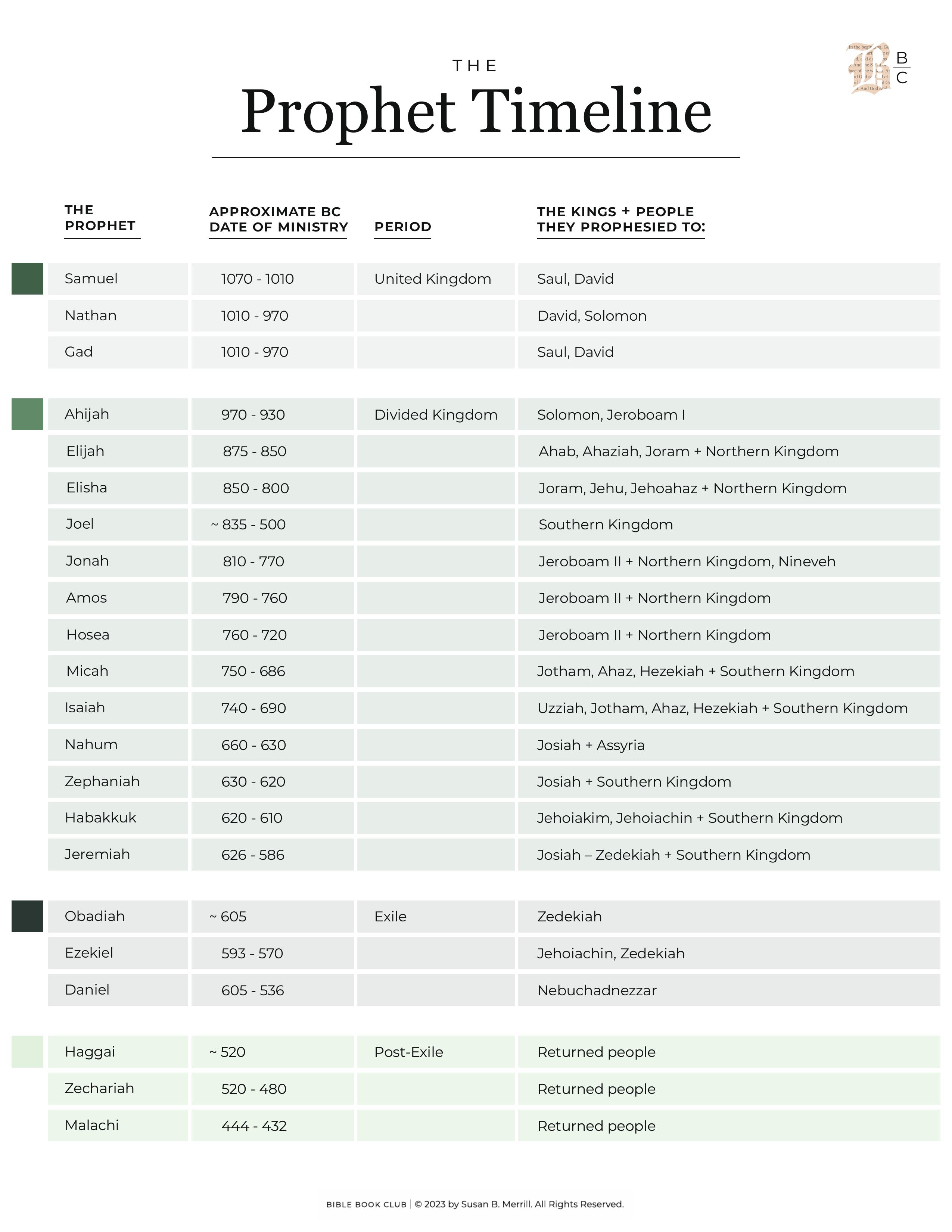
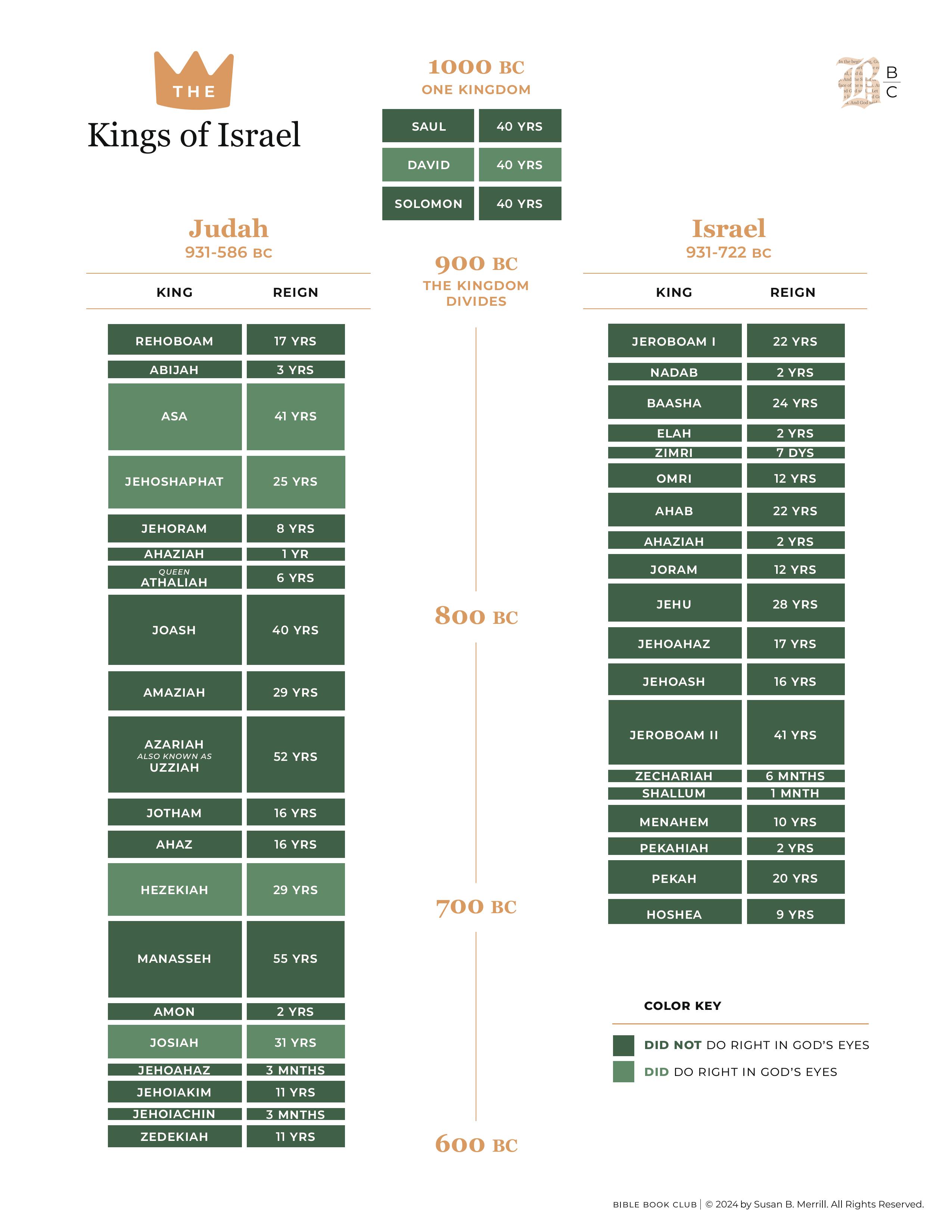
- 722 BC: The people in the Northern Kingdom are exiled to Assyria and basically scattered and absorbed into other cultures. In fact, they are called the ten lost tribes because they lose their distinct identity.
- 626 BC: About one hundred years later, the Babylonians take over Assyria. So now all those Israelites born into Assyrian captivity are deported into Babylonian captivity.
- About twenty years later: Babylon goes after Judah, and all the rest of the Israelites get scattered into captivity.
- 538 BC: Two hundred years after the first exile, the captives are released and slowly begin returning to Israel.
After hundreds of years of captivity, their release is nothing like when they all came out of Egypt. It is not a mass exit but a slow drip. How do they get back to the plan?
- They can not have their own nation.
- They are under the rule of Babylon.
- They can’t have a king as God promised.
No David, no kings, no Moses. How do they even agree on God’s plan?
Why is Chronicles written for a community in an identity crisis?
The Israelites have all been born amidst foreign culture with foreign gods, and Israel is having an identity crisis. That is the Chronicler’s main concern. He wants them to remember they are the chosen people of the one true God. He writes these books with an urgency of proof. They must:
- Believe the promises of God.
- Choose to covenant with Him in faith.
- Trust that God will work all things together even when it looks impossible at this point.
The Chronicler wants them to hope despite the facts. To believe they can do the impossible: become the great nation God promised Abraham, even when they are a poor, weak, small remnant. The Chronicler is specifically building a case for the lost remnant to believe in the impossible.
How do 1 and 2 Chronicles fit into the story of the Bible?
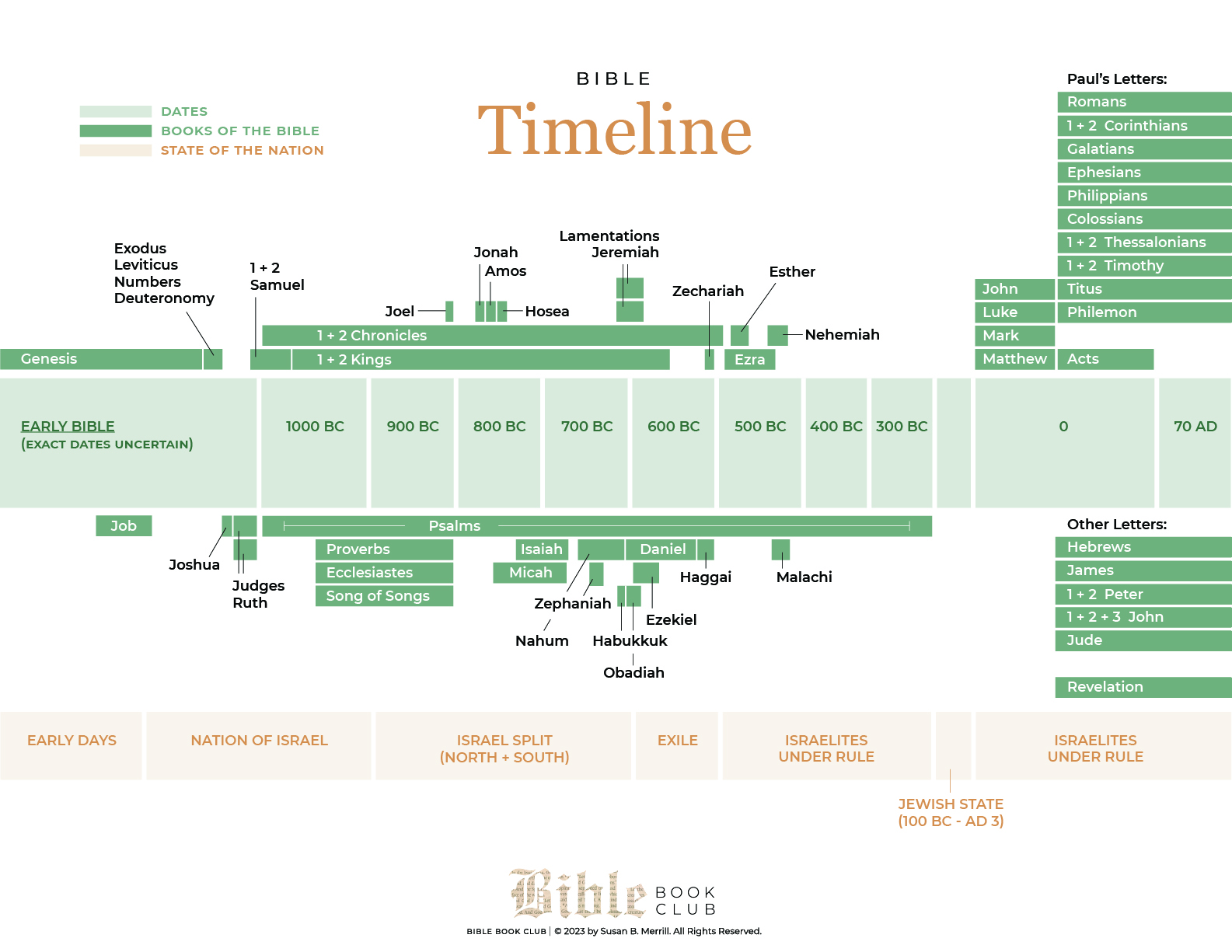
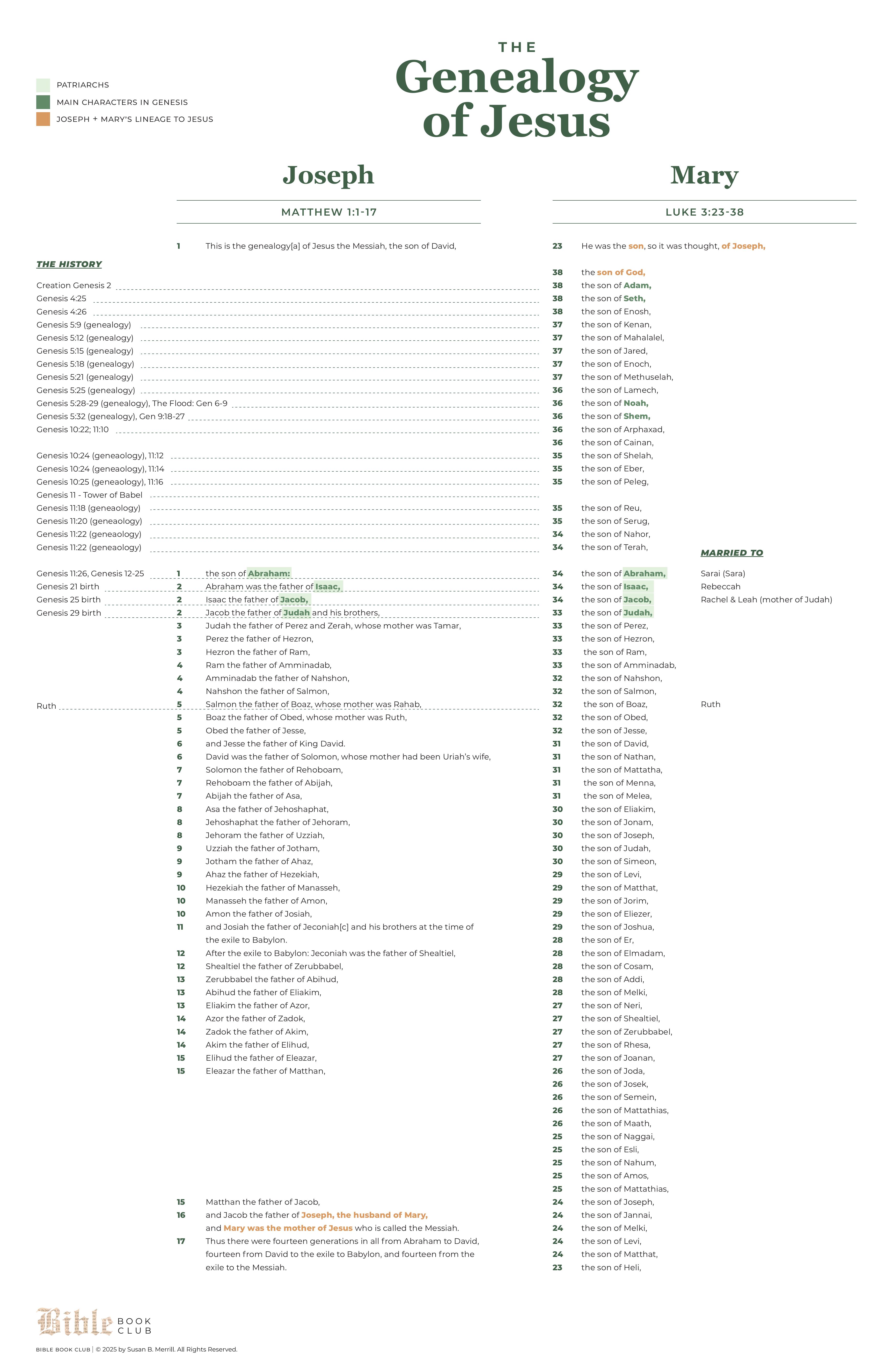
Like 1 Samuel and 2 Samuel and 1 Kings and 2 Kings, 1 and 2 Chronicles were written as one book. But what you may not know because of the order of our Bible is that Chronicles is actually the last book in the Hebrew Bible, or Tanakh. For a clear visual of all the books and their divisions, take a moment to study these resources:
What are the three parts of the Tanakh?
1. The Torah (Law)
We have talked about all five books of the Torah in our Bible studies on:
2. The Nevi'im (Prophets)
We have partially covered the middle section of the Tanakh called the Nevi’im, or Prophets. There are 15 more Prophets to go. We’ve already studied:
3. The Ketuvim (Writings)
We have five more books to go in the Ketuvim, or writings, the final part of the Tanakh. We have already covered:
Where is Chronicles located in the Hebrew Tanakh?
Chronicles is the last book in the Ketuvim, and in fact, it is the last book in the whole Hebrew Bible. It is placed last, even though that is not chronologically correct, because of the people and purpose for which it is written. Chronicles is written to the people who have returned from exile.
- They are faltering.
- Their faith is weak.
- Their understanding is cloudy.
- Their purpose seems impossible.
The author of Chronicles is faced with the task of educating and inspiring a generation that has grown up in a foreign culture. They simply do not know their heritage and call themselves God's chosen people.
Isn’t that like so many of us today? Surrounded by culture, we simply do not understand our rich heritage in God. Because the Old Testament story is our heritage too. It is the answer to our identity crisis. Paul said it this way in Romans 15:
Romans 15:4-6 4 For everything that was written in the past was written to teach us, so that through the endurance taught in the Scriptures and the encouragement they provide we might have hope.
5 May the God who gives endurance and encouragement give you the same attitude of mind toward each other that Christ Jesus had, 6 so that with one mind and one voice you may glorify the God and Father of our Lord Jesus Christ.
Everything written in the past, including Chronicles, gives endurance, encouragement, and hope. Our identity is in Christ, and it calls for a lot of endurance to maintain. Like the returned exiles, we will face:
- Opposition.
- Worldly temptations.
- Spiritual drift.
- Trials.
- Suffering.
Just like the Israelites, maintaining our identity in Christ with hope will require a deep and abiding knowledge of God’s Word, so we can understand the miracle of Christ’s life as a fulfillment of what God promised. And that, my fellow Bible Book Clubber, is my hope for you. That Chronicles, the last book of the Ketuvim, will:
- Open your mind to all the other Scriptures.
- Cement what you believe, just as it did for those returning Israelite exiles so long ago.
- Your faith will grow stronger.
- Your understanding will become clearer.
- Your purpose will move from impossible to possible.
Who is the traditionally accepted author of 1 and 2 Chronicles?
The author is unknown, but Jewish tradition and that of the early church are convinced Ezra is the author. There is a lot of evidence to support this belief, and I am in favor of this for two reasons.
- Ezra is both a scribe and a priest. Chronicles places a large focus on the importance of the Temple and the priesthood, which would be of great concern to Ezra as a priest serving in a post-exilic culture without a Temple.
- The Book of 2 Chronicles ends almost word-for-word the same as the beginning of Ezra.
2 Chronicles 36:22-23 22 In the first year of Cyrus king of Persia, in order to fulfill the word of the Lord spoken by Jeremiah, the Lord moved the heart of Cyrus king of Persia to make a proclamation throughout his realm and also to put it in writing: 23 “This is what Cyrus king of Persia says:
“‘The Lord, the God of heaven, has given me all the kingdoms of the earth and he has appointed me to build a temple for him at Jerusalem in Judah. Any of his people among you may go up, and may the Lord their God be with them.’”
Ezra 1:1-3 1 In the first year of Cyrus king of Persia, in order to fulfill the word of the Lord spoken by Jeremiah, the Lord moved the heart of Cyrus king of Persia to make a proclamation throughout his realm and also to put it in writing:
2 “This is what Cyrus king of Persia says: “‘The Lord, the God of heaven, has given me all the kingdoms of the earth and he has appointed me to build a temple for him at Jerusalem in Judah. 3 Any of his people among you may go up to Jerusalem in Judah and build the temple of the Lord, the God of Israel, the God who is in Jerusalem, and may their God be with them.
The Book of Ezra follows Chronicles, so we will become familiar with Ezra soon. Chronicles’ tie to the books of Ezra and Nehemiah sends a message. The author of Chronicles is reminding the people not to forget what Ezra and Nehemiah taught.
How does Chronicles differ from the Books of Samuel and Kings?
The theme, or purpose, of Chronicles is quite different from Samuel and Kings because of who the books are written to. Chronicles is written to the people after the exile, while the books of Samuel and Kings are written to the people before the exile.
The people of Israel are having an identity crisis that leads to a lot of promise-specific problems. The continuity between their past and present is gone. They are confused about how to move forward as a nation and people of God, because the exile and its aftermath have resulted in national confusion. Where is:
- The promise of a king through the line of David?
- The Temple to house the presence of God?
- The nation of Israel that is to be a blessing to all nations?
- The promises of the Abrahamic and the Davidic covenant?
The people who returned after the exile need to understand the past, just as we do. Prior to the exile, the nation of Israel had been a theocracy. Church and state were one, and God ruled through Israel’s leaders. All that changed after the exile when the people returned from Babylon, and the Persians became the ruling power over Israel. Israel is just a district in a Persian region with much foreign influence over the people of Israel.
How does the Persian Empire influence the original readers of Chronicles?
The Israelites feel as if they are still in bondage, and the people are discouraged. They are no longer living in the Promised Land. To them, it is the Persians' land. The task of rebuilding the Temple and the city seems impossible.
So the author of Chronicles has a different aim than the author of Kings. Chronicles is written to encourage the returned Israelites. The author wants them to remember:
- Their God.
- Their covenant with God.
- God’s promises to them if they will be faithful.
They may no longer be allowed to have a physical king in Israel, but God is still on the throne. To encourage them, the Chronicles portrays the reigns of David and Solomon in the best possible light. So there will be no mention of David's affair with Bathsheba. The author assumes they (and we) have read the books of Kings for the details on how the kings failed.
Key Differences Between Kings, Chronicles, and the Prophets
The key differences to remember between Kings, Chronicles, and the other prophets who all speak of Israel’s history are:
- Kings: Written during the exile, it explains why the exile happened.
- Chronicles: Written after the exile, it encourages faithfulness.
- Prophets: Written before, during, and after the exile, it calls for repentance and warns of judgment.
What are the three main sections of 1 and 2 Chronicles?
Chronicles 1 and 2 are really one book divided into three parts:
- 1 Chronicles 1-9: God's people from Adam to the return from exile.
- 1 Chronicles 10 to 2 Chronicles 9: The ideal united David/Solomon kingdom.
- 2 Chronicles 10-36: Judah during the Divided Kingdom.
1 Chronicles 1 Introduction
Now buckle up, because here we go with Part 1 of Chronicles.
Why does the genealogy of 1 Chronicles begin with Adam?
The author systematically proves to the remnant who they are and where they come from, and to do so, he goes way back to the beginning with Adam and proceeds through the genealogy of God's people. The Chronicler is nothing if not thorough.
This first chapter covers a lot of ground, over 2000 years from Adam to Jacob. This is the era I call the "fruitful and multiply era." It is a period of great geographical expansion, population growth, and the beginning of the Table of Nations.
Genesis 1:28 28 God blessed them and said to them, “Be fruitful and increase in number; fill the earth and subdue it. Rule over the fish in the sea and the birds in the sky and over every living creature that moves on the ground.”
Genesis 9:1 1 Then God blessed Noah and his sons, saying to them, “Be fruitful and increase in number and fill the earth.
And they followed that command. First Adam, then, after a population reset, Noah.
Scene 1: Starting with Adam to Noah
This genealogy can also be found in Genesis 5.
1 Chronicles 1:1-3
1 Adam, Seth, Enosh, 2 Kenan, Mahalalel, Jared, 3 Enoch, Methuselah, Lamech, Noah.
The Chronicler Doesn’t Waste Time
This lineage is seriously lacking description, and for a good reason. The author doesn't waste time describing the ten generations listed from Adam to Noah because their lineage ceases to exist when God floods the earth. If you want to know more about them, check out our Bible study on the Book of Genesis. You will get all kinds of intel on the other sons like Cain and all his wicked descendants.
A Reminder for Us
The omission is a good reminder for us that there have always been setbacks in the journey of humanity, but God's purpose always prevails. God fulfills His purposes by substituting others with a heart to do His calling. In this case, Cain's sin put an end to Abel. God chose Seth, and Cain was written out of the story.
The Chronicler is going to go into detail about Noah's three sons because they were the beginning of the Table of Nations, which is the beginning of 70 different nations. The Table of Nations is found in Genesis 10. It is a list of the various people and nations that descended from Noah's three sons. By listing the nations again, the Chronicler wants the people of Israel (and us) to remember that all the nations of the world belong to God and all will be used to fulfill God's purposes.
Scene 2: Noah's Three Sons
Noah, his sons, and their wives were the only eight people to survive the flood. The Chronicler starts with the third son and works back to the most important son, the first son, Shem.
1 Chronicles 1:4-23
4 The sons of Noah: Shem, Ham and Japheth.
5 The sons of Japheth: Gomer, Magog, Madai, Javan, Tubal, Meshek and Tiras.
6 The sons of Gomer: Ashkenaz, Riphath and Togarmah.
7 The sons of Javan: Elishah, Tarshish, the Kittites, and the Rodanites.
8 The sons of Ham: Cush, Egypt, Put and Canaan.
9 The sons of Cush: Seba, Havilah, Sabta, Raamah and Sabteka.
The sons of Raamah: Sheba and Dedan. 10 Cush was the father of Nimrod, who became a mighty warrior on earth. 11 Egypt was the father of the Ludites, Anamites, Lehabites, Naphtuhites, 12 Pathrusites, Kasluhites (from whom the Philistines came) and Caphtorites. 13 Canaan was the father of Sidon his firstborn, and of the Hittites, 14 Jebusites, Amorites, Girgashites, 15 Hivites, Arkites, Sinites, 16 Arvadites, Zemarites and Hamathites.
17 The sons of Shem: Elam, Ashur, Arphaxad, Lud and Aram.
The sons of Aram: Uz, Hul, Gether and Meshek. 18 Arphaxad was the father of Shelah, and Shelah the father of Eber.
19 Two sons were born to Eber: One was named Peleg, because in his time the earth was divided; his brother was named Joktan.
20 Joktan was the father of Almodad, Sheleph, Hazarmaveth, Jerah, 21 Hadoram, Uzal, Diklah, 22 Obal, Abimael, Sheba, 23 Ophir, Havilah and Jobab. All these were sons of Joktan.
Noah’s Son Japheth
Japheth had seven sons who became 14 nations, but only two of those sons are listed as having descendants. Here’s the cool thing: you may be one of them if your ancestors immigrated from Europe.
The Japhethites became the nations to the north and west of Israel. These are the people who populated the regions around the Mediterranean, including Turkey, Greece, Spain, and Europe. Many of these people eventually grafted into God's people in the New Testament through Paul and other apostles. This fulfilled Noah's prophecy in Genesis 9 when he said:
Genesis 9:24-27 24 When Noah awoke from his wine and found out what his youngest son had done to him, 25 he said, “Cursed be Canaan!
The lowest of slaves will he be to his brothers.” 26 He also said, “Praise be to the Lord, the God of Shem! May Canaan be the slave of Shem.
27 May God extend Japheth’s territory; may Japheth live in the tents of Shem,
and may Canaan be the slave of Japheth.”
So God expanded Japheth's territory to the largest, and the people of Japheth, the Gentiles, were brought into the tent of the house of Shem, the chosen line of God. Canaan was cursed. He was the son of Ham, Noah’s second son, which leads us to the Hamites.
Noah’s Son Ham
The Hamites became 30 nations, and if you have been with the Bible Book Club since the beginning, you are probably cringing over a lot of his sons. Many of Ham’s sons became enemies of Israel and lived in Canaan as the occupants of the Promised Land. Their sin became so great that God could not ignore it, and they lost their land to the Israelites. Ham had four sons. Only three of the four are listed as having sons of their own.
- Cush settled south of Egypt in Africa and parts of Arabia. One thing to note about Cush is that Nimrod was a descendant of his, and it was from Nimrod that the great nations of Assyria and Babylon were formed. These were the nations that carried Israel and Judah into captivity.
- Egypt, another son of Ham, settled in Egypt. Pharaoh and the Philistines arose from this line. This was a pesky line for both Moses and David.
- Canaan was the worst of Ham’s sons. He was cursed because he was somehow involved in the wine scandal with Noah. As we already read in Genesis, Noah decreed that Canaan was to be a slave to his brothers, and this happened in several interesting ways:
- The Semites, sons of Shem who became the Israelites, conquered Canaan under Joshua and David.
- The Japhethites, sons of Japheth who became the Greeks and Romans, conquered Canaan and the Persian Empire under Alexander the Great.
Noah’s Son Shem
The last son of Noah is Shem, the chosen one who became the Semites and ultimately the Israelites and about 26 different nations. Five sons of Shem are listed, but only two are listed as having sons of their own.
- Aram had four sons, but that is all we know of his line other than that they became the Arameans. Laban, the father of Leah and Rachel, was Aramean. Leah and Rachel married Jacob and produced eight of the tribes of Israel, including the three most important tribes: Judah, Levi, and Benjamin. Stay tuned for that in our next chapters.
- Arphaxad may have had more than one son, but the only son the Chronicler cares to follow is Shelah, whose son Eber had two sons: Peleg and Joktan. Joktan’s people populated the Arabian Peninsula. Peleg is the other son, and it is through him that we get to Abraham.
Scene 3: From Shem to Abraham
This genealogy can also be found in Genesis 11. This next genealogical breakdown is so important to the Chronicler that he starts from Shem again. It’s like he wants us to mentally break away from all the other sons and grandsons of Noah and zero in on this one special elect line that would eventually lead to Israel. There are ten generations from Adam to Noah, and here we have ten more generations from Shem to Abraham.
1 Chronicles 1:24-27
24 Shem, Arphaxad, Shelah, 25 Eber, Peleg, Reu, 26 Serug, Nahor, Terah 27 and Abram (that is, Abraham).
What does the name change from Abram to Abraham signify in Chronicles?
The author makes sure to note for the returned exiles that Abram became Abraham, which is a shout-out to God's covenant promise in Genesis 17:
Genesis 17:3-5 3 Abram fell facedown, and God said to him, 4 “As for me, this is my covenant with you: You will be the father of many nations. 5 No longer will you be called Abram; your name will be Abraham, for I have made you a father of many nations.
The fulfillment of this promise to Abraham is a Bible Bender when you think about the nations that came from this one man. And not just the nations but three of the major religions in the world: Judaism, Christianity, and Islam. All from descendants of Abraham. We will save Abraham's descendants for our 1 Chronicles 1-2 commentary, when we get into the patriarchs of Israel.
Group Discussion Questions for 1 Chronicles 1
- The Chronicler encourages the exiles to believe God's promises even when circumstances seem impossible. In times of despair, who has God sent to help you remember to trust Him?
- The returned exiles are going through an identity crisis, surrounded by a foreign culture in unfamiliar territory. Have you ever lost your sense of identity or purpose? How did God help you remember who you are in Him?
- Despite major setbacks, God's redemptive plan always prevails. In your own life, when has a perceived setback actually been God's way of working out a bigger (better) plan for you?