What is the Chronicler’s purpose in writing these long genealogical lists?
The Chronicler is strategically building a case for the lost remnant to believe in the impossible. That is the Chronicler’s game. He is just getting started with his evidence, and his heart is in the right place. He is living with these people. He sees their conditions. After years immersed in foreign culture, they are confused and discouraged. They need to:
- Believe the promises of God.
- Choose to covenant with God in faith.
- Trust that God will work all things together even when it seems impossible.
In 1 Chronicles 1-2, he continues building his case by proving their history through a long list of ancestors. It’s the Israelites’ old-school DNA tracking.
Scene 1: The Genealogy of God’s People Continues with Abraham’s Descendants
This genealogy can also be found in Genesis 25.
1 Chronicles 1:28–31
28 The sons of Abraham: Isaac and Ishmael.
29 These were their descendants: Nebaioth the firstborn of Ishmael, Kedar, Adbeel, Mibsam, 30 Mishma, Dumah, Massa, Hadad, Tema, 31 Jetur, Naphish and Kedemah. These were the sons of Ishmael.
Who are the descendants of Abraham mentioned in 1 Chronicles 1?
Abraham actually has eight sons, and the Chronicler will get to all of them. But first he lists the two most important: Isaac and Ishmael. They are singled out because both of them are promised they will become a great nation. After mentioning Isaac, the Chronicler saves him for last and goes straight into Ishmael's twelve sons.
Ishmael is Abraham's only child with Hagar, who is Sarah's maid and an Egyptian slave. She was given to Abraham in Genesis 16:3 to be his wife and produce a child, which she did. His name is Ishmael, and he has the twelve sons listed here.
Why does 1 Chronicles 1 list the 12 sons of Ishmael?
The twelve sons of Ishmael become twelve tribes to parallel the twelve sons of Jacob, the tribes of Israel. Ishmael and his mother Hagar were sent away from Abraham's household, but they were not forgotten by God. In Genesis 17, God promised Abraham:
Genesis 17:20 20 And as for Ishmael, I have heard you: I will surely bless him; I will make him fruitful and will greatly increase his numbers. He will be the father of twelve rulers, and I will make him into a great nation.
Even with this promise, Abraham worried about this son whom he loved, and in Genesis 21 God again comforted Abraham with this promise:
Genesis 21:8-13 8… on the day Isaac was weaned Abraham held a great feast. 9 But Sarah saw that the son whom Hagar the Egyptian had borne to Abraham was mocking, 10 and she said to Abraham, “Get rid of that slave woman and her son, for that woman’s son will never share in the inheritance with my son Isaac.”
11 The matter distressed Abraham greatly because it concerned his son. 12 But God said to him, “Do not be so distressed about the boy and your slave woman. Listen to whatever Sarah tells you, because it is through Isaac that your offspring will be reckoned. 13 I will make the son of the slave into a nation also, because he is your offspring.”
The people of Ishmael live in Northern Arabia, where the 12 sons form 12 tribes. Today, Islamic tradition claims Ishmael as a patriarch and traces Arab genealogy through Ishmael to the prophet Muhammad. Next in the list of Abraham’s descendants are those born to Keturah. It is hard to believe that Abraham had more children after Sarah died.
How old were Abraham and Sarah when Isaac was born?
Abraham was 100, and Sarah was 90 when Isaac was born. Sarah was 127 when she died, so Abraham was over 137 when he married Keturah. With her, he had six more sons before he died at 175.
Scene 2: The Descendants of Keturah
1 Chronicles 1:32-33
32 The sons born to Keturah, Abraham’s concubine: Zimran, Jokshan, Medan, Midian, Ishbak and Shuah. The sons of Jokshan: Sheba and Dedan. 33 The sons of Midian: Ephah, Epher, Hanok, Abida and Eldaah. All these were descendants of Keturah.
Midian, Father of the Midianites
Keturah is mentioned here as a concubine but in Genesis as a wife. A couple of her sons’ names should be familiar, like Midian, the father of the Midianites. Joseph's brothers sold him to the Midianites, who sold him to Potiphar. Moses married a Midianite woman named Zipporah. Her father was a Midianite priest named Jethro, who gave Moses leadership advice. Later, the Midianites became enemies of the Israelites. Not much else is known about the sons of Keturah.
Scene 3: The Sons of Esau
Last of all, the author gets to the important part of the genealogy. Sarah's one son, Isaac, and his descendants who are the chosen line of Abraham. Isaac has two sons who are twins. The author starts with the non-elect son, Esau, who is the firstborn but sold his birthright for stew in Genesis.
1 Chronicles 1:34–37
34 Abraham was the father of Isaac. The sons of Isaac: Esau and Jacob.
35 The sons of Esau: Eliphaz, Reuel, Jeush, Jalam and Korah.
36 The sons of Eliphaz: Teman, Omar, Zepho, Gatam and Kenaz; by Timna: Amalek.
37 The sons of Reuel: Nahath, Zerah, Shammah and Mizzah.
Esau has five sons, and we don't know much about them or the grandsons listed here. Next, our author takes a little detail detour and lists the people of Seir in Edom and their kings.
How does 1 Chronicles 1 connect the people of Seir to Esau?
The people of Seir integrated with the descendants of Esau. Eventually, Esau's lineage takes over the region of Seir. So the author includes the seven sons of Seir in Esau’s lineage. Esau's descendants are called Edomites, and the two names “Esau” and “Edom” are used interchangeably.
Scene 4: The People of Seir in Edom
1 Chronicles 1:38-54
38 The sons of Seir: Lotan, Shobal, Zibeon, Anah, Dishon, Ezer and Dishan. 39 The sons of Lotan: Hori and Homam. Timna was Lotan’s sister. 40 The sons of Shobal: Alvan, Manahath, Ebal, Shepho and Onam. The sons of Zibeon: Aiah and Anah. 41 The son of Anah: Dishon. The sons of Dishon: Hemdan, Eshban, Ithran and Keran. 42 The sons of Ezer: Bilhan, Zaavan and Akan. The sons of Dishan: Uz and Aran.
43 These were the kings who reigned in Edom before any Israelite king reigned: Bela son of Beor, whose city was named Dinhabah. 44 When Bela died, Jobab son of Zerah from Bozrah succeeded him as king. 45 When Jobab died, Husham from the land of the Temanites succeeded him as king. 46 When Husham died, Hadad son of Bedad, who defeated Midian in the country of Moab, succeeded him as king. His city was named Avith. 47 When Hadad died, Samlah from Masrekah succeeded him as king. 48 When Samlah died, Shaul from Rehoboth on the river succeeded him as king. 49 When Shaul died, Baal-Hanan son of Akbor succeeded him as king. 50 When Baal-Hanan died, Hadad succeeded him as king. His city was named Pau, and his wife’s name was Mehetabel daughter of Matred, the daughter of Me-Zahab. 51 Hadad also died.
The chiefs of Edom were: Timna, Alvah, Jetheth, 52 Oholibamah, Elah, Pinon, 53 Kenaz, Teman, Mibzar, 54 Magdiel and Iram. These were the chiefs of Edom.
The Importance of 12
The whole of this section about Edom has a purpose. The author is making a point. Esau had five sons, but the author added the seven sons of Seir to Esau's descendants, giving him a total of twelve sons. The author documents an interesting parallel of the number twelve. There are 12 sons and tribes for:
- Jacob/Israel.
- Ishmael.
- Esau.
All fair and square in sons and tribes. The parallel between Ishmael, Esau, and Jacob is intentional. The author is highlighting the fulfillment of the promise to Abraham that he would be a father of many nations. These nations included:
- Israel, God's chosen people, with their 12 tribes.
- Ishmaelites with the 12 tribes of Ishmael.
- Edomites with the 12 tribes of Esau.
The author makes this point right before introducing the all-important 12 tribes, the sons of Jacob, in Chapter 2.
Scene 5: Jacob’s 12 Sons and the 12 Tribes of Israel
1 Chronicles 2:1-2
1 These were the sons of Israel: Reuben, Simeon, Levi, Judah, Issachar, Zebulun, 2 Dan, Joseph, Benjamin, Naphtali, Gad and Asher.
Recall that in Genesis 32:22 Jacob wrestled with God on the way to meet Esau for the first time after stealing Esau's birthright. Jacob was nervous because he had heard of Esau's national and military growth. God met Jacob and renamed him Israel because he had wrestled with God and with humans and had overcome. So the names Jacob and Israel are interchangeable names for this one man.
The Tribe of Judah is first as the most important.
The author is not going to list the sons and tribes in the order of their birth. He places emphasis on three tribes: Judah, Levi, and Benjamin. These three tribes lead the others in the return to Jerusalem and the restoration of the Temple. The author will cover their descendants at key places in the list of the 12 tribes. Judah will be first in the genealogy, Levi in the middle, and Benjamin at the end. The most attention is given to Judah.
Why is the Tribe of Judah listed first in 1 Chronicles 2?
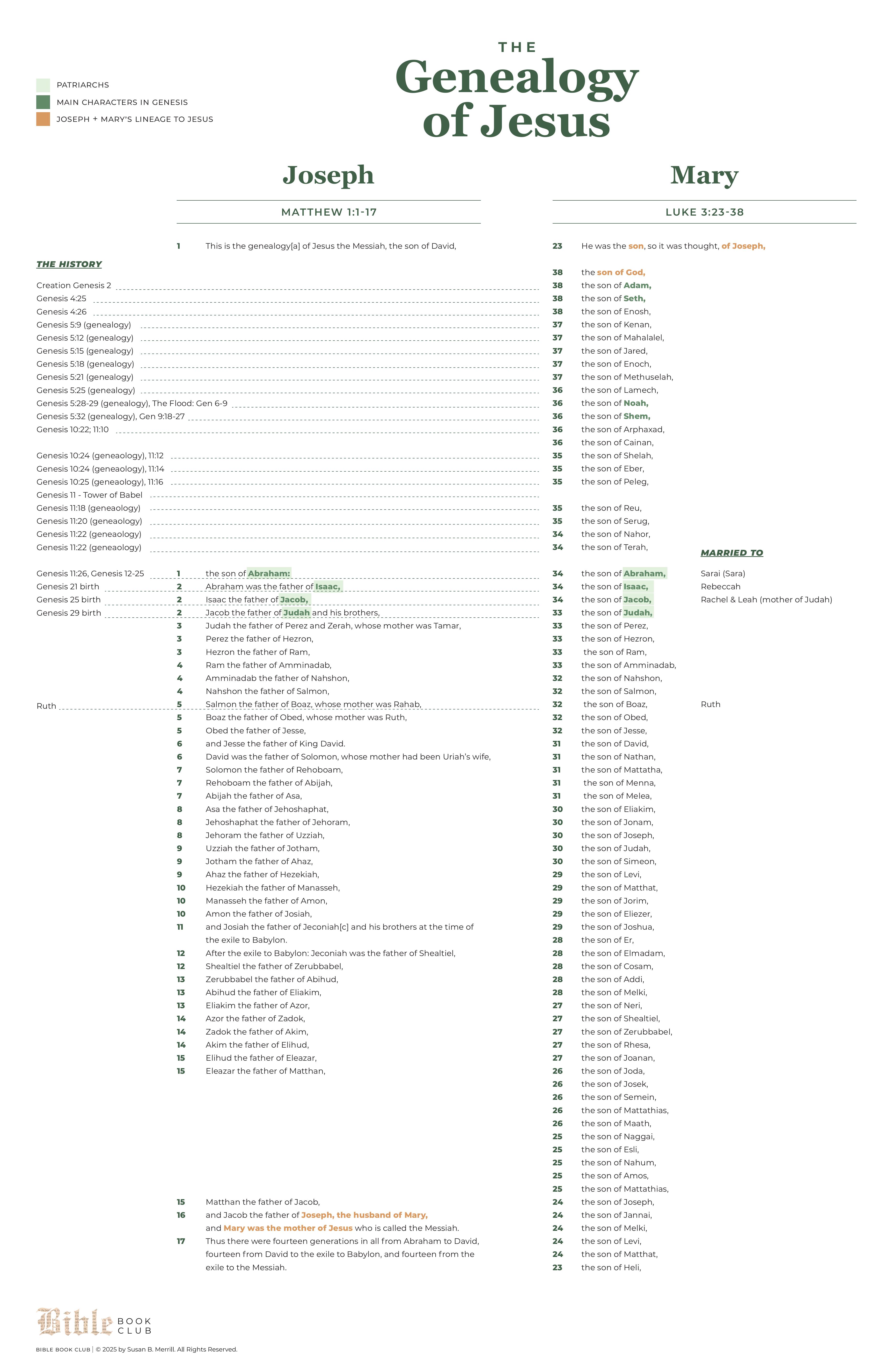
The Tribe of Judah is listed first in 1 Chronicles 2 because it is from this line that we get that one special family. The Davidic Covenant promised that the Messiah, the king who will reign forever, will come from the line of David.
Scene 5: The Sons of Judah
1 Chronicles 2:3–4
3 The sons of Judah: Er, Onan and Shelah. These three were born to him by a Canaanite woman, the daughter of Shua. Er, Judah’s firstborn, was wicked in the Lord’s sight; so the Lord put him to death. 4 Judah’s daughter-in-law Tamar bore Perez and Zerah to Judah. He had five sons in all.
What happens to Jacob’s son Judah?
Jacob's son Judah had a rough start. First, he married a Canaanite woman and raised several wicked sons. Then he tried to trick Tamar, his first son's widow, into waiting to marry his last son, Shelah, without any intention of actually letting that happen.
Tamar is smarter and, in return, played a trick on Judah. She dressed up as a prostitute, went after Judah, and she and Judah conceived twins, Perez and Zerah. It's a great story. You can listen to it in the Bible Book Club’s Season 1, Episode 30 about Wily Women.
Despite Judah's uncertain start, he acknowledged his mistakes and worked to make things right with Tamar and also with his brother Joseph, which is another great story in our commentary on Genesis 44. Judah's powerful speech to Joseph revealed his heart transformation.
Judah learned and turned from his sin, which is one of the best ways to find favor with God. The result is that Judah and his tribe rose to the top and scored the promise of the future Messiah. They also formed the largest population of the returning exiles. For this reason, the Chronicler, who is speaking to this large group of Judite exiles, details this tribe with care.
Scene 6: The Sons of Perez
1 Chronicles 2:5-8
5 The sons of Perez: Hezron and Hamul. 6 The sons of Zerah: Zimri, Ethan, Heman, Kalkol and Darda—five in all. 7 The son of Karmi: Achar, who brought trouble on Israel by violating the ban on taking devoted things. 8 The son of Ethan: Azariah.
Perez had two sons, and Zerah had five. Zerah had a few grandsons who are mentioned. Zerah's oldest son Zimri had a son named Karmi, who had a son named Achar. Joshua tells us in the Book of Joshua, chapter 7, that Achar was unfaithful and caused the Lord’s anger to burn. The Chronicler, most likely the priest Ezra, does not want the people to forget what happens when they are unfaithful to the things of the Lord. So he calls out Achar's idolatry. The line continues with Perez's oldest son, Hezron.
Scene 7: The Sons of Hezron
Hezron had three sons, and all three get a lot of print. These are Hezron’s descendants, starting with his second son, because this is the line to watch.
1 Chronicles 2:9-55
9 The sons born to Hezron were: Jerahmeel, Ram and Caleb.
10 Ram was the father of Amminadab, and Amminadab the father of Nahshon, the leader of the people of Judah. 11 Nahshon was the father of Salmon, Salmon the father of Boaz, 12 Boaz the father of Obed and Obed the father of Jesse.
13 Jesse was the father of Eliab his firstborn; the second son was Abinadab, the third Shimea, 14 the fourth Nethanel, the fifth Raddai, 15 the sixth Ozem and the seventh David. 16 Their sisters were Zeruiah and Abigail. Zeruiah’s three sons were Abishai, Joab and Asahel. 17 Abigail was the mother of Amasa, whose father was Jether the Ishmaelite.
18 Caleb son of Hezron had children by his wife Azubah (and by Jerioth). These were her sons: Jesher, Shobab and Ardon. 19 When Azubah died, Caleb married Ephrath, who bore him Hur. 20 Hur was the father of Uri, and Uri the father of Bezalel.
21 Later, Hezron, when he was sixty years old, married the daughter of Makir the father of Gilead. He made love to her, and she bore him Segub. 22 Segub was the father of Jair, who controlled twenty-three towns in Gilead. 23 (But Geshur and Aram captured Havvoth Jair, as well as Kenath with its surrounding settlements—sixty towns.) All these were descendants of Makir the father of Gilead.
24 After Hezron died in Caleb Ephrathah, Abijah the wife of Hezron bore him Ashhur the father of Tekoa.
25 The sons of Jerahmeel the firstborn of Hezron: Ram his firstborn, Bunah, Oren, Ozem and Ahijah. 26 Jerahmeel had another wife, whose name was Atarah; she was the mother of Onam.
27 The sons of Ram the firstborn of Jerahmeel: Maaz, Jamin and Eker. 28 The sons of Onam: Shammai and Jada.
The sons of Shammai: Nadab and Abishur. 29 Abishur’s wife was named Abihail, who bore him Ahban and Molid.
30 The sons of Nadab: Seled and Appaim. Seled died without children.
31 The son of Appaim: Ishi, who was the father of Sheshan. Sheshan was the father of Ahlai.
32 The sons of Jada, Shammai’s brother: Jether and Jonathan. Jether died without children.
33 The sons of Jonathan: Peleth and Zaza.
These were the descendants of Jerahmeel. 34 Sheshan had no sons—only daughters. He had an Egyptian servant named Jarha. 35 Sheshan gave his daughter in marriage to his servant Jarha, and she bore him Attai.
36 Attai was the father of Nathan, Nathan the father of Zabad, 37 Zabad the father of Ephlal, Ephlal the father of Obed, 38 Obed the father of Jehu, Jehu the father of Azariah, 39 Azariah the father of Helez, Helez the father of Eleasah, 40 Eleasah the father of Sismai, Sismai the father of Shallum, 41 Shallum the father of Jekamiah, and Jekamiah the father of Elishama.
42 The sons of Caleb the brother of Jerahmeel: Mesha his firstborn, who was the father of Ziph, and his son Mareshah, who was the father of Hebron.
43 The sons of Hebron: Korah, Tappuah, Rekem and Shema. 44 Shema was the father of Raham, and Raham the father of Jorkeam. Rekem was the father of Shammai. 45 The son of Shammai was Maon, and Maon was the father of Beth Zur.
46 Caleb’s concubine Ephah was the mother of Haran, Moza and Gazez. Haran was the father of Gazez.
47 The sons of Jahdai: Regem, Jotham, Geshan, Pelet, Ephah and Shaaph. 48 Caleb’s concubine Maakah was the mother of Sheber and Tirhanah. 49 She also gave birth to Shaaph the father of Madmannah and to Sheva the father of Makbenah and Gibea. Caleb’s daughter was Aksah. 50 These were the descendants of Caleb.
The sons of Hur the firstborn of Ephrathah: Shobal the father of Kiriath Jearim, 51 Salma the father of Bethlehem, and Hareph the father of Beth Gader.
52 The descendants of Shobal the father of Kiriath Jearim were: Haroeh, half the Manahathites, 53 and the clans of Kiriath Jearim: the Ithrites, Puthites, Shumathites and Mishraites. From these descended the Zorathites and Eshtaolites.
54 The descendants of Salma: Bethlehem, the Netophathites, Atroth Beth Joab, half the Manahathites, the Zorites, 55 and the clans of scribes who lived at Jabez: the Tirathites, Shimeathites and Sucathites. These are the Kenites who came from Hammath, the father of the Rekabites.
The Descendants Ram, Hezron’s Middle Son
Lots of familiar names here. This is the lineage of David through his father, Jesse, and the fulfillment of prophecy.
Isaiah 11:1 1 A shoot will come up from the stump of Jesse;
from his roots a Branch will bear fruit.
Honorable mention goes to David's sister Zeruiah’s sons: Abishai, Joab, and Asahel. They all served David throughout his conquests in the books of Samuel and Kings.
- Joab was the commander of David's army. He had a very long career and is mentioned well over 100 times for it. He was brilliant but ruthless, resulting in both good and bad moves.
- Abishai was a valiant warrior who was fiercely loyal to David.
- Asahel was known for his speed and courage. He was killed by Abner, the commander of Saul's army.
The Descendants of Caleb, Hezron’s Son
This Caleb is not to be confused with the spy Caleb who explored the Promised Land with Joshua. The author goes into some interesting detail in this genealogy to make a few key connections. First, Bezalel is a descendant of distinction.
Who was Bezalel and how is he related to the Tribe of Judah?
Bezalel was the architect and craftsman assigned to design and build the Tabernacle and its furniture by Moses back in Exodus 31 and Exodus 35. The Lord filled him with the Spirit of God, knowledge, and skills.
Then there is an author detail detour about Caleb's father, Hezron. At 60, Hezron married the daughter of Makir, the father of Gilead. Makir was Manasseh's firstborn, which made him the grandson of Joseph. So here we have a marriage alliance between the tribes of Judah and Manasseh. Note that many biblical authors love to pop in details about Joseph's peeps, and I understand. Joseph himself doesn't get enough billing because he does not become a tribe.
The Descendants of Jerahmeel, Hezron’s Firstborn Son
Most of these names will be new to us, as there is no other Old Testament mention of this branch of Hezron’s family. So why does the Chronicler give Jerahmeel so much print? He always has a reason. Most commentaries speculate that the final descendant in this list, Elishama, needed an established pedigree. His lineage of Egyptian heritage came about similarly to Ishmael's, but this time a male servant was used, not a female servant.
Sarah gave her Egyptian servant to Abraham to continue his line. In this case, Sheshan had no sons, so he gave his daughter to his Egyptian servant to continue his line. The Chronicler is making the point that foreigners are absorbed into Israel in general and into Judah's family.
The three sons of Hezron have all been documented: Ram, Caleb, and Jerahmeel. For some reason, the author takes us back to Caleb to give the details of his clan.
More Sons of Caleb
Before we try to unravel the headcount of Caleb's blended family, the author has buried another key detail for us:
1 Chronicles 2:51 51 Salma the father of Bethlehem, and Hareph the father of Beth Gader.
Recall that the true author of the Bible is God working through men to tell the story of His plan for us. So nothing in this Book is random. God is always weaving together people, places, words, and stories, and all of it points to the one King, His Son, who will complete the plan. Who was born in Bethlehem? Why is it important here? Because Bethlehem is important everywhere it is mentioned.
God is establishing links, proof of His hand, work, and providence throughout time. In Genesis, Rachel, Jacob's beloved wife, was buried in Bethlehem. She was not the mother of the tribe of Judah but of Benjamin, one of the remaining three important tribes.
Then here in 1 Chronicles we learn that Bethlehem had been absorbed by the tribe of Judah. Caleb's grandson Salma is the father of Bethlehem. In Ruth, we read that Boaz, David's great-great-grandfather, was from Bethlehem, and this will lead to David's birth in Bethlehem. That is why this place is so important to the author and the exiles.
Little does the author know there are more kings to come from Bethlehem. This small town is destined to have an everlasting-life impact. God plans this even down to the name of the town. Bethlehem means bread, and this town is not only the birthplace of David but also His descendant, the Bread of Life, Jesus. God transcends time. That means He can work the past, present, and future into His purposes, as it states in Revelation 1.
Revelation 1:8 8 “I am the Alpha and the Omega,” says the Lord God, “who is, and who was, and who is to come, the Almighty.”
The author wrote this genealogical list for the post-exilic Jews to remind them of who they are and where they come from: sons, tribes, kings, the line of David. Little does the author know he is writing it for us too. That our King, Jesus, will also come from Bethlehem, as it is prophesied by Micah.
Micah 5:2 “But you, Bethlehem Ephrathah,
though you are small among the clans of Judah,
out of you will come for me
one who will be ruler over Israel,
whose origins are from of old,
from ancient times.”
OK, back to the genealogy and this Caleb who pops up twice in the genealogies. How many wives, concubines, and sons did Caleb have from these two genealogies? It is unclear. But possibly:
- Two wives: Azubah and Ephrath.
- Two concubines: Ephah and Maakah.
- One unknown wife/mother: possibly Jerioth.
- Sons: somewhere around thirteen.
Do you feel as if you are in a conversation with your grandmother? You know who Mareshah is. He is the second son of your second cousin's second wife on your father's side!
This is the who's who of the tribe of Judah. Some of the names mean little to us. But for the exiles who are having an identity crisis, returning from foreign exile, confused about where they fit into Israel's future, finding their family on this list would have been a lifeline from God that they belonged to the Promise.
In our 1 Chronicles 3-4 commentary, the Chronicler will prove that the Promise is still alive through the line of David.
Group Discussion Questions for 1 Chronicles 1-2
- Judah’s story is full of mistakes, poor choices, and messy situations, yet God transforms his heart and uses his family line to bring about the Messiah. Why do you think God chooses to work through imperfect families and flawed people?
- The Chronicler shows that “outsiders” like the Egyptian servant Jarha are fully welcome and integrated into God’s family tree. This week, what’s one practical way you can help someone feel welcome in your faith community?
- Have you ever felt the thrill of discovery when looking through your own family genealogy? How does that help you imagine what this list of names meant to the exiles?